I’ve been doing a lot of author interviews and book reviews lately. This month, TreeHouse Arts turns the table on me with some great questions. If you want to learn more about my experiences and where this blog is heading, check this out. http://treehousearts.me/2014/05/31/an-interview-with-author-and-blogger-ellis-nelson/
Tag Archives: book review
Wisps from the Dazzling Darkness by Anne Whitaker
Anne and I connected through our blogs. We share many similarities in interests and experiences. I just finished her wonderful memoir and I’m happy to share it here.
Over a thirty year period, Anne was challenged by many happenings which left her baffled. As a skeptic, she tried to come to grips with them as she managed a career and family. But how does the rational mind grasp phenomena like atmospheres, ghosts, poltergeists, mediumship, premonitions, reincarnation, mystical experience, and telepathy and make sense of them? The prevailing worldview of scientific materialism insists they’re not possible. Using diary notes and drawing upon recall, Anne categorizes the events and digs deeper. Her writing is straightforward, honest, and from the heart.
Most of us have probably had some kind of weird experience that defies rational analysis. In 2009, a Pew Research study revealed that 29% of Americans report they have had contact with the dead and 18% have had an encounter with a ghost. Furthermore, 49% report mystical experience as defined as a “moment of sudden religious insight or awakening.” In this context, Anne is far from alone. Many of us dismiss these events because they’re uncomfortable. We shrug our shoulders and try to forget them. This is where one of the powers of Anne’s writing grabs us. As we read about her experiences, we begin to remember our own. Anne is fueled by open-minded curiosity coupled with rationalism in her search. And just like her, we’d like some answers too.
Anne turns to science and finds the reductionist materialism paradigm to be inadequate to address her experiences. At the same time, she knows that current theoretical physics has offered hope. New scientific theories are starting to make inroads toward the mainstream. In the final part of the memoir, she takes on the science and realizes the paradigm for our reality must shift to accommodate what many of us have experienced. Kudos to Anne for boldly sharing her journey. May her book encourage others to do the same.
You can purchase the book here: http://anne-whitaker.com/wisps-from-the-dazzling-darkness/
To learn more about Anne and her work: www.anne-whitaker.com
Anne Whitaker has worked in the fields of adult education, social work, and counselling. She has been a practicing astrologer, teacher and writer since 1983. Her first book was entitled Jupiter Meets Uranus (2009). She lives in Glasgow, Scotland.
Pew Study Link: http://www.pewforum.org/2009/12/09/many-americans-mix-multiple-faiths/
Filed under Book Review, Books, PSI
SHAKING MEDICINE by Bradford Keeney
Bradford Keeney’s book, Shaking Medicine, takes us into the heart of healing with ecstatic movement. While the East and West delights in powerful, relaxing healing modalities of meditation and acupuncture, Keeney bravely asserts we are missing the other half of healing medicine- the shaking forms of arousal from Africa and other cultures. Mostly absent from our culture are the healing techniques of The Shake and it’s time we got over our prejudice. Keeney believes that it is only when we fully cycle through being hyper-aroused and then deeply relaxed, can we powerfully realign and evolve in a pattern consistent with holistic medicine. Fifty years ago or so, meditation was new and seen as a fringe movement and now it is so accepted and commonplace, doctors recommend it. Keeney predicts Shaking Medicine is coming west and it’s healing benefits will be open to all. At first I wondered about that, but my latest foray into my local meetup groups, revealed that there is a group dedicated to ecstatic dance.
Of course, some of the hurdles for society to overcome are the immediate associations we have for those shaking. Historically scholars (and the general public) have associated ecstatic movement with mental or neurological disease. Some would even go so far as to say evil or satanic, but most of that is either blatant prejudice or cultural ignorance. There is also a fear of being out of control that western cultures so value. Conformity and predictability are pillars of our society, what would happen if everyone shook? Would we….lose it? And those still prevalent fears have led Keeney to call shaking The Last Great Taboo.
So what is shaking all about? Simply put it’s an experience, a journey into the ecstatic state brought forth by trembling joy. You tremble, quake, and shake losing control and entering into healing and transformation. Like other mystical practices, you surrender to higher authority and wisdom. For Keeney, it’s the thing most missing from our spiritual table in the West. Cultures who practice it value it for its ability to renew and restore vitality. It takes us into the unknown and connects us to life in all its forms.
This is a book I truly loved. I knew nothing about the subject and enjoyed visiting the diverse cultures Keeney portrays. Lest you think shaking is confined to the African continent, Keeney starts out with a tale about settlers in the Pacific Northwest and later the Quakers and Shakers all of whom participated in ecstatic movement in pursuit of spiritual growth. Keeney has strong ties to the Kalahari bushmen earning the title of Heart of Spears, a title of respect acquired by learning and experiencing their shaking medicine. Some of the other cultures explored in the fascinating book include the: Spiritual Baptists of St. Vincent (Caribbean), African American Church, Seiki Jutsu (Japan), and Hindu/Buddhist traditions (India). The book comes with a CD and instructions to begin your own journey of discovery. Highly recommended!
Filed under Book Review, Books, Spiritual/Mysticism
PHILIP K DICK: MYSTIC
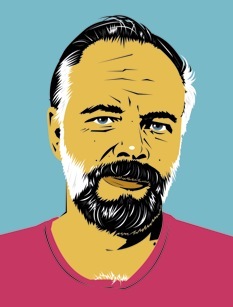
Most people know Philip K. Dick (PKD) by way of two main venues- either his science fiction novels or his movies (Minority Report, Blade Runner, etc). If fact, he is more famous now then he ever was in life. Such is the nature of being a visionary- the art world is rife with this. The thing I find fascinating about PKD though, is something most people have never heard about. PKD had many mystical experiences and he wrote about them.
His first encounter happened in Feb. 1974 and what followed would direct a line of inquiry for the rest of his life. After oral surgery and under the influence of sodium pentothal, he opened his door to a delivery girl who was wearing a gold necklace with a pendant in the shape of a fish- an early Christian symbol. The sun glinted off the fish producing a pink beam. The resulting mystical experience involved an encounter with an intelligence which allowed PKD to receive wisdom and clairvoyant messages. Throughout Feb. and Mar., the experiences continued with visions and more encounters. At one point while in trance, PKD received detailed medical information about his son and a life-threatening condition. Rushing the baby to the hospital, doctors indeed confirmed the condition and saved the boy.
In the years of exploration and searching that followed, PKD kept detailed journals, totaling some 9000 pages. Whittled down to 900 pages, Exegesis is a collection of his mystical experiences and the author’s attempts to make sense of what was happening to him. It makes for fascinating reading. There is real passion and honesty in his efforts to understand and deal with what was going on. On one hand, it’s very inspiring but on the other, it’s unsatisfying too. PKD never really accepts any one answer and scholars who view the material are also at a loss. What really happened to PKD during the period known as 2-3-74 (and after) and what did it mean?
PKD’s last novel was entitled The Transmigration of Timothy Archer. It is considered to be one of his best, and truly, it is a metaphysical work. Reading Exegesis and then Transmigration, the reader is encouraged to search for their own answers and fully engage the mind. Happy reading!
Filed under Spiritual/Mysticism
THE CHAKRAS AND SPIRITUAL GROWTH
I recently finished reading In Search of the Miraculous- Healing Into Consciousness by Eliza Mada Dalian. It’s a book for spiritual seekers wanting a manual on the path out of fear, pain, and suffering. This is a largely down to earth book that attempts to simplify the mystical and make it accessible to the average reader. It is not St. Theresa of Avila, The Cloud of Unknowing, a Buddhist sutra, or a Sufi text. Dalian grounds her work and for that we can be thankful.
The one section I found to be particularly useful was the part concerning the development of the ego-mind in each of the chakras. Chakras can be thought of as circular energy centers, and for our purposes, we will use the traditional Indian system of seven chakras. Dalian is careful to point out that spiritual development through the chakras is not necessarily a linear one. I take that to mean that life’s trials and tribulations can have us working in any chakra at any time or in several (which seems likely given the complexity of life). Let’s take a look at the spiritual work associated with each chakra and see if you can identify where you are in the process.
1st Chakra (Root): Foundations of Life: (located at the base of the spine)
Although some writings on chakras are different, Dalian identifies this chakra as the center for sexuality. The spiritual work here involves breaking through sexual fears, taboos, and conditioning.
2nd Chakra (Hara): Survival of the Physical Body: (located 2” below navel)
Here the spiritual seeker deals with fears or insecurities over your physical survival. Eventually you develop trust that the universe will take care of you.
3rd Chakra (Solar Plexus): Developing Self Power & Decision Making Ability: (located in solar plexus region)
Spiritual work here involves developing the courage to make decisions, set boundaries for protection, and accept the responsibility for one’s actions. Considerable maturing of the ego-mind happens here.
4th Chakra (Heart): Developing Unconditional Love: (located behind the sternum near the heart)
The heart chakra is the bridge between the lower instinctual chakras and the higher spiritual chakras. Dalian believes that 90 percent of humanity is stuck in the first three chakras and I’d tend to agree. The work of the spirit in the 4th chakra is to transform the body’s need for survival and the instinctual lust of self- gratification into unconditional love.
5th Chakra (Throat): Developing Individuality & Self Expression: (located at the base of the throat near the thyroid) The spiritual challenge here is to develop honesty and integrity that allows an individual to break free of old patterns, beliefs, and social conditioning to bring freedom of expression and individuality into the world. There is a turn inward for truth and compromising the soul is no longer possible. People begin to speak and live their purpose.
6th Chakra (Third Eye): Developing Wisdom & Intelligence: (located in the center of the forehead between the eyebrows)
Spiritual growth in the 6th chakra is associated with the revelation and expansion of psychic knowing. Sometimes called the opening of the third eye, the door to cosmic reality opens. An individual begins to develop extra-sensory abilities, intuition, and begins to glimpse who he/she really is in cosmic terms. Interconnectedness becomes apparent.
7th Chakra (Crown): Dissolving the Ego: (located at the top of the head, acts as the transition point between physical reality and cosmic reality)
This is what Buddhists call Enlightenment. It’s the ultimate goal, the end game. Here, spiritual work involves the death of the ego-mind and ultimate liberation. Through the 7th chakra, the life force moves from time/space reality into timeless reality of ever-evolving consciousness. It’s important to remember that enlightenment (or liberation) is available at every moment of life or at the point of physical death.
If you’d like to learn more about any of the specific challenges associated with the chakras or techniques and meditations that may be useful, grab a copy of the book. There is a whole chapter packed with resources to help. You can also visit the author’s website at www.madadalian.com.
Filed under Books, Spiritual/Mysticism
FUN WITH NEW WORDS
I just want to remind all my tweeps to refrain from photobombing me unless you want my ripped OH to set a micropig lose on you during one of your date nights.
It sounds ridiculous, and it is, but how many of you recognized six new additions to the online Oxford Dictionary? After all, language is an evolving art form and 2013 saw some interesting additions to the grand old tome. Usually by the time slang is incorporated into something as old and wise as the dictionary, many of us are already using the words or have heard them in some context. Old and wise as the dictionary? Dictionaries have been around forever, right? Not so fast.
The Oxford English Dictionary really isn’t as ancient and definitive (yes- a pun!!) as you might think. It wasn’t until 1857 that the Philological Society of London got together and started to think about putting together a dictionary of the English Language. After five years of hard work, the authors had reached the word “ant” and realized the project was going to take much longer than the planned ten years. Published in multiple volumes, The Oxford English Dictionary (affectionately known as the “OED”), was finally completed in 1928. If you want to read more about this Herculean task, Simon Winchester’s book, The Professor and The Madman: A Tale of Murder, Insanity, and the Making of the OED is a great read.

Language is all about communication and for us to understand each other in the ever evolving reality of today’s world, we have to keep up with the ways in which science, technology, entertainment, and social media change things. These are the areas that probably contribute most of the new words. Gone are the days when writers like Shakespeare created his own words and Lewis Carroll coined vorpal, chortle, galumph, and burble. But maybe not. New words are added every year and they have to come from somewhere. Maybe you will come up with the next slick phrase for something. In the meantime, let’s take a look at a few of the new entries for 2013.
OED Online Additions:
tweeps– (n.) your followers on Twitter
photobomb-(v.) to ruin a photograph by suddenly appearing in the camera’s field of view
as the photo is taken, usually as a prank or joke
OH- (n.) a person’s wife, husband, or partner (“Other Half”, I suppose)
Micropig– (n.) a very small pig usually kept as a pet (I’ve written a book about micro-
elephants as pets and, I firmly believe with this OED addition, it’s time for the book to
be published!!)
ripped-(adj) muscular body
date night & group hug– also made it in
Merriam Webster Additions:
flexitarian– (n.) someone whose meatless diet occasionally contains meat/fish
sexting– (v.) the sending of explicit messages or photos by cellphone
Other catchy additions: game changer, brain cramp, f-bomb, bucket list, aha moment, man cave, energy drink, cloud computing, craft beer
I’m off to look up cloud computing!
Filed under Book Review, Books
THE UNEXPLAINED POWERS OF ANIMALS
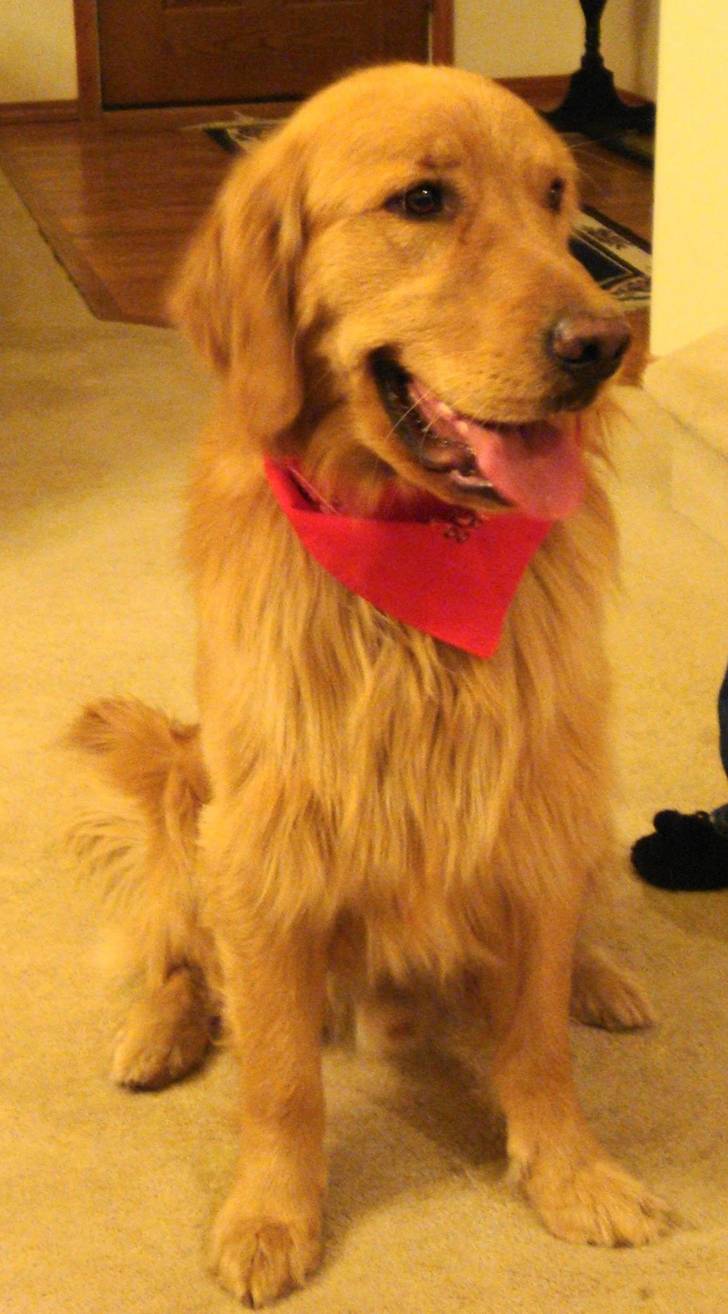
In the last two weeks, my husband and I have welcomed a new dog into the family. Luke is a friendly, almost two year old, Golden Retriever who has had a rough start in life. As we are getting to know each other, I’m drawn back into the routine and wonder of dog ownership. All the while, our elderly cat, George, raises an eyebrow and wonders why he can’t live in a one cat household.
I’ve been re-reading and thoroughly enjoying Dogs That Know When Their Owners Are Coming Home (And Other Unexplained Powers of Animals) by Rupert Sheldrake. Sheldrake is a biologist with a Ph.D. from Cambridge. As a pet owner himself he wondered why the stories of pet owners were so universally ignored by scientists. He felt that confining research to lab animals or wildlife observation misses entirely to capture a unique understanding man has with his companion animals. Sheldrake set out to mine this field for its gold. He interviewed hundreds of people with experience with our closest companion animals. These included dog trainers, vets, zoo keepers, kennel owners, and pet owners. Later, he conducted formal surveys in Britain and the US to quantify the frequency of the most commonly reported behaviors in the area of perceptiveness. He took a special interest in reports of dogs that seemed to know when their owners were coming home. These dogs displayed anticipatory behavior which included alertness and going to a particular spot to await their owner’s return. Using a scientific approach, Sheldrake set out to learn what was at work in this commonly reported behavior.
He examined the common explanations many have given for this behavior. An established routine by the owner, a dog’s superior sense of smell, a dog’s keen hearing ability, human cueing, and the use of a familiar mode of transportation did not seem likely. When these things were eliminated, case histories suggested a human/animal bond along the lines of telepathy.
The best way to understand this is to look at the case of Jaytee and owner Pam Smart. Pam often left Jaytee with her parents when she went out and over time, the parents noticed Jaytee would go to a window and wait for Pam to return. Often the parents had no idea when Pam would return but started to trust Jaytee’s signal because Pam did show up shortly after the dog would go to the window. The Smarts kept logs of the incidents and before long an opportunity arose to film what was really going on. A camera was set up to watch Jaytee and a film crew followed as Pam was sent out. At a randomly selected time Pam was told to return home. On split screen and with the times synchronized, the film shows Pam being told it’s time to return while Jaytee reacts at the same moment with alertness and ears pricked. While Pam walks to a taxi stand, Jaytee goes to a window to wait. Jaytee seems to be responding to Pam’s intention to return suggesting a mind to mind connection. Telepathy! Further research carried out in 1995 and 1996, confirmed that Jaytee anticipated Pam’s arrival at randomly chosen times and in unfamiliar vehicles. Psychic debunker, Dr. Richard Wiseman, conducted his own experiment and found the same result.
Work with filming several other dogs indicated that Jaytee is not alone in her ability. Surveys indicate that the behavior is widespread in all kinds of dogs. About 51% of dogs seem to do this. Males display the behavior slightly more than females. A close bond with a human does seem to be necessary to induce the dog to engage in the behavior. Sheldrake advances the idea of morphic fields to explain the mind to mind connection we have with our pets. This invisible connection is likened to a rubber that can stretch over large distances to facilitate communication.
Sheldrake’s book is a delight. There are many stories of dogs, cats, parrots, horses and other animals engaging in behaviors because they are so connected to us. In later chapters, animal empathy, telepathy, precognition, and sense of direction are covered. I invite you to explore this fascinating book and rediscover your pet through the eyes of science. And don’t forget to share your stories here. I spent a lot of time on dogs, but how many of you have cats who know when there is a vet appointment? Mine does and not because the cat carrier is left out.
Watch the videos:
Unexplained Power of Animals http://www.youtube.com/watch?v=tLgyFQZxs40
Science Deluded http://www.youtube.com/watch?v=kO4-9l8IWFQ

Filed under animals, Book Review, Books
THE LINE BETWEEN FACT & FICTION
Since the release of INTO THE LAND OF SNOWS, there have been some questions concerning what’s real and not real in the book. From the perspective of this being a book whose main theme concerns defining that very line, it’s a somewhat amusing question. I concern myself with it because I’ve heard some people dismiss the book as fantasy. But that’s not the whole story.
The book is set in the magical Himalayas surrounded by a rich cultural tradition. In such a place, my job as author was relatively easy. I chose concepts and ideas already present there to create a story around an American teenager. I made up very little.
Now as to the facts.
1. Locations- The map at the beginning of the book accurately depicts the placement of real locations Blake would visit along his route, had Blake actually gone there. But the careful reader will notice that about half way through the book, Blake continues his journey, but the map stops. This is because Blake has left the material reality of our world. An alternate reality opens up for him to fully experience the magic and potential for enlightenment.
2. Mallory& Irvine- The story of these climbers disappearing into legend while on the Third Step is true. The camera Mallory carried that day is still missing. We don’t know (for sure) who summited Everest first, although Hillary is officially credited with it.
3. Yetis- These animals/beings remain a mystery. Sherpa culture recognizes different kinds of yetis. I took great liberty with the Tantric yidam concept.
4. Baian-Kara-Ula Mountains- There are legends of star people and an origination story. As late as the 1950s, stories of the Chinese gathering evidence in the region exist.
5. Chakra points- There are many different systems. Tibetans usually depict 5 while Indian schools generally have 7. Research by Dr. Hiroshi Motoyama revealed the heart chakra produced measurable physical light.
6. Singing Bowls- Are used for healing.
7. Lung-gom-pa/Tumo/Yidam- Are Tantric practices.
8. Birds- The sneaky placement of rare birds in the region was my invention and homage to HH. The 16th Karmapa, who loved birds.
Filed under Books, Spiritual/Mysticism, Story behind ITLS
A BEATRIX POTTER CHRISTMAS
The Christmas tree is up and as I peruse ornaments collected over decades, I’m struck by how many of them are animals. There are cats and dogs, rabbits and squirrels, hedgehogs and birds (a humming bird, blue jay, goose, partridge), and cows and horses. At the back door, I struggle with getting sunflower seeds and nuts out for my squirrels. Three inches of snow have to be cleared before I can lay down six piles of seed to accommodate the squirrels. After our dog died, we started feeding birds off our deck but soon found the squirrels to be more entertaining. The birds still come to the feeder and the overflow trickles down to feed a family of field mice who will come onto the deck once the squirrels have had their fill. I won’t see the bunny today because the storm is intensifying but I take comfort that I’ll see him tomorrow once the snow melts off. He was here earlier though; because I see his tracks crisscross the yard. The ornaments on the Christmas tree and the activity in the backyard scream BEATRIX POTTER. I live in a world she knew.
Helen Beatrix Potter was born in 1866 in London. She is best remembered for her children’s stories featuring animals. As children, she and her brother spent many happy family vacations in Scotland and the English Lake District. Undoubtedly, the freedom to explore and interact with nature as a child grounded Beatrix in the natural world and fostered her connection to the land and its creatures. She and her brother made pets of wildlife including rabbits, a hedgehog, mice, and bats. Beatrix’s talents in drawing and painting emerged in childhood and were encouraged by her parents. In her teens, she wandered the Lake District sketching and immersing herself in nature. She took a keen interest in archeology, geology, entomology, and mycology. By the late 1890s, she had become adept at scientific illustration concentrating on watercolors of local fungi. She even had a paper on fungi reproduction presented at the Royal Botanic Gardens (women were not allowed to attend).
It wasn’t until her mid- 30s that Beatrix took a set of picture letters she had written to children and turned them into her first book. She had The Tale of Peter Rabbit printed in 1901. Publishers turned down the opportunity to publish the book failing to see its merit (think Harry Potter in the Edwardian Age, JK Rowling was also turned down by multiple publishers). Along came Frederick Warner who published The Tale of Peter Rabbit with color illustrations the following year. Beatrix’s book was highly successful and so were the two (The Tale of Squirrel Nutkin and The Tailor of Gloucester) that came soon after. From then on, Beatrix published two or three books a year. Later her interests in farming and preserving the Lake District became foremost in her life, but she is still remembered fondly for the animal characters and stories she created.
www.beatrixpottersociety.org.uk
Miss Potter (2006), the movie with Renee Zellweger & Ewan McGregor
Filed under animals, Book Review, Books