Tag Archives: spiritual

I Write Visionary Fiction- Who Knew?

Photo: Salvatore Di Giovanna (2008)

Photo: Salvatore Di Giovanna (2008)

I’ve always bristled at categorizing my writing although I recognize it’s important for marketing purposes. Writing for kids seemed natural because I always saw promise and openness in young people.  Adults can be very set in their identities, roles, and futures. Kids play with new ideas, try them out. The distinction between writing for older or younger kids also was easy. I like both age groups and have a tendency to jump from one to the other once I finish a given novel. Having to adapt to a different audience allows me an opportunity to play in different ways.

But then an agent or publisher wants to know sub-genre. What’s my sub-genre? Here’s where things get tough. Traditionally, my work would be lumped into fantasy or science fiction, sometimes paranormal. But is it?

Photo: Ole Anders Flatmo (2013)

Photo: Ole Anders Flatmo (2013)

This week I learned about a newly emerging genre called visionary fiction. According to the Visionary Fiction Alliance (VFA), this category of writing “embraces spiritual and esoteric wisdom, often from ancient sources, and makes it relevant to our modern life.” It does this without preaching to the reader. Furthermore, there is a strong emphasis on the growth of consciousness while often employing reincarnation, dreams, visions, and psychic abilities within the novel. Human characters in visionary fiction point to our limitless potential to transform and evolve.

I write visionary fiction. For more information on this genre and books which fall into it, visit the VFA by clicking on the link on the sidebar.

46 Comments

Filed under Books, writing

INTO THE LAND OF SNOWS (YA)

IntotheLandofSnows_200

30% OFF ON AMAZON

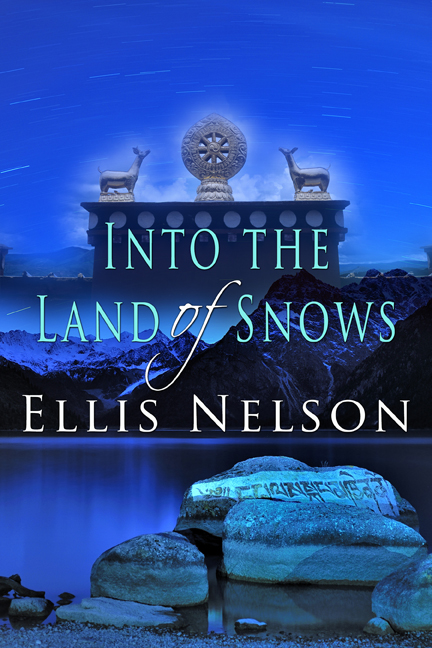
A troubled, sixteen year old Blake travels to Base Camp on Mt. Everest to spend time with his physician father.  When a deadly avalanche occurs, Dad is forced to rethink things and sends Blake off the mountain.  Now accompanied by a Sherpa guide, and in possession of a mysterious camera, Blake undertakes a journey which will challenge everything he believes.  In the magical Himalayas, he will be forever changed by what he experiences.

WHAT READERS ARE SAYING:

“Into the Land of Snows takes the reader into a world so different, so beautifully challenging in its vision of life that the reader is drawn-in completely.” Karin DeMer

“Well-written with engaging and believable characters, this story has it all: adventure, mystery, magic, and wisdom.” Naomi C. Rose

“Yes, this is a “YA” novel, but to call it a cross-over, or even transcendent, would not be an exaggeration.” Kevin Robinson

“The journey that you will be taken on is an exciting, fast-paced adventure that will have you gasping for breath in some parts and reading with your mouth wide open in amazement only to find yourself laughing a few pages later.” Book Peeps

AMAZON SALE:   Take 30% off!

8 Comments

Filed under Books, YA

THE LOST SECRET OF IMMORTALITY by Barclay Powers

Lost Secrets

I’ve been taking some classes on a particular branch of Gnosticism and went in search of a book to help me see “the forest through the trees.” Certain things that were being taught on the transmutation of energy and enlightenment started to feel restrictive and I wondered how other spiritual traditions approached the subject. Author Barclay Powers has a BS in East Asian Studies from Columbia University and has studied meditation, yoga, and martial arts for over thirty years. His book allowed me to gaze across several Eastern traditions while confirming almost everything Gnosticism outlined.

Photo: Mark Donoher

Photo: Mark Donoher

Once upon a time, the secrets of the East were tightly restricted to advanced followers of personal lineages. That has all changed with new translations of ancient texts and a proliferation of skilled teachers. The internet itself can even act as a guru. Ancient wisdom is available from India, China, Egypt, Tibet, Japan, and eastern and western alchemy. Powers sees a paradigm shift coming. Science is now looking at states of mind through brain imaging and he feels science will eventually look at the phenomena of the “rainbow body”* (the dissolving of the body into pure energy). When that happens, the world has the potential to change and manifest the best of humanity resulting in a global Bodhisattva* civilization.


Photo: Dennis Jarvis

Photo: Dennis Jarvis


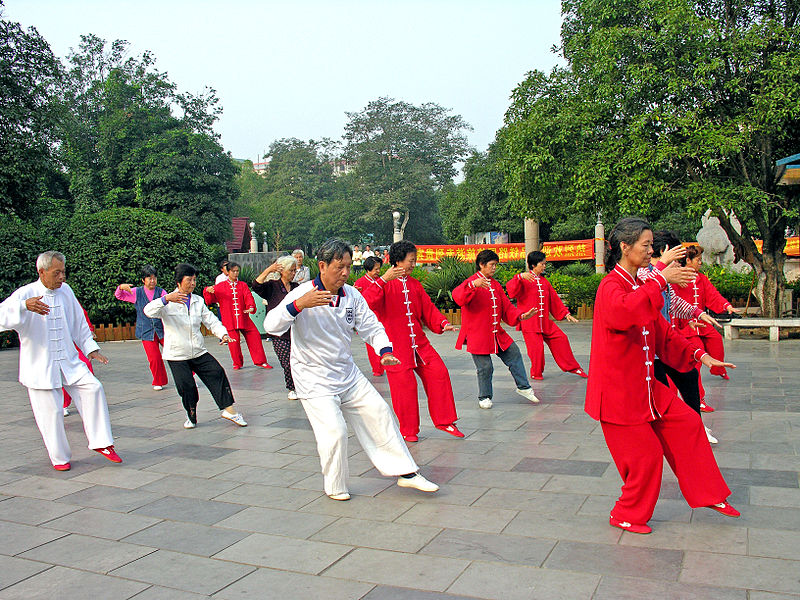
As we wait for science to catch up, individual practitioners all over the world are taking up techniques like meditation, yoga, tai chi, gi gong, kundalini awakening, and the internal martial arts. All of the methods begin in the body and ultimately unite the body, soul, and spirit. Instead of a psychological transformation, Powers is talking about a physiological process that spans traditions. The ultimate freedom of enlightenment is found when the individual transcends birth and death, as well as time and space. The bulk of the book is devoted to examining Indian (Kundalini), Chinese (Tao), and Tibetan (Tantra) teachings for their similarities of energetic enlightenment. This was a good book for getting an overview of the systems of enlightenment. I enjoyed learning more about Taoist philosophy and the difference between the internal and external martial arts. The book could be expanded to include more about western mysticism and the Kabbalah, but those are not Powers’ areas of expertise. This is probably not a book for someone without burning questions about the nature of reality and enlightenment. For the novice, these practices will, at times, be shocking. They are meant to be having spent a millennia being well guarded by the masters of many traditions.

Photo: Joe Mabel

Photo: Joe Mabel

*Rainbow body- a phenomena well-recorded in the East, especially when a great spiritual teacher dies

*Bodhisattva- someone who postpones full Enlightenment to return to help others: the ultimate expression of compassion

13 Comments

Filed under Book Review, Books, Buddhism, Spiritual/Mysticism, Uncategorized

ENTER TO WIN A FREE COPY OF MY BOOK

snow scene

TreeHouse Arts is running a contest through July 10th (Th.). Enter with a poem about snow. Winner’s poem will be published on their site. Good luck!

Part III: Summer Reading Giveaway and Haiku Contest!

Into the Land of Snows

4 Comments

Filed under Book Review, Books

A LOOK AT SYNCHRONICITY

 Buddha

Years ago when I returned to Buddhism and began meditation, I opened a door which, even after ten years, remains open. We can call them synchronistic events (SEs), meaningful coincidences. They come and ping in my environment especially when I’m working intensely on something. The easiest examples to share have to do with my writing. When I was writing INTO THE LAND OF SNOWS, all manner of Tibetan symbols and objects showed up in my environment. Where before I knew nothing about Tibet, and relatively little about Buddhism, I started to see various things each and every day. Sometimes it was funny. Sometimes it was alarming- what did it mean? Why was it happening? Thankfully, my immediate family was supportive and I explored various ideas before finally embracing the idea that these events were like warm embraces from the universe.

Synch

Enter psychologist, Kirby Surprise who has written a book called Synchronicity- The Art of Coincidence, Choice, and Unlocking Your Mind. He was about to challenge my warm, fuzzy world. Has he won or can we come to a… middle way? Some believe these coincidences are tied to archetypes and Jung’s collective unconscious. Others see the hand of God or some unifying force at work. In Surprise’s career, he has seen clients attribute these “signs” to Gods, saviors, demons, devils, nature spirits, people with extraordinary powers, ETs, ghosts, and/or secret agencies or governments. Our psychologist proposes an alternative. We cause our own SEs because the universe mirrors us. Therefore, what we project is what we get. Many mystical traditions (becoming co-creators) and science itself seems to support the idea.

Current theories of quantum physics play with the idea that the universe has 11 dimensions. In N Space, there are an infinite number of parallel universes. And then there is M Space which has probable universes. Brain activity as thoughts and powered by emotion, move across these spaces creating change. In a sense, we exist in in infinite number of alternative and probable universes all at the same time. The changes we create in these universes ripple back to us as SEs. We are indeed very powerful- but limited according to Surprise, because we can only travel so far. Rhine’s early parapsychology experiments at Duke University seem to suggest we influence our world by 3-5% and that may reflect a typical SE. However, there are exceptional cases of SE which are life changing and may be more in line with a 60-90% change.

stage

All well and good. So what can we do with SEs? Why are they important? SEs give us insight into who we are and how the world functions. For those attuned to SEs, they shake up our world and force us to look at the big questions- who are we, what is the nature of reality? Surprise cautions us here because whatever our belief structure is, meaningful coincidences will conspire to confirm it. Believe a loving, powerful God underlies everything, he shows up. Believe the devil is at the heart of your misery, he’s there too. How about a shadow government conspiring with aliens to take over the world? Suddenly, conspiracy theories are everywhere and intruding into your daily life. While SEs are often fun and exciting, they can also be scary and throw your world into chaos. The trick here is to maintain a sense of humor without believing everything we are being shown. We are the actor on the stage as well as the playwright.

Not that everyone is happy with the book. Surprise does explore the idea that SEs point to deep connectedness, but he is pretty tough on organized religions sometimes putting it on the level of his patient’s other delusions. And while he does admit that SEs can be powerful at times, he tends to dismiss their overall importance. I think he’s done a good job in opening up some speculation on how the mechanics of SEs work, but he may have only part of the story. We need magic and mystery.

Image by: Kevin McGill

Image by: Kevin McGill

Surprise’s book gives some exercises to try so that you can create thoughtforms and see what happens. He goes to great length stressing that everyone has this ability, but many aren’t aware of it. You can live a full life and never recognize SEs- but for those of us who do, it will permanently shift your frame of reference. All spiritual paths tell us this, once you open the door and step through, you can never go back. Some are not up to the journey.


53 Comments

Filed under Book Review, Books, Spiritual/Mysticism

SHAKING MEDICINE by Bradford Keeney

Shaking Medicine

Bradford Keeney’s book, Shaking Medicine, takes us into the heart of healing with ecstatic movement.  While the East and West delights in powerful, relaxing healing modalities of meditation and acupuncture, Keeney bravely asserts we are missing the other half of healing medicine- the shaking forms of arousal from Africa and other cultures.  Mostly absent from our culture are the healing techniques of The Shake and it’s time we got over our prejudice.  Keeney believes that it is only when we fully cycle through being hyper-aroused and then deeply relaxed, can we powerfully realign and evolve in a pattern consistent with holistic medicine.  Fifty years ago or so, meditation was new and seen as a fringe movement and now it is so accepted and commonplace, doctors recommend it.  Keeney predicts Shaking Medicine is coming west and it’s healing benefits will be open to all.  At first I wondered about that, but my latest foray into my local meetup groups, revealed that there is a group dedicated to ecstatic dance.

Of course, some of the hurdles for society to overcome are the immediate associations we have for those shaking.  Historically scholars (and the general public) have associated ecstatic movement with mental or neurological disease.  Some would even go so far as to say evil or satanic, but most of that is either blatant prejudice or cultural ignorance.  There is also a fear of being out of control that western cultures so value.  Conformity and predictability are pillars of our society, what would happen if everyone shook?  Would we….lose it?  And those still prevalent fears have led Keeney to call shaking The Last Great Taboo.

Photo by: Justin Hall

Photo by: Justin Hall

So what is shaking all about?  Simply put it’s an experience, a journey into the ecstatic state brought forth by trembling joy.  You tremble, quake, and shake losing control and entering into healing and transformation.  Like other mystical practices, you surrender to higher authority and wisdom.  For Keeney, it’s the thing most missing from our spiritual table in the West.  Cultures who practice it value it for its ability to renew and restore vitality.  It takes us into the unknown and connects us to life in all its forms.

Assembly of Quakers, London. Engraving.

Assembly of Quakers, London. Engraving.

This is a book I truly loved.  I knew nothing about the subject and enjoyed visiting the diverse cultures Keeney portrays.  Lest you think shaking is confined to the African continent, Keeney starts out with a tale about settlers in the Pacific Northwest and later the Quakers and Shakers all of whom participated in ecstatic movement in pursuit of spiritual growth.  Keeney has strong ties to the Kalahari bushmen earning the title of Heart of Spears, a title of respect acquired by learning and experiencing their shaking medicine.  Some of the other cultures explored in the fascinating book include the: Spiritual Baptists of St. Vincent (Caribbean), African American Church, Seiki Jutsu (Japan), and Hindu/Buddhist traditions (India).  The book comes with a CD and instructions to begin your own journey of discovery.  Highly recommended!

13 Comments

Filed under Book Review, Books, Spiritual/Mysticism

WELCOME BACK FRANCIS


St. Francis, 13th Century

St. Francis, 13th Century

A couple of years ago I listened to one of those Great Courses lectures on St. Francis of Assisi. I patiently waited through all the talk about his early beginnings, his military experience, his illness, his rejection of society, and his eventual creation of a new order. Most of it was dry and rather matter-of-fact. Where was the meat? Where was the mystical Francis I’d heard about? Where were the stories, the hagiography, that made Francis one of the most loved and recognized saints of all time? I walked away from the lectures shaking my head in disappointment. It wasn’t until later that my reading caught up with the reality. I had been very naïve believing a history and art professor would ever broach the subject of mystical experience. It wasn’t done; even an academic degreed in comparative religion would shy away from this discussion. How sad because isn’t that what many of us hunger for?

Francis has whispered from time to time to me. A statue in someone’s garden, the visit of the Pope this fall to Assisi, a well-known spiritual teacher planning a workshop there, St. Francis hospital visible from my new house. Then recently, Pope Francis was proclaimed Time’s Man of the Year. Francis is present in ways he hasn’t been in a long time. What can a twelfth century saint have to say to the modern world? Maybe a lot.

St. Francis in Ecstasy Caravaggio, 1594

St. Francis in Ecstasy
Caravaggio, 1594

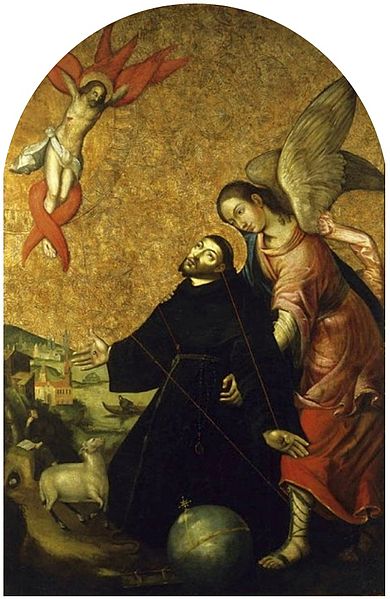
Let’s dispense with the relevant historical details (and don’t worry it won’t take twelve lectures) to seek out a deeper meaning for Francis in our time. Francis was born Giovanni di Pietro di Bernadone around 1181. Born into a wealthy merchant family, he enjoyed all the advantages of his station and even went off to war fighting for Assisi. Some kind of vision compelled him to return home where he subsequently lost his zeal for the kind of life he’d been previously living and he began to reject it. He left his father’s silk business, took to serving the poor and lepers, and gained a following. Francis eventually went on to found the Order of the Friars Minor, the Order of St. Clare, and the Third Order of St. Francis.

It was in San Damiano that Francis had a powerful mystical experience which was to frame his life’s work. While praying before an icon, he had a vision of Jesus who spoke to him and said, “…go and repair My house which, as you can see is falling into ruins.”  Francis’ interpretation resulted in him raising money to repair the physical church he was in. Of course, Francis’ mission was not a literal one and called him instead, to restore the institution of the Church.

Stigmatization of St. Francis Matthias Kargen, 1664

Stigmatization of St. Francis
Matthias Kargen, 1664

Although never ordained, Francis’ calling was manifested in a simple life of poverty emulating the life of Christ. His followers were “To follow the teaching of our Lord Jesus Christ and walk in his footsteps.” He was devoted to his spiritual practice and at times would withdraw from life to develop it. He had guiding visions throughout his life, was seen levitating, and was the first recorded person to receive the wounds of Christ (stigmata). Francis was a mystic, but he was also a mystic who brought back what he learned and shared it.

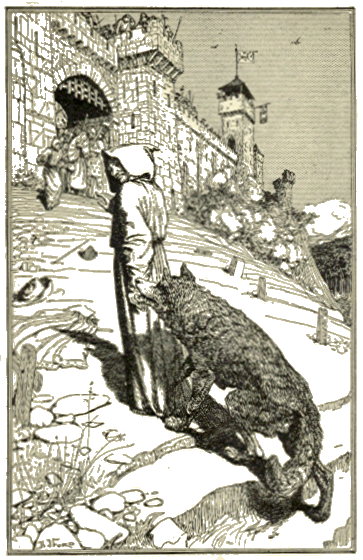
St. Francis leads the wolf of Gubbio. HJ Ford, 1912

St. Francis leads the wolf of Gubbio.
HJ Ford, 1912

Two of the most widely known miracles told about Francis involve his ability to work with animals. In the town of Gubbio, a wolf threatened the townsfolk. Francis intervened and made a pact with the wolf. Thereafter, the wolf remained peacefully near the village and the people fed it. The other story concerns an incident where Francis was trying to preach over the noisy chatter of swallows. He asked the birds to be silent and to the amazement of the crowd, they did. That famous story is the reason why Francis statues and art depictions often have a bird. Francis is the patron saint of animals and the environment.

As we draw near to Christmas and many churches display a nativity scene (Francis is credited with creating the first nativity scene), I hope you will remember a simple saint who lived an exemplary life devoted to poverty and service. His mystical connection to the Universe (God, if you prefer) was the powerhouse of his practice.

For More:

Canticle of the Sun: http://en.wikipedia.org/wiki/Canticle_of_the_Sun

St. Francis Peace Prayer: http://en.wikipedia.org/wiki/Prayer_of_Saint_Francis

Book: The Life and Prayers of St. Francis

44 Comments

Filed under animals, Book Review, Books, Spiritual/Mysticism

WHO WANTS TO BE NORMAL ANYWAY?

“The trembling in academic journals over how science must be falling apart because of positive evidence for psi is a desperate attempt to maintain a stable worldview where psi can’t exist.” Dean Radin, PhD

Welcome back old and new friends. It’s been a while and I wanted to share something I’m really enjoying. I’m reading Supernormal by Dean Radin. From the mystical side I’ve known that many (if not all) spiritual traditions hold that spiritual progress, especially through meditation practice, directly leads to the emergence of what we commonly call psychic ability (PSI). And these traditions also warn the seeker not to be distracted or side-lined when it happens because the spiritual path’s goal is Truth or union with the Universe (God, divine, Absolute, Reality, etc.). Leave it to scientist Dean Radin to put this to the test.

51jTUbPpTYL__BO2,204,203,200_PIsitb-sticker-arrow-click,TopRight,35,-76_AA300_SH20_OU01_

About two thousand years ago, Pantanjali (The Yoga Sutras) wrote in rather cookbook terms that if you sit down and quiet the mind and dedicate yourself to this practice, you will eventually gain supernormal powers (siddhis). Elementary siddhis as outlined by the text include telepathy, clairvoyance, precognition, and psychokinesis. And to open your mind further, Pantanjali goes on to discuss the more advanced siddhis of invisibility, levitation, invulnerability, and superstrength (homage to comic book superheroes here). Are you still with me or are you rolling your eyes and scoffing? I sense a few of you are… smiling.

If you’ve read some of my previous work, you already know that science long ago established the existence of precognition with the Rhine experiments and the meta- analysis which followed (Honorton/Ferrari). There is statistically significant evidence for precognition although its effect is small in the general population. The point is that it’s there.

In the 1990s Radin went on to look at presentiment (prefeeling instead of preknowing). Radin used a random number generator and a stock of color photos which contained calming or emotional images that were flashed on a computer screen. He collected the subject’s reaction via skin conductance levels using electrodes attached to the palm. (Radin gives an exhaustive description in the book in case anyone wants to examine all the experimental protocols.) The results indicate that people react physiologically BEFORE they see the image on the screen. The experiment is strong evidence for presentiment even though the subject does not have conscious awareness of the image.

Back to Pantanjali. In a fairly complicated experiment, Radin looked at a group of meditators and non-meditators (sixteen individuals total). Meditators with a lot of experience in non-dual techniques often can achieve a deep state of absorption (Samadhi/Samyama) where time and space evaporate. The yogic perception is that an underlying deeper reality exists beyond time and space. In this reality, past and future influence the present. We are used to thinking about the past influencing the future, but it may also be that the future is at work as well. In this way of looking at things, presentiment/precognition can be viewed as the future influencing present awareness.

In the experiment, 32 channels of EEG were measured before, during, and after exposure to unpredictable light and sound stimuli. If meditation practice developed a way to extend consciousness through time, then we would expect the meditators to exhibit prestimulus differences in EEG responses over the control group (non-meditators). The research revealed that meditators did show brain activity that anticipated an audio signal. Non-meditators did not show any significant prestimulus differences between light v. sound.* The outcome supported the idea that the meditators were accessing the future in a way consistent with Pantanjali’s description.

A reversal of the cause-effect sequence is compatible with classical and quantum physics. Physicists already accept time reversal for the quantum world, but the evidence for precognition suggests it also takes place in the macro-world.

The evidence for precognition/presentiment may excite you or it may make you very nervous but either way, it should make you pause to consider how our worldview must change. Science has to take us to new places and challenge us to think and see in new ways. Scientific laws are not carved in stone and to reject all PSI research because it doesn’t fit a materialistic worldview only slows down the inevitable. We are starting to see the ground shift. Seventy-five years of scientific evidence from all over the world indicates that humans do possess one of the siddhis Pantanjali listed. We can glimpse the future.

More Summer Reading:
Emotional Freedom (Energy Psychology)- Judith Orloff, MD
The Biology of Belief- Bruce Lipton, PhD
The Way of the Explorer- Edgar Mitchell (astronaut)
The Genie in Your Genes- Dawson Church (epigenetics)

*Reasons why the non-mediators didn’t exhibit presentiment (in this small study) may be due to the stimulus not being emotionally charged and/or the choice of measuring physiological changes might not be the best one.

67 Comments

Filed under Book Review, Books, PSI, Spiritual/Mysticism, Uncategorized

IMAGINE COMPASSION NOW

photo: Kopp, 2006

photo: Kopp, 2006

Back in 2008, Karen Armstrong, a religion scholar gave a TED talk. In it, she proposed a movement by multi-faith, multi-national groups which would promote compassion worldwide by activating the Golden Rule. Her idea led to the development of the Charter for Compassion. The Council of Conscience, consisting of representatives of many faiths and many national groups, together with input from thousands who responded online resulted in the current Charter for Compassion. The goal of the Charter is to highlight common ground amongst all major religions and all religious traditions. Specifically, they all share compassion and the Golden Rule.

Since that time, tens of thousands have signed the Charter online. Public events, discussions, and readings of the Charter have taken place bringing compassion more and more into public awareness. Now it’s our turn. This is a call to action to connect to the heart and manifest a bigger Truth than any one of us. How Karen’s idea takes form (or fails to take form) depends on our actions. I don’t really know what my part in this will be and I don’t know what your role is either. I’ve read and signed the Charter and brought it into my consciousness. Now it’s your turn. Here’s the Charter.

THE CHARTER FOR COMPASSION

The principle of compassion lies at the heart of all religious, ethical and spiritual traditions, calling us always to treat all others as we wish to be treated ourselves. Compassion impels us to work tirelessly to alleviate the suffering of our fellow creatures, to dethrone ourselves from the centre of our world and put another there, and to honour the inviolable sanctity of every single human being, treating everybody, without exception, with absolute justice, equity and respect.

It is also necessary in both public and private life to refrain consistently and empathically from inflicting pain. To act or speak violently out of spite, chauvinism, or self-interest, to impoverish, exploit or deny basic rights to anybody, and to incite hatred by denigrating others—even our enemies—is a denial of our common humanity. We acknowledge that we have failed to live compassionately and that some have even increased the sum of human misery in the name of religion.

We therefore call upon all men and women ~ to restore compassion to the centre of morality and religion ~ to return to the ancient principle that any interpretation of scripture that breeds violence, hatred or disdain is illegitimate ~ to ensure that youth are given accurate and respectful information about other traditions, religions and cultures ~ to encourage a positive appreciation of cultural and religious diversity ~ to cultivate an informed empathy with the suffering of all human beings—even those regarded as enemies.

We urgently need to make compassion a clear, luminous and dynamic force in our polarized world. Rooted in a principled determination to transcend selfishness, compassion can break down political, dogmatic, ideological and religious boundaries. Born of our deep interdependence, compassion is essential to human relationships and to a fulfilled humanity. It is the path to enlightenment, and indispensable to the creation of a just economy and a peaceful global community.

To sign the Charter for Compassion: www.charterforcompassion.org/the-charter
If you do sign it, let me know in the comments below. Please feel free to reblog, FB, or tweet this.

60 Comments

Filed under Political, Spiritual/Mysticism

WHEN DEE MET KELLEY

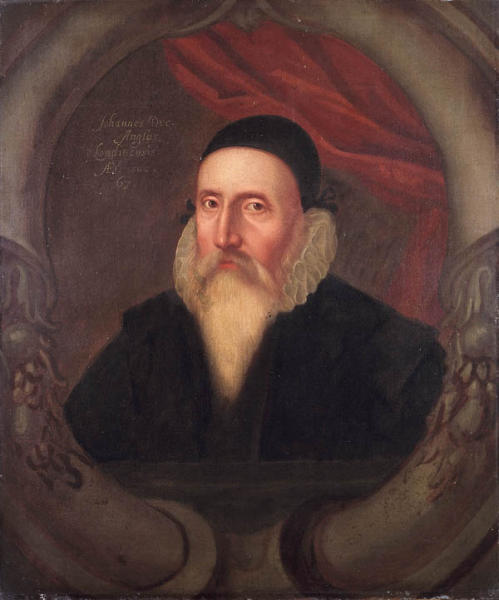
John Dee Portrait- Ashmolean Museum

John Dee Portrait- Ashmolean Museum

February, 1582

Mortlake

Light flooded through the west window illuminating the simple study. The doors were closed against the noise of his toddler children. Within was sanctuary. Some especially interesting manuscripts had been hidden in a traveling bag secreted inside the chimney. The comings and goings at Mortlake had drawn many rumors which John Dee had carefully tried to sidestep. Owning one of the best libraries in Europe drew many scholarly types. Dee’s interests included math, astronomy, astrology, navigation, and the occult. He had access to the powerful ministers of Queen Elizabeth I’s court as well as to the Queen herself. Dee’s interests were not unique because many at court dabbled, but Dee hated the caricatured image created by the term “arch conjuror” he had been given in some circles.

Dee called his work optical science and for him crystal gazing was just another way of discovering how the universe worked much like using a telescope to understand the motion of the stars. But Dee had a problem. Not having the power to scry himself, he had to rely on others to do the gazing for him. Previously he had worked with Barnabas Saul but Saul had disappeared a few days earlier. Now a man named Talbot (later known as Edward Kelley) had appeared on his doorstep claiming to be able to do what Saul had done.

Dee’s expectations were modest but using a crystal ball, Talbot soon had a vision of the archangel Uriel. Unable to resist access to such a highly placed spirit, Dee asked about a coded manuscript he possessed. Uriel told him that The Book of Soyga (a copy resides in the British Library) was revealed to Adam in paradise and could only be understood with the help of Archangel Michael. In a later session, Uriel told Dee to construct a table to facilitate future angelic communications.

The table was to be set into four divine wax seals and each seal had to contain an image revealed by the angel. On the top of the table, resting on the Seal of God, a crystal ball or shew stone would be placed.

Objects belonging to Dee at the British Museum (photo: British Museum)

Objects belonging to Dee at the British Museum (photo: British Museum)


Later in the week, Talbot had a vision of the Archangel Michael anointing Dee. There was no doubt in Dee’s mind that some very special work lay ahead of the two men. Over the next decade Dee and Kelley would receive and communicate in Enochian, a fully developed angelic language. People still puzzle over those messages and their importance.

For more investigation:

John Dee’s Conversations with Angels– Deborah E. Harkness

The Queen’s Conjuror– Benjamin Woolley

John Dee’s Five Books of Mystery– Original Sourcebook of Enochian

Magic- Joseph H. Peterson

The Complete Enochian Dictionary– Donald C. Laylock

Enochian Alphabet- Vincent Bridges (YouTube- video, the importance of Dee’s

communication )

31 Comments

Filed under alchemy, Books, Spiritual/Mysticism