Tag Archives: Ellis Nelson

THINGS THAT GO BUMP IN THE NIGHT

Sir Robert Ottley, Royalist

Sir Robert Ottley, Royalist

 Continuing with JH Brennan’s, Whisperings: The Secret History of the Spirit World, I wanted to mention the research conducted by Dr. A.R. G. Owen a few years after Bacheldor’s work. A Canadian research group led by Owen wondered if they could create a ghost.

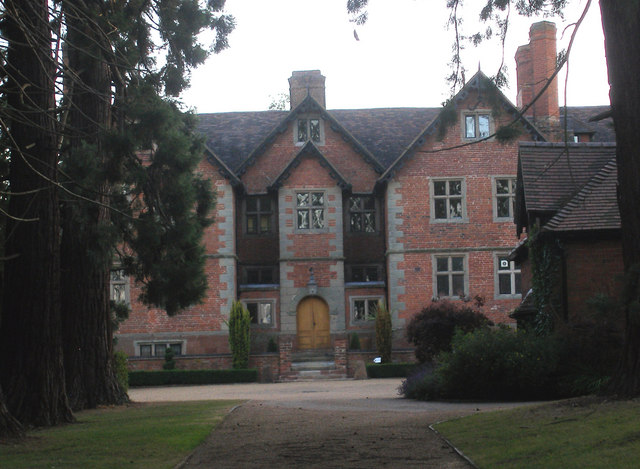
Working a lot like fictional writers, the group created “Philip” and gave him a whole history. Philip had been a Cavalier officer during the English Civil War and had resided at Diddington Hall (a real place). The story of his life was a fabrication and went like this. Although Philip was married, he had an affair with a gypsy girl which had enraged his wife. The wife managed to have the girl denounced as a witch and burned. So distraught was Philip that he threw himself off the battlements of the hall committing suicide. Poor Philip!

Diddington Hall. Photo: John Evans

Diddington Hall. Photo: John Evans

The group held séances for a year trying to contact the Cavalier with no luck. I think it’s pretty amazing they’d keep at it that long with no result. One of the group eventually read Bacheldor’s work and wondered if a lighthearted atmosphere might make a difference. Giving it the old college try, they sang and told jokes, and oddly enough, after a few more séances, things started to happen. They heard their first rap and the table slid across the floor. Success at last! Encouraged, someone asked if Philip was doing it and was answered back with a loud rap. Having contacted the entity, the group used the one knock for yes and two for no method, to go on to communicate with Philip. Phillip affirmed the basic facts of his fictional life story and went on to reveal additional details the group had not created. The séances also produced various physical phenomena. The most spectacular was recorded for a television program. A table climbed a set of steps joining the panelists being interviewed.

Battle of Marston Moor, 1644

Battle of Marston Moor, 1644

I’ll leave you to ponder the significance of the Philip research. As a fiction author, I’m already concocting plots about how the other side conspires to have a good laugh at Owen and the other sitters.

12 Comments

Filed under Book Review

Time to Get Your Halloween On

whisperers

JH Brennan’s, Whisperers: The Secret History of the Spirit World explores the powerful undercurrents flowing just beneath the surface of the history we’re taught in school. Whether or not you believe in ghosts, spirits, or faeries, is immaterial (pun intended). The fact that various phenomena have been occurring throughout pre-history right up until today is undeniable. Brennan doesn’t set out to prove the existence of ghosts as disembodied, earth-bound entities but rather he examines the effect they may have played on history.

It’s a fascinating book with lots of little surprises. I read the last two sections first and went back to the older histories later. While I love a good ghost story (and Brennan does share two personal experiences), it was some of the research into the phenomena that caught my attention.

ghost1

There have been many theories put forth to explain all manner of ghostly happenings, but none seem to fully explain everything. Indeed, although we tend to lump everything under the vast heading of the paranormal (or PSI), different phenomena may be different things entirely.

Brennan cites two studies which are fascinating. I’m going to outline the first one here and then take on the second in a follow-on piece.

In 1966, Kenneth Batcheldor (a UK psychologist) published findings in the Journal of the Society for Psychical Research concerning the levitation of tables. Recall from the Victorian era, the spiritualism craze which involved spirit contact and various physical manifestations including rappings, materializations, levitation, etc.

ghost2

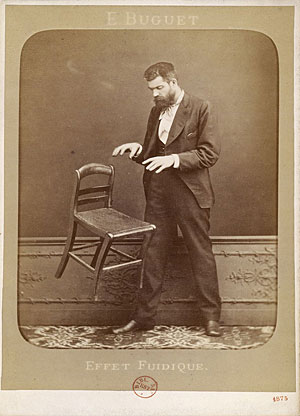
In 1964, Batcheldor conducted a series of 200 séances with a small group of sitters. In 120 of the sessions, no phenomena were observed but in 80 of them (40%), physical phenomena was seen. While table movement early in the trials could possibly be dismissed by involuntary muscle movement, by the 11th session, Batcheldor watched as a table rose and floated in the air. At this point he couldn’t rule out fraudulent means so he worked with an engineer to tighten his experimental controls. Once the controls were in place, the phenomena stopped- but over time, the phenomena returned. This was a pattern Batcheldor saw over and over again. Introduced slowly, the sitters appeared to acclimate to the controls and the happenings would start anew. Astonishingly enough, Batcheldor observed not only table movement and levitation, but a whole range of spirit phenomena reported by Victorian spiritualists and witnesses. Amongst the phenomena observed were rapping sounds, breezes, lights, the feeling of being touched, movement of objects including the pulling back of chairs, apports, and holding the table to the floor so it couldn’t be lifted.

levitation

The experiments seem to indicate people have the ability, through unconscious means, to produce a variety of physical phenomena. While it doesn’t definitively rule out spirit action, it does point toward interesting avenues for further research. Batcheldor theorized that early movement of the table due to muscle contractions conditioned sitters to expect phenomena and opened them up to actually producing it. This is something later PSI researchers discovered when examining other kinds of phenomena in a lab setting. Belief makes a difference, and in Batcheldor’s case, seeing the phenomena may have led to its manifestation. So here we learn nothing really about spirits, but it does indicate how little we (or science) know about the mind.

The book on Amazon:http://www.amazon.com/Whisperers-Secret-History-Spirit-World-ebook/dp/B00EOARZGY/ref=sr_1_1?s=books&ie=UTF8&qid=1395336244&sr=1-1&keywords=whisperers+the+secret+history+of+the+spirit+world

8 Comments

Filed under Uncategorized

Counting Down the Last Day

elephants never forgotten 2

Last day to join my Thunderclap!

https://www.thunderclap.it/projects/30885-a-book-is-born

Oct. 2, 2015: Thanks to everyone who helped make my Thunderclap campaign a success. With your generosity our combined social outreach was over 200,000! I could never have done that on my own. Thanks again!

2 Comments

Filed under book launch

WELCOME BACK FRANCIS!

With Pope Francis visiting the US, it’s time again to reflect on his namesake. This is a reblogged post, so some might remember it.

St. Francis, 13th Century

St. Francis, 13th Century

A couple of years ago I listened to one of those Great Courses lectures on St. Francis of Assisi. I patiently waited through all the talk about his early beginnings, his military experience, his illness, his rejection of society, and his eventual creation of a new order. Most of it was dry and rather matter-of-fact. Where was the meat? Where was the mystical Francis I’d heard about? Where were the stories, the hagiography, that made Francis one of the most loved and recognized saints of all time? I walked away from the lectures shaking my head in disappointment. It wasn’t until later that my reading caught up with the reality. I had been very naïve believing a history and art professor would ever broach the subject of mystical experience. It wasn’t done; even an academic degreed in comparative religion would shy away from this discussion. How sad because isn’t that what many of us hunger for?

Francis has whispered to me from time to time. A statue in someone’s garden, the visit of the Pope this fall to Assisi, a well-known spiritual teacher planning a workshop there, St. Francis hospital visible from my new house. Then recently, Pope Francis was proclaimed Time’s Man of the Year. Francis is present in ways he hasn’t been in a long time. What can a twelfth century saint have to say to the modern world? Maybe a lot.

St. Francis in Ecstasy Caravaggio, 1594

St. Francis in Ecstasy
Caravaggio, 1594

Let’s dispense with the relevant historical details (and don’t worry it won’t take twelve lectures) to seek out a deeper meaning for Francis in our time. Francis was born Giovanni di Pietro di Bernadone around 1181. Born into a wealthy merchant family, he enjoyed all the advantages of his station and even went off to war fighting for Assisi. Some kind of vision compelled him to return home where he subsequently lost his zeal for the kind of life he’d been previously living and he began to reject it. He left his father’s silk business, took to serving the poor and lepers, and gained a following. Francis eventually went on to found the Order of the Friars Minor, the Order of St. Clare, and the Third Order of St. Francis.

It was in San Damiano that Francis had a powerful mystical experience which was to frame his life’s work. While praying before an icon, he had a vision of Jesus who spoke to him and said, “…go and repair My house which, as you can see is falling into ruins.”  Francis’ interpretation resulted in him raising money to repair the physical church he was in. Of course, Francis’ mission was not a literal one and called him instead, to restore the institution of the Church.
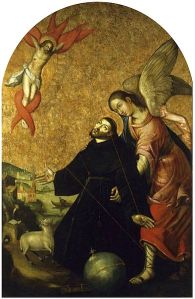
Stigmatization of St. Francis Matthias Kargen, 1664

Stigmatization of St. Francis
Matthias Kargen, 1664

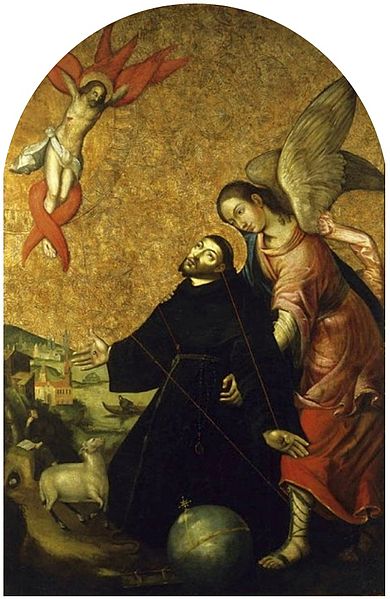
Although never ordained, Francis’ calling was manifested in a simple life of poverty emulating the life of Christ. His followers were “To follow the teaching of our Lord Jesus Christ and walk in his footsteps.” He was devoted to his spiritual practice and at times would withdraw from life to develop it. He had guiding visions throughout his life, was seen levitating, and was the first recorded person to receive the wounds of Christ (stigmata). Francis was a mystic, but he was also a mystic who brought back what he learned and shared it.
St. Francis leads the wolf of Gubbio. HJ Ford, 1912

St. Francis leads the wolf of Gubbio.
HJ Ford, 1912

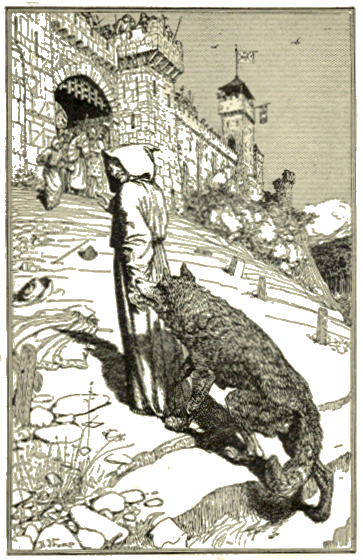
Two of the most widely known miracles told about Francis involve his ability to work with animals. In the town of Gubbio, a wolf threatened the townsfolk. Francis intervened and made a pact with the wolf. Thereafter, the wolf remained peacefully near the village and the people fed it. The other story concerns an incident where Francis was trying to preach over the noisy chatter of swallows. He asked the birds to be silent and to the amazement of the crowd, they did. That famous story is the reason why Francis statues and art depictions often have a bird. Francis is the patron saint of animals and the environment.

As we draw near to Christmas and many churches display a nativity scene (Francis is credited with creating the first nativity scene), I hope you will remember a simple saint who lived an exemplary life devoted to poverty and service. His mystical connection to the Universe (God, if you prefer) was the powerhouse of his practice.

For More:

Canticle of the Sun: http://en.wikipedia.org/wiki/Canticle_of_the_Sun

St. Francis Peace Prayer: http://en.wikipedia.org/wiki/Prayer_of_Saint_Francis

Book: The Life and Prayers of St. Francis

*****************************************************************************************************************

JOIN MY THUNDERCLAP:

https://www.thunderclap.it/projects/30885-a-book-is-born

17 Comments

Filed under mysticism, spiritual

Only 9 More Needed to Launch Thunderclap

On October 1st, please help me send a one-time message to announce my new book Elephants Never Forgotten. I need just 9 more participants or the campaign won’t launch.  I need you, every one of you. Help!

https://www.thunderclap.it/projects/30885-a-book-is-born

BUY FROM AMAZON

BUY FROM MUSEITUP


2 Comments

Filed under book launch, Books, Uncategorized

Can You Still Be a Post-Materialist?

coins

Some time ago I wrote about post-materialism and it sparked a lot of interest. Some things have changed. My son has graduated and is struggling like most young people today. A generation that grew up believing they could do anything, be anything, is discovering that truth my generation sold them was wildly over-blown. Maybe even a lie. And a good lot of the twenty-somethings did everything we told them to. They went to college, got their degrees, took on debt when necessary, and tumbled full force into the real world. Young people with so much potential and so much to offer are stuck in minimum wage jobs, if they can get those. Many have bounced back home. Never have we seen so many twenty and thirty-somethings living in their parents’ basements. Never!!

This situation has become a topic I return to again and again, and it’s with a very heavy heart. I look at my daughter and son, friends, family, and neighbors where no one in this generation is thriving. Some are doing better than others, but when compared to the opportunity available to my parents and my own generation, it’s obvious it’s a different world. The recession is supposedly over and unemployment low. But we have not gone back to what we were, and sadly, we probably never will.

In the current reality, I think it bears asking is post-materialism valid? Valid only for a few?

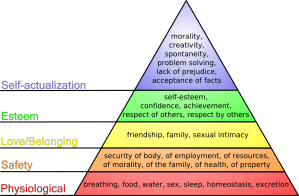
Ronald Inglehart developed the idea of post materialism in the 1970s as a sociological theory to explain an ongoing transformation of individual values within a society. He argued that as western nations achieved a level of economic prosperity and physical security, its members transformed their values seeking more autonomy and self-expression. Ah, this sounds a lot like Maslow’s hierarchy of needs. As people meet their basic survival requirements, we move up the pyramid until we are striving for self-actualization. Maslow confined his theory to how individuals are transformed and Inglehart wanted to see how societies as a whole might be transformed.

Maslow's Hierarchy of Needs, created by J. Finkelstein, 2006

Maslow’s Hierarchy of Needs, created by J. Finkelstein, 2006

So to be a post materialist, you must first meet your basic survival needs (food, shelter, security). OK, done (for me). But not for young people who are living paycheck to paycheck without benefits.

Once your basic needs are met you move up Maslow’s hierarchy and as you do, you start to realize you’re no happier than when you were struggling. This brings to mind Daniel Gilbert’s book, Stumbling on Happiness. I believe it was in that book I first learned American happiness peaked in the 1950s. BEFORE I WAS BORN! Sixty plus years later, we have higher incomes, higher levels of education, better health care, bigger houses, more cars but we are less happy overall. Remember when we were told (and believed) that he (or she) who has the most toys wins? We played the game, we toed the line, we consumed and bought all the right stuff, we competed with the Joneses, and we became… less happy. Maybe we were even miserable because the promise of happiness slipped away as we had to go looking for a storage shed to rent for all the loot that was supposed to make us positively giddy.

Stumbling on Happiness

We looked around and saw it wasn’t working. We stopped playing the game. We got rid of the excess stuff and looked inside to see what would fill the void. We began to talk about “downsizing”. The value shift from possessing things to experiencing and self- expression took hold.

Inglehart recognized that younger people (raised in economic security) were more likely to identify with the values of post materialism. But older people who were raised with the struggle of material existence may or may not shift out of that paradigm.

So given the current environment, we’ve essentially taken an economically secure generation and thrown them into struggle. We’ve kicked the chair out from underneath them. Inglehart probably didn’t see that coming. Values, I believe can be molded in adversity. I would expect today’s younger people to begin to identify with materialistic thinking because they will struggle to obtain the basics in life. Post-materialism as mainstream probably can’t happen if the majority of younger people haven’t met their basic needs. Post-materialism may now be relegated to a minority, elitist idea. Or, perhaps the younger generation can strike a new path to balance. It remains to be seen.

PLEASE HELP ME MAKE THE MINIMUM THRESHOLD FOR THUNDERCLAP! Need 32 volunteers.

https://www.thunderclap.it/projects/30885-a-book-is-born
9 Comments

Filed under Books, economy

WANTED: 100 Kind-Hearted Volunteers

elephants never forgotten 2THE BOOK IS NOW AVAILABLE!

Please help me announce it to the world! Don’t just ‘like’ this posting. Sign up and help me out.

I’m looking for 100 people to help me get the word out about my new book, ELEPHANTS NEVER FORGOTTEN. On October 1 (Thursday) at 6 pm, I have set up a Thunderclap to resonate across the universe. Those who sign up will use their Facebook, Twitter, or Tumblr accounts to send a one- time message announcing the release of the book. It’s easy! Sign up on my account page, and Thunderclap does the rest. Can more than 100 people sign up? You bet, but I need at least 100 people or the message doesn’t get sent. Oh- and by the way, the clock’s ticking. There are only 22 days left. Help!

https://www.thunderclap.it/projects/30885-a-book-is-born

BUY FROM AMAZON

BUY FROM MUSEITUP

27 Comments

Filed under Uncategorized

The Age of Atheists by Peter Watson

(How We Have Sought to Live Since the Death of God)

A Publishers Weekly Best Book of 2014

atheistsI’ve always regarded the word atheist as a quagmire. What does it mean, really? People mean so many different things in using it. Even after reading Watson’s book, I’m still puzzled. So let’s more away from that term and look at the meat of the book.

Watson traces the history of thought following Friedrich Nietzche’s 1882 pronouncement, “God is dead.” The big questions about the meaning of life and how to live it are quested after by artists, writers, poets, philosophers, and scientists. The 626 page tome follows hundreds of individuals and their pursuit to answer the stickiest of questions in a post-modern world where salvation doesn’t exist.

This is a book for everyone because it is about our collective history. Unless you have a PhD in philosophy, you won’t know all the people Watson brings up in his survey, but names like James Joyce, Sigmund Freud, Albert Einstein and countless others, will ground you in the familiar. Some chapters are absolutely fascinating. Did you know that some people thought poetry would supplant God? Or that many intellectuals looked forward to WWI as a way to purge the modern age? Other chapters are a slog to get through. But persist.

Watson takes us on a journey to understand where we’ve been and perhaps where we’ve going. In the end, we see the search for meaning seems to be universal and that many have answered the call by looking to transcend this life while others (the subject of Watson’s book) look for meaning in this world in diverse and rich ways.


7 Comments

Filed under Book Review

The Sublime Transformation of Vera Wright by Rea Nolan Martin

 Vera

What if your neighbor was a saint? This was the question Rea Nolan Martin asked herself in creating this masterpiece of visionary fiction. Her main character, Vera Wright, qualifies for the senior discount, but is still working as a beautician. She has a grown daughter and a teddy bear of a husband, living a normal life. Then one day, her parish priest asks the congregation to invite God into their lives. Vera does and that’s when everything starts to change.

I was fully caught up in Vera’s reluctant spiritual journey. More than once I wondered how I’d react if some of the things that Vera experienced happened to me. Remember in the stories of saints, the path to enlightenment is not an easy one. Vera is continuously challenged on her road to God. Unexpected twists and turns occur. Vera navigates some of them beautifully and some not. She is after all, human. Vera’s job is to awaken to her inner divinity and that awakening has her question the role of the feminine in Catholicism.

The story of Vera’s transformation might be heavy except that the author has interjected copious amounts of humor into the mix. Vera is the saint next door and we are no longer free to relegate holiness to the past. Might we not come across a saint in our own lives? Who is that waiting on us at the Post Office? Who is that old man feeding the ducks at the pond? The child reaching for the cookie? This book is a mind-opening adventure. Don’t miss it!

12 Comments

Filed under Book Review, spiritual, Spiritual/Mysticism

ASTROLOGY AND THE RISING OF KUNDALINI- Barbara Hand Clow

Clow

In 1991, Barbara Hand Clow posited a theory in which planetary cycles could be used to predict the onset,progress, and completion of certain transformative growth cycles. The most powerful of these occurs at mid-life (early 40s) and can viewed as spiritual emergency. Her earlier work has been updated and re-released as Astrology and the Rising of Kundalini.

I was really intrigued when I learned my own crisis occurred within the predictable parameters and how my experience can be seen as a classic case of kundalini rise. My biggest regret is that I didn’t have this book about ten years ago when it would have been so informative and comforting!

Ptolemaicsystem-smallClow insists that everyone undergoes a rise in kundalini energy according to the movement of Uranus in a person’s chart. This rise triggers mid-life crisis. Mid-life crisis does seem to be a fairly common experience but we all know people who sail through life seemingly immune to life’s ups and downs. Certainly not everyone goes through spiritual crisis. Regardless, the information is very pertinent to the spiritual seeker and this is where it can be most useful.

The key astrological transitions to look at are the first Saturn return (age 30), Uranus opposition to the natal chart (ages 38-44), and the return of Chiron (age 50). The exact dates are given on charts in the back of the book. It’s interesting to try to look back and remember what was going on at each time. All of the dates held some significance for me. In addition, the key wounding dates for Chiron were also significant, but oddly enough, I wouldn’t say they were my worst wounds. This trend continued with my husband and son who could sometimes recall incidents connected to their dates, but also felt they were not the most significant ones they’ve experienced.

DiagrammaChakraKundaliniThere is much to ponder over reading this book. It should be required reading BEFORE mid-life, especially for the spiritually-minded. Anyone going through spiritual crisis will find some practical help to treat the symptoms and comfort knowing it will settle down (eventually). The material is presented in lively way with real life examples. No prior knowledge of astrology or the kundalini phenomena is necessary. All the charts needed to do your own analysis are included.


https://amzn.to/30oq1NL

21 Comments

Filed under astrology, Book Review, Books, kundalini