Tag Archives: writing

Reaping Grimly: How to Make the Traditional Zombie

Another seasonal blast from the past.

A Real Tale for Halloween


Wade Davis is a Canadian anthropologist and ethnobotanist. He has written extensively about culture, botany, the environment and he has become a noted photographer. Davis has done hundreds of interviews, inspired many documentaries, and even was the source for three X-files shows. And Wade Davis has met a zombie. Not the made-up kind delighting so many Americans nowadays, but the very real kind. A poor, unschooled man who was victimized by his family.

Back in the 80s Wade Davis wrote about his experience investigating the zombification process in Haiti. His book The Serpent & the Rainbow propelled him to worldwide fame and a Hollywood movie followed in 1988.

Drawn to Haiti by legends concerning the existence of zombies, Davis wanted to investigate the botanical or chemical aspects of the phenomena. Soon he was drawn into the vodoun culture of the Haitian witchdoctor (bokor). Escape the cities of Haiti for the countryside and fear and magic play a very real role in the society. Wade Davis knew the story of Clairvius Narcisse and before long the two would meet.

In 1980, Clairvius Narcisse approached a woman in a marketplace and identified himself as her long gone, well- dead actually, brother. She was shocked to say the least, but then so is his story. Shocking. Clairvius told a tale of being drugged, buried, resurrected, and made a slave on a sugar plantation. Apparently a brother wanting Clairvius’ land sold him to a bokor. Having “died” in 1962, Clairvius escaped the plantation a couple of years later only to wander aimlessly for the next sixteen. Now having learned of his brother’s recent death, he felt safe enough to make himself known to the sister. A local doctor developed a questionnaire to establish once and for all, if the man was who he claimed to be. Clairvius answered everything correctly and the doctor along with his village accepted him as the true Clairvius. Had the curious tale of Clairvius Narcisse been isolated, maybe it could have been dismissed easily. But there are many tales of zombies in Haiti long before Clairvius and after.
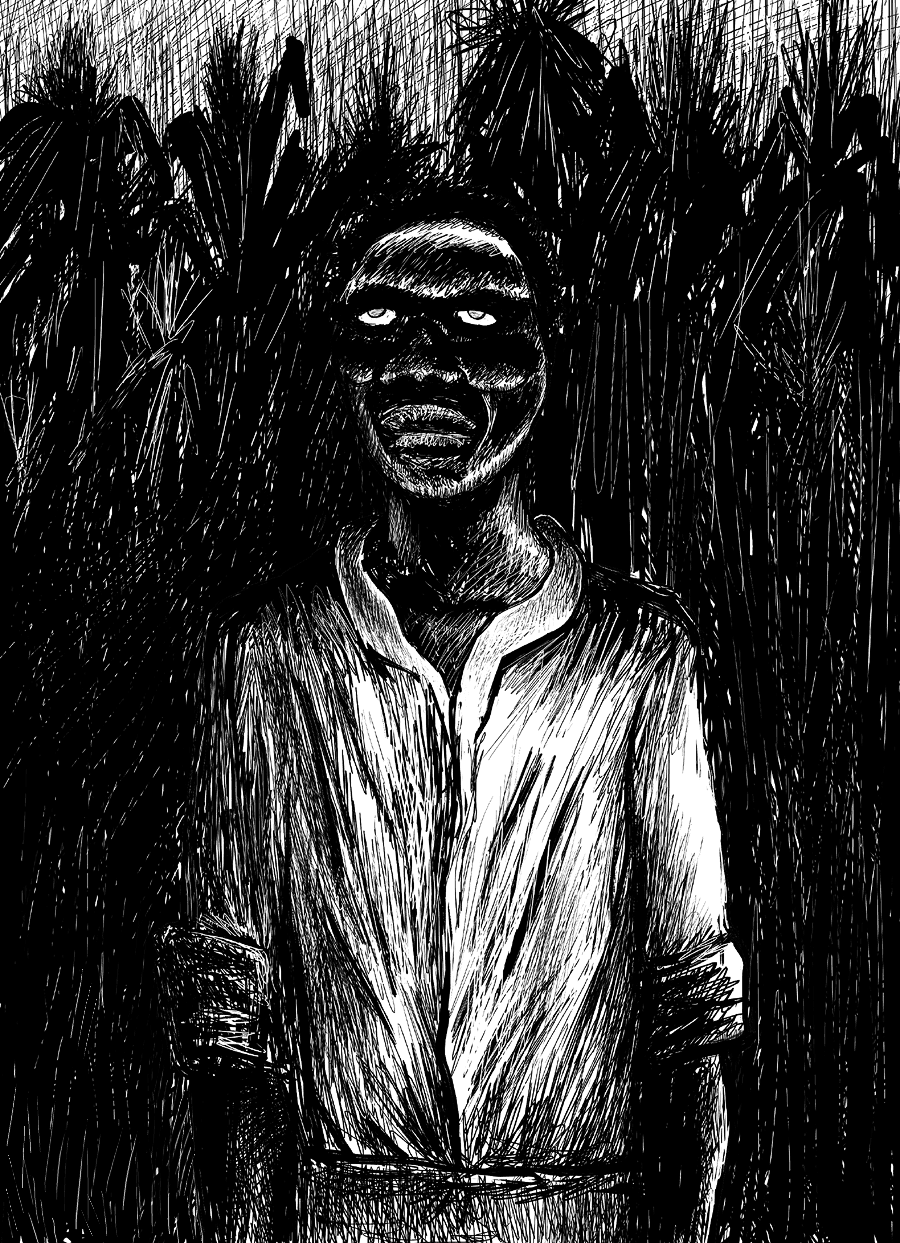
Davis’ investigation into the world of vodoun and the zombie led him to advance the hypothesis that tetrodotoxin (TTX) was the chemical agent used by the bokor to induce a death-like state. A mixture of toad skin and puffer fish, either rubbed on the skin or ingested through food, seems to accomplish this. Breathing slows, the heartbeat weakens, and victim appears dead even to medical personnel. In the tropical climate of Haiti, bodies are buried quickly and the bokor likes it that way. A zombie in the ground for more than eight hours risks asphyxiation. The zombie is dug up and restored to life possibly with an antidote. Delivered to a plantation, the zombie is kept in a semi-permanent induced psychotic state by force feeding a datura paste. Datura destroys memory and wreaks havoc with gaining any sense of reality. It is also known to produce powerful hallucinations.

All of the chemicals used or potentially used are powerful enough to cause real death so the bokor has to be knowledgeable and proficient in their use to be successful. Davis also credited the culture of fear and belief that underlies the creation of the zombie. There are powerful cultural influences that must be in place to create and maintain a zombie.

Are zombies scary? Maybe not, they’re victims, but the idea that you or I could be made into one makes me uncomfortable. That’s why I try to make sure my siblings are happy with me and I’m not more valuable “dead” than alive. Happy Halloween!

 

13 Comments

Filed under Books, Halloween, Spooky stuff

ELEPHANTS NEVER FORGOTTEN under contract

 640px-Elephant_near_ndutu

I’m happy to announce that my middle-grade novel, entitled Elephants Never Forgotten, is now under contract with MuseItUp Publishing. It’s a science fiction tale that could easily be pitched as Micro meets Jurassic Park. It was written at a time when I was finishing up my work in humane education and it honors the human/animal bond. The book is set for release in the Spring of 2015 as an e-book.

About the book:

A hundred years in the future, eleven-year-old Nigella receives a shipment from her deceased grandfather. Her inheritance is a herd of micro-elephants. While a lot of her friends have micro-pets, Nigella is at a loss on how to care for them. Why are her micro-elephants so different? What was her grandfather up to? In her quest to understand her pets, she learns that there might be a group of wild elephants left in a remote part of Africa. With the help of her best friend, Kepler, the girls set off on an adventure to discover the truth.


50 Comments

Filed under Books

TreeHouse Arts Interviews Me

IM000011.JPG

I’ve been doing a lot of author interviews and book reviews lately. This month, TreeHouse Arts turns the table on me with some great questions. If you want to learn more about my experiences and where this blog is heading, check this out. http://treehousearts.me/2014/05/31/an-interview-with-author-and-blogger-ellis-nelson/

8 Comments

Filed under Book Review, Books, Story behind ITLS

SHAMAN ELIZABETH Joins Me for Author Interview- Get her FREE Book Now

FREE “Shaman Stone Soup” eBook — Limited Time!

Shaman Stone Soup

Shaman Stone Soup

Shaman Stone Soup is an Enchanting Memoir Featuring 20 True-Life Stories of Miracles. It’s available free on Amazon.com during a special promotion on January 4-8 (Kindle eBook) to help promote her new release, Dreams of Dying.

In Shaman Stone Soup, Shaman Elizabeth Herrera shares personal stories of spirit guides, angels, and enlightened beings answering calls for help through miracles. You’ll read about the spirits of ancient wise men who provided a miraculous cure from cancer for a friend; Elizabeth’s vivid dream of a pastor who needed guidance and their later “chance” meeting; a client’s husband, who was visited by three spirits showing him the past, present and future; and many more!

“Unique and captivating!” — Awareness Magazine

“Clearly written from the heart.” — Sandra Ingerman

“Beautifully written and heartfelt stories.” — Hal Z Bennett

Shaman Stone Soup will take you on a journey to the mystical side of life, where miracles and healing are natural occurrences. 

FYI: the Kindle app can be downloaded to computers and smart phones.

11 Comments

Filed under Book Review, Books, Spiritual/Mysticism

PHILIP K DICK: MYSTIC

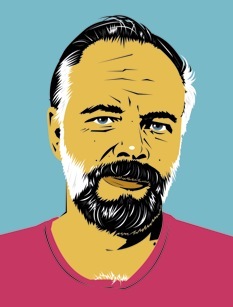
Philip K. Dick Portrait by Pete Welsch Washington, DC

Philip K. Dick
Portrait by Pete Welsch
Washington, DC

Most people know Philip K. Dick (PKD) by way of two main venues- either his science fiction novels or his movies (Minority Report, Blade Runner, etc). If fact, he is more famous now then he ever was in life. Such is the nature of being a visionary- the art world is rife with this. The thing I find fascinating about PKD though, is something most people have never heard about. PKD had many mystical experiences and he wrote about them.

His first encounter happened in Feb. 1974 and what followed would direct a line of inquiry for the rest of his life. After oral surgery and under the influence of sodium pentothal, he opened his door to a delivery girl who was wearing a gold necklace with a pendant in the shape of a fish- an early Christian symbol. The sun glinted off the fish producing a pink beam. The resulting mystical experience involved an encounter with an intelligence which allowed PKD to receive wisdom and clairvoyant messages. Throughout Feb. and Mar., the experiences continued with visions and more encounters. At one point while in trance, PKD received detailed medical information about his son and a life-threatening condition. Rushing the baby to the hospital, doctors indeed confirmed the condition and saved the boy.

exegesis

In the years of exploration and searching that followed, PKD kept detailed journals, totaling some 9000 pages. Whittled down to 900 pages, Exegesis is a collection of his mystical experiences and the author’s attempts to make sense of what was happening to him. It makes for fascinating reading. There is real passion and honesty in his efforts to understand and deal with what was going on. On one hand, it’s very inspiring but on the other, it’s unsatisfying too. PKD never really accepts any one answer and scholars who view the material are also at a loss. What really happened to PKD during the period known as 2-3-74 (and after) and what did it mean?

PKD’s last novel was entitled The Transmigration of Timothy Archer. It is considered to be one of his best, and truly, it is a metaphysical work. Reading Exegesis and then Transmigration, the reader is encouraged to search for their own answers and fully engage the mind. Happy reading!

29 Comments

Filed under Spiritual/Mysticism

INTERVIEW WITH NAOMI C. ROSE, AUTHOR OF:

WHERE SNOW LEOPARD PROWLS

Tibetan Wildlife Cover.2.indd

This is my first author interview and it seems fitting to welcome Naomi as my first guest. We met several years ago when I was first working on Into the Land of Snows. Naomi was a children’s author/illustrator who had already published a book on Tibetan culture and I sought her out for guidance. She graciously supplied it. I am happy to welcome her here to talk about her fourth picture book entitled Where Snow Leopard Prowls.

Thanks, I’m very honored to be your first interviewed author!!

NaomiRose

Naomi, your first three picture books dealt with Tibetan culture and Where Snow Leopard Prowls marks a change for you. This book is all about wildlife on the Tibetan plateau. Can you talk about how your vision shifted and you were drawn to paint these images?

I’ve had the joy of creating books for children for many years. Two of my previously published books are wisdom tales from Tibet. Several years ago, while painting the illustrations for these books, I found myself painting more and more Tibetan wildlife into the scenes. And as I painted, I felt more and more endeared to these animals. When I finally painted a snow leopard, I knew the animals were calling me. It was time to create a book for and about them. 

I’ve always thought of picture books as a child’s first introduction to art. The time and care that goes into the production of a picture book is amazing. How long was it from the time you decided to write and illustrate this book until you held it in your hands? What was the process like?

I think it was about five years from conception to birth. I really try to give each book the time it needs, to let the inspiration, the art, the book itself lead the way. When I first felt the call to do a book on Tibetan wildlife, I envisioned an activity book. But when I had completed that, I realized there was something more wanting to emerge. So I switched gears and created a full 32-page picture book. Then I posted the activity book as a free companion book off my website.

Baby Leopard

The paintings also evolved in an interesting way. I painted Snow Leopard’s portrait first. To my surprise, I felt very compelled to paint Snow Leopard’s eyes before any other feature. This was NOT how I was taught to paint portraits, but I couldn’t resist the urge. Once the eyes were painted, it felt like Snow Leopard was watching me paint, and guiding me on various details of its portrait. This turned out to be the case with each portrait, culminating in a deeper connection with each animal. 

Some of the animals in the book readers may be familiar with but there are some that were new for me. I’d never heard of a Himalayan Tahr, for example. Was there an animal you researched that was totally new to you? I know the book is full of animal facts and I wonder if there is anything in your research that surprised or even shocked you.

Many of the animals were new to me. Himalayan Tahr is a good example. I don’t remember what drew me to this particular animal, but somehow Tahr popped out at me as I studied the animals and the land of Tibet. Once Tahr showed up on my radar, I had to paint it and give it a place in the book. That’s sort of how it went. I think the animals found me as much as I found them. I had great fun learning about them and finding fun tidbits to put in the book. They’re all so amazing!  These animals became so personal to me that I had to treat them as individuals, thus referring to them by name (“Snow Leopard” instead of “a snow leopard”).

You’ve talked about the importance of having children connect with wildlife. It is in that connection and caring that we may be able to do a better job protecting whole environments. Can you outline a few of the factors that threaten some of the species in your book?

That’s a really interesting question because I ended up choosing to not study those factors.  When I first worked on the book, I focused on how these amazing animals were at risk of extinction as a way to motivate children to care for Mother Earth. Then I realized that approach wasn’t right for me.  I wanted to motivate from the same place that motivated me to do the book, a growing personal connection. I believe that’s another way to motivate; by fostering a love, respect, and connection with wildlife and nature, children will naturally grow to care about Mother Earth and her precious animals. In hopes the book has motivated children to care, I’ve listed things we can do to help in the back of the book. I’ve also listed activities for cultivating a personal connection to the natural world. 

Baby Monkey

My favorite illustrations were the baby snow leopard and the red panda. What animal or animals were the most fun for you to paint and why?

I loved painting them all, of course. But I had a special fondness for the baby animals. They are all soooo cute!  And painting Mama Snow Leopard was especially powerful.  I invite folks to see more of the animals in the short video on my website:  http://www.naomicrose.com/books/wslp-books

Thanks, Naomi for sharing your wonderful book with us. Please visit Naomi’s sites to see more of her beautiful work.

Website link(s):  http://www.naomicrose.com

Facebook:  www.facebook.com/naomicrose

Youtube: www.youtube.com/user/naomicrose

21 Comments

Filed under Book Review, Books

PHILIP K. DICK- MYSTIC

Philip K. Dick Portrait by Pete Welsch Washington, DC

Philip K. Dick
Portrait by Pete Welsch
Washington, DC

Most people know Philip K. Dick (PKD) by way of two main venues- either his science fiction novels or his movies (Minority Report, Blade Runner, etc). If fact, he is more famous now then he ever was in life. Such is the nature of being a visionary- the art world is rife with this. The thing I find fascinating about PKD though, is something most people have never heard about. PKD had many mystical experiences and he wrote about them.

His first encounter happened in Feb. 1974 and what followed would direct a line of inquiry for the rest of his life. After oral surgery and under the influence of sodium pentothal, he opened his door to a delivery girl who was wearing a gold necklace with a pendant in the shape of a fish- an early Christian symbol. The sun glinted off the fish producing a pink beam. The resulting mystical experience involved an encounter with an intelligence which allowed PKD to receive wisdom and clairvoyant messages. Throughout Feb. and Mar., the experiences continued with visions and more encounters. At one point while in trance, PKD received detailed medical information about his son and a life-threatening condition. Rushing the baby to the hospital, doctors indeed confirmed the condition and saved the boy.

exegesis

In the years of exploration and searching that followed, PKD kept detailed journals, totaling some 9000 pages. Whittled down to 900 pages, Exegesis is a collection of his mystical experiences and the author’s attempts to make sense of what was happening to him. It makes for fascinating reading. There is real passion and honesty in his efforts to understand and deal with what was going on. On one hand, it’s very inspiring but on the other, it’s unsatisfying too. PKD never really accepts any one answer and scholars who view the material are also at a loss. What really happened to PKD during the period known as 2-3-74 (and after) and what did it mean?

PKD’s last novel was entitled The Transmigration of Timothy Archer. It is considered to be one of his best, and truly, it is a metaphysical work. Reading Exegesis and then Transmigration, the reader is encouraged to search for their own answers and fully engage the mind. Happy reading!

Leave a comment

Filed under Spiritual/Mysticism