CAN A JELLYFISH BE THE SECRET TO IMMORTALITY?

jellyfish

To everything, turn, turn, turn

     There is a season turn, turn, turn

          A time to be born, a time to die (The Byrds)

And so we thought. One of the most accepted, basic truths is that we are born and we die but what if that’s not the whole truth? Enter Christian Sommer, a German marine-biology student who in 1988 scooped up some Turritopsis dohrnii. He placed the tiny, obscure jellyfish in a petri dish for observation. Soon he was witness to the creatures doing the unthinkable. Over time, they grew younger and younger and eventually began a new life cycle. Biologists continued to study the species, and in 1996, a paper was published describing how the jellyfish could revert to a polyp “thus escaping death and achieving potential immortality.” Of course, it’s not totally immortal in the conventional sense, and we really need to view the subsequent life forms as clones, but still it is pretty amazing.  The jellyfish, the size of your pinky nail, became known as the immortal jellyfish although I’d be inclined to call it the Benjamin Button jellyfish, just for the literary connection.

For reasons beyond my comprehension, very few people took much notice of this discovery. Big pharma and well-heeled universities did not rush in to take up studying our bizarre little friend. Some scientists think the immortal jellyfish may lead to breakthroughs in cancer research and longevity, but so far very little research has been done.

In fact, there is only one Japanese researcher, Shin Kubota who is consistently culturing and studying these creatures. He works alone without a staff or major funding. This seems incredible considering what molecular biologist Kevin J. Peterson told a NY Times Magazine reporter in a recent article. Peterson said, “There’s a shocking amount of genetic similarity between jellyfish and human beings.”  Kubota himself thinks the species has the potential to unravel immortality but interestingly, he doesn’t think humans are spiritually evolved enough to handle the responsibility for it. So there might be something good in only having one person doing this work. Even slight gains in life expectancy rate can wreak havoc in a society and who wants to wait to be 100 before you can apply for Social Security. Maybe immortality is for jellyfish.

See NY Times Article: http://www.nytimes.com/2012/12/02/magazine/can-a-jellyfish-unlock-the-secret-of-immortality.html?smid=fb-share&_r=0

https://amzn.to/30oq1NL

41 Comments

Filed under Spiritual/Mysticism

ON HABITS

habit

We all have habits. Some are good and some are not so good, but it’s amazing to consider how much of our lives are given over to them. We get up in the morning and activate those circuits and we’re off. If you doubt how much habits rule you, just try to change something. Do your morning routine or just a couple of things out-of-order and see how discombobulated you become. What’s that saying? We are creatures of habit.

In The Power of Habit, New York Times reporter, Charles Duhigg, discusses why habits exist and how they can be changed. The power to transform habits allows individuals, organizations, and societies to implement changes.     

In part one of the book, we learn about the habits of the individual. The author delves into the neuroscience of the habit loop and how cravings are created. The real insight here is that habits are not broken, rather they are transformed. The stimulus (or cue) for a habit, along with some kind of payoff will always remain. The individual however can modify the response to the cue and substitute a new behavior. This creates the “new” habit. Be warned, this is not a magic bullet. Changing habits still remains hard work.

The habits of successful organizations are covered in part two. Here we learn how keystone habits are fundamental to the organization and how changing these can have powerful ripple effects. Alcoa, Starbucks, and Target are examined in detail but take care. Not everything about habit change is positive. While Alcoa’s focus on employee safety is to be applauded, Target’s computer marketing data collection may set your teeth on edge. Don’t worry about Big Brother, worry about how you and your purchase information is being exploited.

Part three concerns itself with the habits of societies. The success of Saddleback Church and the Montgomery bus boycott are used as examples of how societal rules and pressures can be brought to bear to affect change. The author concludes with a section called the neurology of free will. This is a last foray into recent discoveries about neuroscience and asks the reader to consider the cases of a murderer and a gambler. Both have habitual behaviors but are treated very differently under the law. It’s a rather odd ending for the book and I wonder if the dichotomy the author was aiming for might better have been used as an introduction to the subject rather than a stomach punch at the end.

The book wasn’t exactly what I thought it would be. It is not a self-help book and no one will be really motivated to implement change by it. It does make you feel change is possible. There are some good discussions about brain science and recent discoveries. However, much of the book is episodic and anecdotal. I wouldn’t use it in a business management setting, so I guess it’s sort of a general interest introduction.

30 Comments

Filed under Book Review, Books

THE CURIOUS CASE OF FRANCIS SCHLATTER: the Denver Messiah

Francis Schlatter

At the turn of the last century, a French cobbler took up residence in Denver. He was a quiet unassuming man who plied his trade until he had a transformative experience in which he was told by “the Father” to give up his business and devote his life to healing. He spent the next two years wandering the American West. His first efforts at healing began in California with the Indians of the San Jacinto Valley. By July 1895, he was in Albuquerque treating hundreds who gathered for his hands-on treatment.

Francis Schlatter lived simply refusing all forms of payment. He taught no new doctrine and healed by grasping the hands of the sufferer. Sometimes he was overheard to say The Lord’s Prayer, but a good portion of his healings was done in silence. He healed the blind, the deaf, the lame, and all sorts of maladies while crediting “the Father” for all of them.

In the fall of 1895, he was back in Denver staying with a friend. Outside a small house Schlatter stood near the front fence as thousands passed by for healings. So impressed was the Union Pacific Railroad executive, Superintendent K. Dickenson, after his wife’s treatment, that he allowed any of his railroad workers to leave his job and travel to Denver at the expense of the company to seek treatment. And come they did! In the short two month period in which Schlatter stood on a platform in that Denver neighborhood, it is estimated that 60,000 people received healings. Each day, the mail arrived requesting the healer bless and return hundreds of handkerchiefs. Schlatter did his best to keep up with those as well.

Newspapers picked up the story and soon other cities were clamoring for Schlatter to visit them. Men came offering Schlatter all kinds of deals in return for his presence. People who took up their places in line for the daily healing were now offered money as the wealthy and privileged sought to exploit them. Schlatter was deeply offended by the practice and some believe it was what convinced him to give up his work and flee in the night. The people of Denver were outraged when their healer disappeared. Hundreds were still arriving daily to see the healer. Search parties were sent out to find Schlatter and bring him back to Denver, against his will if necessary.

Francis Schlatter’s story is detailed in Denver’s Extraordinary Faith-Healing Messiah edited by Bill Blanning. The book contains the newspaper accounts from the time Schlatter appears in New Mexico until his disappearance. It’s interesting to read the articles written over a hundred years ago because the language is so formal and foreign to the way we write today. However, you do get a good feel for the way Schlatter was received. Hundreds of individuals who received healings are named and people genuinely felt Schlatter was doing good work. His simple way of living and goodness are portrayed. There were a few dissenters, who felt Schlatter was a fraud, but they can be counted on one hand and their motives even at the time were seen as suspect.

What is also interesting is looking back and seeing Schlatter in his own time. I was surprised to see that Spiritualism was well known and I found no derisive comments in the newspaper coverage of it. In addition, the terms animal magnetism, Christian Science, and psychic science were all used without explanation. People over a century ago were familiar with those terms. I came away feeling that mainstream people at the turn of the last century were far more open to these things than we are today.

And the end of the story. Schlatter disappeared into New Mexico for a few months where he managed to dictate his autobiography. The Life of the Harp in the Hand of the Healer by Ada Morley was released in 1897. That same year, Schlatter’s bones and possessions were discovered on a mountain in the Sierra Madre.

82 Comments

Filed under Books, Spiritual/Mysticism

DO YOU HAVE A GRATITUDE PRACTICE?

It’s Thanksgiving again and many will fleetingly acknowledge a few (or many) things they are grateful for today. Maybe you’ll go around the dinner table asking friends and family to share a few words. That reminds me of the year we did that. The kids were little and we had gathered pinecones from Plymouth and I thought it’d make a meaningful ritual to pass a pinecone and mention something we were grateful for. It was a disaster. Everyone was caught off guard and a few adults even seemed offended. How dare I require something of them when the whole idea of Thanksgiving was to stuff yourself to bursting? The pinecones sit at the bottom of a box of fall decorations never to see the light of day again. I learned.

I’ve always been a cup half-empty person. My focus was on a compulsive need to fill up the cup so I could at last be happy. When I achieve the right job, the right income, the right family, the right set of possessions, and the right body – then I will have earned the right to be happy. That’s how I was raised after all. Then I will celebrate and be grateful for having it all. For decades I existed like this (maybe you do too?).

Eventually I did come to understand how toxic this attitude is.

Nowadays, I have a gratitude practice which is simple and has turned me into more of a cup half-full person. Every night I take a few minutes to focus on the myriad of good things in my life. By choosing to see the world this way, I banish thoughts of not being good enough and not having enough. I am good enough and I certainly have enough. That’s blasphemy in our consumer driven, material world. I am a revolutionary. Are you?

98 Comments

Filed under Spiritual/Mysticism

Into the Land of Snows: Wonderful Review Found on Blogosphere

Woke up this morning and discovered this very thoughtful and insightful review. Couldn’t help myself from sharing. Thanks for making my day (or week) bookpeeps!

http://bookpeeps.org/2012/11/17/into-the-land-of-snows-a-novel-by-ellis-nelson/#respond

14 Comments

Filed under Book Review, Books

A NOD TO NEWTON, A HUG FOR EINSTEIN, AND THE NEW PARADIGM

We’ll never totally get over Newton. His system explains lots about daily life. But we will need to move forward and embrace new ideas and try new things that challenge our worldview. It is said that when a person has direct experience of reality (a metaphysical experience) things become blurry. Literally blurry. Welcome to that new reality.

The understanding of a solid, material existence is constantly being called into question by quantum physics. Quantum physics isn’t new and we only choose to believe that the question is still there. It’s not. We live in an energy filled world. Things aren’t solid, they just look that way. The universe isn’t empty, it’s filled with energy.

Enter a new paradigm for seeing yourself. Quite simply you are an energy being. Here’s one example. Your electromagnetic heart field extends 8 to 12 feet around you. When you walk into a room this field interacts with others. If you sat across from me, our hearts would act on each other. Scientific equipment could “find” your rhythm in my EEG recording and vice versa.

As we start to understand ourselves as energy beings a whole new way of thinking opens to us. We are energy and so is everything else around us. We interact with everything in our environment (and how big that is, is only constrained by how you define it), all the time energetically. These ideas have ushered in a whole new set of treatments and modalities of healing. To access these new methods, we must push forward fighting established ways just like Columbus pushed forward to pursue the idea of a new world. I’m working with two of these new systems currently.

The first is called EFT (Emotional Freedom Technique). Developed by Gary Craig in the 1990s, it is based on the discovery that tapping on traditional meridian points defined in acupuncture systems brings relief from pain, disease, and emotional issues. The other system called The Emotion Code brings relief with the use of magnets run along meridian paths. Both modalities rely on the idea that negative emotion disrupts the body’s energy system and is a major contributor to pain and disease. EFT is widely regarded as helpful in many kinds of cases. Recently there’s been a lot of successful work done with EFT with post-traumatic stress disorder (PTSD). Both systems are easily accessible through books and online training. There are also practitioners throughout the country who are trained to give these treatments.

On a personal level, I have had some success with EFT in aborting low intensity migraines. It’s sort of similar to my ability able to use bio-feedback to raise finger temperature to abort a migraine early in my cycle. The real test for the system will come as I see if EFT can help me avoid aphasia after an emotional trauma. I’m just starting with The Emotion Code but it is far more complex that EFT. If you’d like to learn more about either system, resources are found below.

The Subtle Body: An Encyclopedia of Your Energetic Anatomy- Cyndi Dale

The EFT Manual- Gary Craig

www.garythink.com (FREE tutorials on how to do basic EFT)

The Emotion Code- Dr. Bradley Nelson


28 Comments

Filed under Book Review, Books, Energy medicine

A PAIR OF YA HORROR NOVELS

In an effort to satisfy my hunger for a good ghost story around Halloween, I stumbled on two firmly planted in the horror genre. Read at your own peril. Spoiler alert.

Beyond- A Ghost Story by Graham McNamee

Seventeen year old Jane was born dead and revived. In her short life she has escaped death four more times, but her shadow is after her. While Jane wrestles with these issues her best friend, Lexi, provides necessary comic relief. As the “Creep Sisters”, Jane and Lexi have to deal with being outsiders at school. Jane must find out why death haunts her before it’s too late and the opportunity comes when a skull is unearthed on the edge of town. Solving that mystery brings her face to face with a serial killer and reveals why her shadow is after her. McNamee successfully incorporates the idea of a dark, lost region that contrasts sharply to the bright light bliss of near death experiences. It’s a nice twist making it a unique ghost story. Sufficiently creepy, fast paced, and satisfying.

Anna Dressed in Blood by Kendare Blake

Cas Lowood has inherited the job of ghost killer from his dad. Armed with a powerful knife, he seeks his prey. His next case draws him to Anna, a girl killed in 1958 on her way to a dance. Anna has the nasty habit of killing anyone who enters the house where she resides. This is a fairly well-crafted story, but not as original as Beyond. It has garnered quite a following seemingly attracting the Twilight crowd because of the romance between Cas and Anna. That part didn’t resonate with me. Cass witnessed a kid being ripped apart by Anna and yet he falls for her. The most unique aspect of the story comes from the idea of the Obeah- a creature seeking power and the Wicca traditions brought to the story by some of the lesser characters. This is a fast read, entertaining, but a bit familiar.      

23 Comments

Filed under Book Review, Books

ELEPHANTS NEVER FORGET

Lawrence Anthony
From Facebook Thula Thula Reserve

In no way am I a soft touch, but this one got me and got me good.

Not that I’m a stranger to animal stories. I’ve always had pets (mostly cats and dogs) and animals around me. Surrounded by the daily activity of birds, squirrels, and bunnies, nature and nature watching are part of my day. I even spent a couple of years teaching humane education classes to children in schools. And there’s my first full length book on animal intelligence that never saw the light of day. But another of my books is closer to the heart of the story I’m going to tell. That book was about elephants.

Noted conservationist Lawrence Anthony died in March this year and, shortly after his death, two herds of elephants arrived at the family compound in South Africa. No one knows how the elephants could have known about Anthony’s death, but it seemed evident to the family that they had come to pay their respects to a friend who had saved their lives. The elephants lingered for two days before returning to the bush. This incident reminds us of the interconnectedness of all things and the many mysteries that tie our lives together in unimaginable ways. Simple, dignified, powerful, and heart-centered.

Lawrence Anthony was an insurance man and real estate developer before he undertook the running of one of South Africa’s largest game sanctuaries. In the mid-1990s, he purchased the 5000 acre reserve known as Thula Thula. Adding luxury accommodations and fine dining, he promoted eco-tourism.

An out of the blue phone call in 1999 came and changed his life. He was offered a herd of nine problematic elephants who were going to be shot if he refused them. He was also told the herd was violent and the matriarch was a talented escape artist. Knowing the job would be difficult, Anthony took it anyway. There was a chance to save the elephants and reintroduce them onto Zulu lands. Only seven of the elephants were delivered to Thula Thula. Two had been killed in the transfer and in the presence of the surviving seven. The herd arrived traumatized and angry.

That first night the elephants broke out of their containment area. They first smashed an electric generator and then, acting as a team, two adults used a tree to take down the electric fence. Racing against time and locals armed to shoot to kill, Anthony and his reserve rangers managed to get the elephants back onto safe ground. Later, as Anthony looked at the matriarch, he realized that it was just a matter of time before they’d break out again. And that’s when inspiration struck. In order to foster trust and understanding, Anthony decided he’d live with them. His experience with the herd is the subject of his book The Elephant Whisperer.

From Facebook Thula Thula Reserve

Many may also remember it was Lawrence Anthony who raced to Baghdad in 2003 after the American invasion to rescue the zoo animals left abandoned in the city. More about his life can be found in his three published books and on the Thula Thula FACEBOOK page.

45 Comments

Filed under animals, Books

HOW TO MAKE A ZOMBIE

Another Tale for Halloween


Wade Davis is a Canadian anthropologist and ethnobotanist. He has written extensively about culture, botany, the environment and he has become a noted photographer. He has done hundreds of interviews, inspired many documentaries, and even was the source for three X-files shows. And Wade Davis has met a zombie. Not the made-up kind delighting so many Americans nowadays, but the very real kind. A poor, unschooled man who was victimized by his family.

Back in the 80s Wade Davis wrote about his experience investigating the zombification process in Haiti. His book The Serpent & the Rainbow propelled him to worldwide fame and a Hollywood movie followed in 1988.

Drawn to Haiti by legends concerning the existence of zombies, Davis wanted to investigate the botanical or chemical aspects of the phenomena. Soon he was drawn into the vodoun culture of the Haitian witchdoctor (bokor). Escape the cities of Haiti for the countryside and fear and magic play a very real role in the society. Wade Davis knew the story of Clairvius Narcisse and before long the two would meet.

In 1980, Clairvius Narcisse approached a woman in a marketplace and identified himself as her long gone, well- dead actually, brother. She was shocked to say the least but then so is his story. Shocking. Clairvius told a tale of being drugged, buried, resurrected, and made a slave on a sugar plantation. Apparently a brother wanting Clairvius’ land sold him to a bokor. Having “died” in 1962, Clairvius escaped the plantation a couple of years later only to wander aimlessly for the next sixteen. Now having learned of his brother’s recent death, he felt safe enough to make himself known to the sister. A local doctor developed a questionnaire to establish once and for all, if the man was who he claimed to be. Clairvius answered everything correctly and the doctor along with his village accepted him as the true Clairvius. Had the curious tale of Clairvius Narcisse been isolated, maybe it could have been dismissed easily. But there are many tales of zombies in Haiti long before Clairvius and after.

Davis’ investigation into the world of vodoun and the zombie led him to advance the hypothesis that tetrodotoxin (TTX) was the chemical agent used by the bokor to induce a death-like state. A mixture of toad skin and puffer fish, either rubbed on the skin or ingested through food, seems to accomplish this. Breathing slows, the heartbeat weakens, and victim appears dead even to medical personnel. In the tropical climate of Haiti, bodies are buried quickly and the bokor likes it that way. A zombie in the ground for more than eight hours risks asphyxiation. The zombie is dug up and restored to life possibly with an antidote. Delivered to a plantation, the zombie is kept in a semi-permanent induced psychotic state by force feeding a datura paste. Datura destroys memory and wreaks havoc with gaining any sense of reality. It is also known to produce powerful hallucinations.

All of the chemicals used or potentially used are powerful enough to cause real death so the bokor has to be knowledgeable and proficient in their use to be successful. Davis also credited the culture of fear and belief that underlies the creation of the zombie. There are powerful cultural influences that must be in place to create and maintain a zombie.

Are zombies scary? Maybe not, they’re victims, but the idea that you or I could be made into one makes me uncomfortable. That’s why I try to make sure my siblings are happy with me and I’m not more valuable “dead” than alive. Happy Halloween!


34 Comments

Filed under Books, Spiritual/Mysticism

NEW AUTHOR INTERVIEW

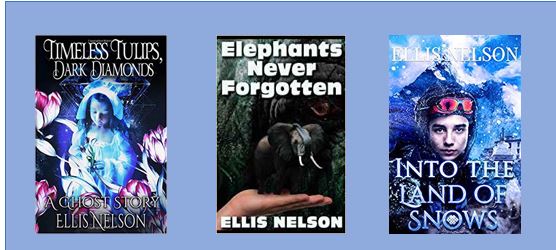
ELLIS NELSON, author of INTO THE LAND OF SNOWS

All the way from Edinburgh, Katharine Griffiths interviews me on writing young adult novels and the influence of Buddhism on my work. Join us for the fun. Feel free to comment or ask questions. Anything goes. http://wp.me/p2Jcvv-4v

13 Comments

Filed under Blog Interview, Books