Category Archives: Book Review

THE UNEXPLAINED POWERS OF ANIMALS

LUKE

LUKE

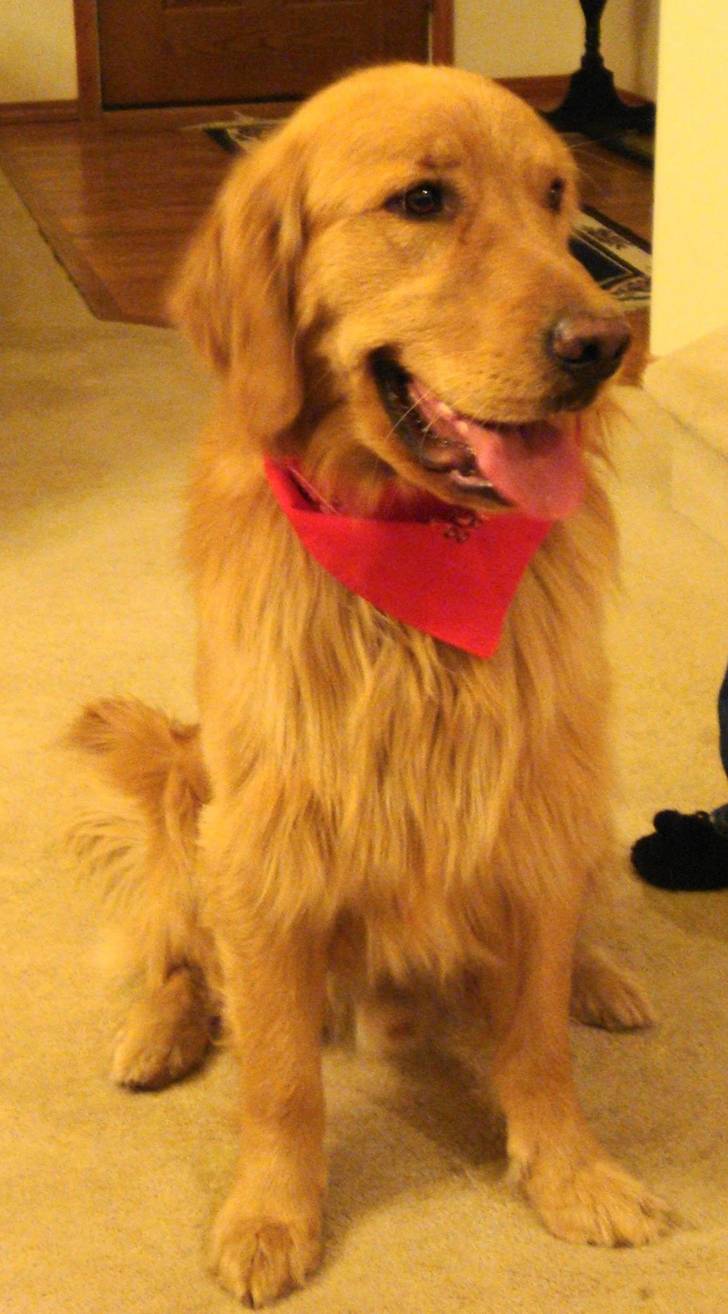
In the last two weeks, my husband and I have welcomed a new dog into the family. Luke is a friendly, almost two year old, Golden Retriever who has had a rough start in life. As we are getting to know each other, I’m drawn back into the routine and wonder of dog ownership. All the while, our elderly cat, George, raises an eyebrow and wonders why he can’t live in a one cat household.


George

George

I’ve been re-reading and thoroughly enjoying Dogs That Know When Their Owners Are Coming Home (And Other Unexplained Powers of Animals) by Rupert Sheldrake. Sheldrake is a biologist with a Ph.D. from Cambridge. As a pet owner himself he wondered why the stories of pet owners were so universally ignored by scientists. He felt that confining research to lab animals or wildlife observation misses entirely to capture a unique understanding man has with his companion animals. Sheldrake set out to mine this field for its gold. He interviewed hundreds of people with experience with our closest companion animals. These included dog trainers, vets, zoo keepers, kennel owners, and pet owners. Later, he conducted formal surveys in Britain and the US to quantify the frequency of the most commonly reported behaviors in the area of perceptiveness. He took a special interest in reports of dogs that seemed to know when their owners were coming home. These dogs displayed anticipatory behavior which included alertness and going to a particular spot to await their owner’s return. Using a scientific approach, Sheldrake set out to learn what was at work in this commonly reported behavior.

He examined the common explanations many have given for this behavior. An established routine by the owner, a dog’s superior sense of smell, a dog’s keen hearing ability, human cueing, and the use of a familiar mode of transportation did not seem likely. When these things were eliminated, case histories suggested a human/animal bond along the lines of telepathy.

sheldrake

The best way to understand this is to look at the case of Jaytee and owner Pam Smart. Pam often left Jaytee with her parents when she went out and over time, the parents noticed Jaytee would go to a window and wait for Pam to return. Often the parents had no idea when Pam would return but started to trust Jaytee’s signal because Pam did show up shortly after the dog would go to the window. The Smarts kept logs of the incidents and before long an opportunity arose to film what was really going on. A camera was set up to watch Jaytee and a film crew followed as Pam was sent out. At a randomly selected time Pam was told to return home. On split screen and with the times synchronized, the film shows Pam being told it’s time to return while Jaytee reacts at the same moment with alertness and ears pricked. While Pam walks to a taxi stand, Jaytee goes to a window to wait. Jaytee seems to be responding to Pam’s intention to return suggesting a mind to mind connection. Telepathy! Further research carried out in 1995 and 1996, confirmed that Jaytee anticipated Pam’s arrival at randomly chosen times and in unfamiliar vehicles. Psychic debunker, Dr. Richard Wiseman, conducted his own experiment and found the same result.

Work with filming several other dogs indicated that Jaytee is not alone in her ability. Surveys indicate that the behavior is widespread in all kinds of dogs. About 51% of dogs seem to do this. Males display the behavior slightly more than females. A close bond with a human does seem to be necessary to induce the dog to engage in the behavior. Sheldrake advances the idea of morphic fields to explain the mind to mind connection we have with our pets. This invisible connection is likened to a rubber that can stretch over large distances to facilitate communication.

Sheldrake’s book is a delight. There are many stories of dogs, cats, parrots, horses and other animals engaging in behaviors because they are so connected to us. In later chapters, animal empathy, telepathy, precognition, and sense of direction are covered. I invite you to explore this fascinating book and rediscover your pet through the eyes of science. And don’t forget to share your stories here. I spent a lot of time on dogs, but how many of you have cats who know when there is a vet appointment? Mine does and not because the cat carrier is left out.

Watch the videos:

Unexplained Power of Animals http://www.youtube.com/watch?v=tLgyFQZxs40

Science Deluded       http://www.youtube.com/watch?v=kO4-9l8IWFQ



126 Comments

Filed under animals, Book Review, Books

SCIENCE PROVES THE EXISTENCE OF ESP- Dateline 1950

All truth passes through three stages:
First it is ridiculed.
Second, it is violently opposed.
Third, it is accepted as self-evident.
                                                                                            Arthur Schopenhauer

I’m excited to be able to write about an intriguing book suggested by a blog reader a while ago. The quote above is the starting point for Science and Psychic Phenomena- Fall of the House of Skeptics by Chris Carter. Carter is a Canadian, schooled at Oxford, who exhibits much courage in taking up a thorough review of parapsychology, its scandals, intriguing characters, research, and advances an idea about why parapsychology remains controversial.

Science and Psychic

Honestly, the existence of psi (including telepathy, clairvoyance, precognition, and psychokinesis) has already been proven to me by personal experience and I’m not alone. One study indicated that about 67% of Americans have had an ESP * experience. Polls taken over decades have shown that a majority of Americans already believe these things happen so what I’m going to get into here is a bit academic. Why is it that the discussion of these topics is still so taboo in some parts of the scientific community and in some parts of society? And what is the truth regarding scientific research into them?

Duke University

Duke University

Let’s look at the research first. It was J.B. Rhine at Duke University who first brought ESP testing into the laboratory. In the early 30s, Rhine and Karl Zenner conducted trials of card guessing that laid the foundation for telepathy research. By 1940, nearly one million trials had been performed which eliminated critics early objections that sensory leakage might be causing the results. Experiments performed at other labs also confirmed Rhine’s results. There was something there. In the 1980s, Charles Honorton continued work in telepathy by conducting computer automated experiments. With an expected hit rate of 25%, Honorton’s studies overall hit rate was 34% with the results occurring by chance alone estimated to be 45,000 to 1. Replication studies were conducted into the 1990s with similar results.

There are five chapters in the book that outline the ins, outs, and fights that resulted when the studies were released. The conclusion really is that if this research had been produced in any other field, it would have been easily accepted as early as 1950!

People have reported experiencing PSI for thousands of years and there is solid scientific evidence to support those claims. Why does it remain so controversial? Author Chris Carter believes that PSI acceptance threatens certain people’s worldview. This worldview is called materialism and is a byproduct of an outdated 17th Century model of science. Many skeptics believe that the existence of PSI is impossible because it violates “known” science. This is simply not true. Science has evolved beyond the old science of Newtonian physics. In fact, the latest science of quantum physics doesn’t deny the existence of PSI, but rather points directly to it. So how to resolve the conundrum? Science has spoken, but the skeptics remain unconvinced. I’ll let noted Nobel Prize winning physicist Max Planck close for me.
“a new scientific truth does not triumph by convincing its opponents and making them see the light, but rather because its opponents eventually die, and a new generation grows up that is familiar with it.”

Max Planck

Max Planck

* Note: ESP includes telepathy, clairvoyance, and precognition.

Psi phenomena includes ESP and psychokinesis

ALSO SEE: video SOMETHING UNKNOWN IS DOING WE DON’T KNOW WHAT- Telekan 2009-the science behind psychic phenomena, with interviews by leading parapsychology researchers including Harold Puthoff, Charles Tart, Dean Radin, Rupert Sheldrake, Edgar Mitchell.  www.somethingunknown.com 


39 Comments

Filed under Book Review, Books, PSI, YA

A BEATRIX POTTER CHRISTMAS

IM000004.JPG

The Christmas tree is up and as I peruse ornaments collected over decades, I’m struck by how many of them are animals. There are cats and dogs, rabbits and squirrels, hedgehogs and birds (a humming bird, blue jay, goose, partridge), and cows and horses. At the back door, I struggle with getting sunflower seeds and nuts out for my squirrels. Three inches of snow have to be cleared before I can lay down six piles of seed to accommodate the squirrels. After our dog died, we started feeding birds off our deck but soon found the squirrels to be more entertaining. The birds still come to the feeder and the overflow trickles down to feed a family of field mice who will come onto the deck once the squirrels have had their fill. I won’t see the bunny today because the storm is intensifying but I take comfort that I’ll see him tomorrow once the snow melts off. He was here earlier though; because I see his tracks crisscross the yard. The ornaments on the Christmas tree and the activity in the backyard scream BEATRIX POTTER. I live in a world she knew.

Beatrix Potter

Helen Beatrix Potter was born in 1866 in London. She is best remembered for her children’s stories featuring animals. As children, she and her brother spent many happy family vacations in Scotland and the English Lake District. Undoubtedly, the freedom to explore and interact with nature as a child grounded Beatrix in the natural world and fostered her connection to the land and its creatures. She and her brother made pets of wildlife including rabbits, a hedgehog, mice, and bats. Beatrix’s talents in drawing and painting emerged in childhood and were encouraged by her parents. In her teens, she wandered the Lake District sketching and immersing herself in nature. She took a keen interest in archeology, geology, entomology, and mycology. By the late 1890s, she had become adept at scientific illustration concentrating on watercolors of local fungi. She even had a paper on fungi reproduction presented at the Royal Botanic Gardens (women were not allowed to attend).

Peter

It wasn’t until her mid- 30s that Beatrix took a set of picture letters she had written to children and turned them into her first book. She had The Tale of Peter Rabbit printed in 1901. Publishers turned down the opportunity to publish the book failing to see its merit (think Harry Potter in the Edwardian Age,  JK Rowling was also turned down by multiple publishers). Along came Frederick Warner who published The Tale of Peter Rabbit with color illustrations the following year. Beatrix’s book was highly successful and so were the two (The Tale of Squirrel Nutkin and The Tailor of Gloucester) that came soon after. From then on, Beatrix published two or three books a year. Later her interests in farming and preserving the Lake District became foremost in her life, but she is still remembered fondly for the animal characters and stories she created.

www.beatrixpottersociety.org.uk

http://www.peterrabbit.com

Miss Potter (2006), the movie with Renee Zellweger & Ewan McGregor


52 Comments

Filed under animals, Book Review, Books

ON HABITS

habit

We all have habits. Some are good and some are not so good, but it’s amazing to consider how much of our lives are given over to them. We get up in the morning and activate those circuits and we’re off. If you doubt how much habits rule you, just try to change something. Do your morning routine or just a couple of things out-of-order and see how discombobulated you become. What’s that saying? We are creatures of habit.

In The Power of Habit, New York Times reporter, Charles Duhigg, discusses why habits exist and how they can be changed. The power to transform habits allows individuals, organizations, and societies to implement changes.     

In part one of the book, we learn about the habits of the individual. The author delves into the neuroscience of the habit loop and how cravings are created. The real insight here is that habits are not broken, rather they are transformed. The stimulus (or cue) for a habit, along with some kind of payoff will always remain. The individual however can modify the response to the cue and substitute a new behavior. This creates the “new” habit. Be warned, this is not a magic bullet. Changing habits still remains hard work.

The habits of successful organizations are covered in part two. Here we learn how keystone habits are fundamental to the organization and how changing these can have powerful ripple effects. Alcoa, Starbucks, and Target are examined in detail but take care. Not everything about habit change is positive. While Alcoa’s focus on employee safety is to be applauded, Target’s computer marketing data collection may set your teeth on edge. Don’t worry about Big Brother, worry about how you and your purchase information is being exploited.

Part three concerns itself with the habits of societies. The success of Saddleback Church and the Montgomery bus boycott are used as examples of how societal rules and pressures can be brought to bear to affect change. The author concludes with a section called the neurology of free will. This is a last foray into recent discoveries about neuroscience and asks the reader to consider the cases of a murderer and a gambler. Both have habitual behaviors but are treated very differently under the law. It’s a rather odd ending for the book and I wonder if the dichotomy the author was aiming for might better have been used as an introduction to the subject rather than a stomach punch at the end.

The book wasn’t exactly what I thought it would be. It is not a self-help book and no one will be really motivated to implement change by it. It does make you feel change is possible. There are some good discussions about brain science and recent discoveries. However, much of the book is episodic and anecdotal. I wouldn’t use it in a business management setting, so I guess it’s sort of a general interest introduction.

30 Comments

Filed under Book Review, Books

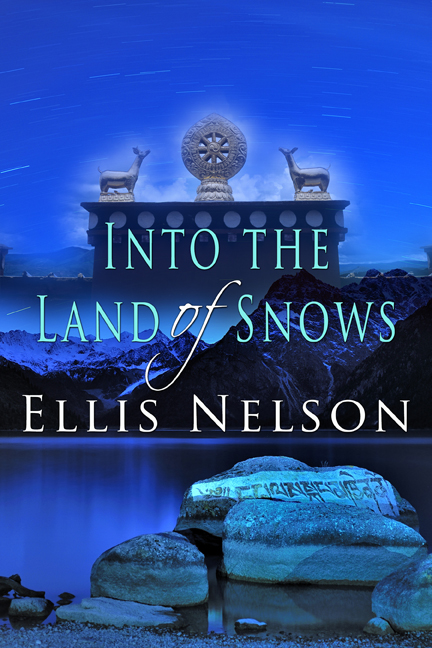
Into the Land of Snows: Wonderful Review Found on Blogosphere

Woke up this morning and discovered this very thoughtful and insightful review. Couldn’t help myself from sharing. Thanks for making my day (or week) bookpeeps!

http://bookpeeps.org/2012/11/17/into-the-land-of-snows-a-novel-by-ellis-nelson/#respond

14 Comments

Filed under Book Review, Books

A NOD TO NEWTON, A HUG FOR EINSTEIN, AND THE NEW PARADIGM

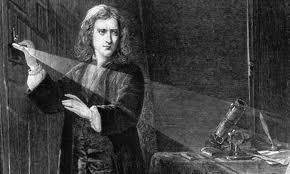
We’ll never totally get over Newton. His system explains lots about daily life. But we will need to move forward and embrace new ideas and try new things that challenge our worldview. It is said that when a person has direct experience of reality (a metaphysical experience) things become blurry. Literally blurry. Welcome to that new reality.

The understanding of a solid, material existence is constantly being called into question by quantum physics. Quantum physics isn’t new and we only choose to believe that the question is still there. It’s not. We live in an energy filled world. Things aren’t solid, they just look that way. The universe isn’t empty, it’s filled with energy.

Enter a new paradigm for seeing yourself. Quite simply you are an energy being. Here’s one example. Your electromagnetic heart field extends 8 to 12 feet around you. When you walk into a room this field interacts with others. If you sat across from me, our hearts would act on each other. Scientific equipment could “find” your rhythm in my EEG recording and vice versa.

As we start to understand ourselves as energy beings a whole new way of thinking opens to us. We are energy and so is everything else around us. We interact with everything in our environment (and how big that is, is only constrained by how you define it), all the time energetically. These ideas have ushered in a whole new set of treatments and modalities of healing. To access these new methods, we must push forward fighting established ways just like Columbus pushed forward to pursue the idea of a new world. I’m working with two of these new systems currently.

The first is called EFT (Emotional Freedom Technique). Developed by Gary Craig in the 1990s, it is based on the discovery that tapping on traditional meridian points defined in acupuncture systems brings relief from pain, disease, and emotional issues. The other system called The Emotion Code brings relief with the use of magnets run along meridian paths. Both modalities rely on the idea that negative emotion disrupts the body’s energy system and is a major contributor to pain and disease. EFT is widely regarded as helpful in many kinds of cases. Recently there’s been a lot of successful work done with EFT with post-traumatic stress disorder (PTSD). Both systems are easily accessible through books and online training. There are also practitioners throughout the country who are trained to give these treatments.

On a personal level, I have had some success with EFT in aborting low intensity migraines. It’s sort of similar to my ability able to use bio-feedback to raise finger temperature to abort a migraine early in my cycle. The real test for the system will come as I see if EFT can help me avoid aphasia after an emotional trauma. I’m just starting with The Emotion Code but it is far more complex that EFT. If you’d like to learn more about either system, resources are found below.

The Subtle Body: An Encyclopedia of Your Energetic Anatomy- Cyndi Dale

The EFT Manual- Gary Craig

www.garythink.com (FREE tutorials on how to do basic EFT)

The Emotion Code- Dr. Bradley Nelson


28 Comments

Filed under Book Review, Books, Energy medicine

A PAIR OF YA HORROR NOVELS

In an effort to satisfy my hunger for a good ghost story around Halloween, I stumbled on two firmly planted in the horror genre. Read at your own peril. Spoiler alert.

Beyond- A Ghost Story by Graham McNamee

Seventeen year old Jane was born dead and revived. In her short life she has escaped death four more times, but her shadow is after her. While Jane wrestles with these issues her best friend, Lexi, provides necessary comic relief. As the “Creep Sisters”, Jane and Lexi have to deal with being outsiders at school. Jane must find out why death haunts her before it’s too late and the opportunity comes when a skull is unearthed on the edge of town. Solving that mystery brings her face to face with a serial killer and reveals why her shadow is after her. McNamee successfully incorporates the idea of a dark, lost region that contrasts sharply to the bright light bliss of near death experiences. It’s a nice twist making it a unique ghost story. Sufficiently creepy, fast paced, and satisfying.

Anna Dressed in Blood by Kendare Blake

Cas Lowood has inherited the job of ghost killer from his dad. Armed with a powerful knife, he seeks his prey. His next case draws him to Anna, a girl killed in 1958 on her way to a dance. Anna has the nasty habit of killing anyone who enters the house where she resides. This is a fairly well-crafted story, but not as original as Beyond. It has garnered quite a following seemingly attracting the Twilight crowd because of the romance between Cas and Anna. That part didn’t resonate with me. Cass witnessed a kid being ripped apart by Anna and yet he falls for her. The most unique aspect of the story comes from the idea of the Obeah- a creature seeking power and the Wicca traditions brought to the story by some of the lesser characters. This is a fast read, entertaining, but a bit familiar.      

23 Comments

Filed under Book Review, Books

NEWTON AS ALCHEMIST

When we think of Isaac Newton, most of us probably return to high school physics. Laws of motion, gravity, incline experiments, and lists of equations come to mind. Newton was a great scientist and collective thought has enshrined him this way. But this is a very modern way to see him and casts aside and discards him as a spiritual being, for Newton was an alchemist. Sir Isaac wrote more on Biblical hermeneutics and occult studies than on math and science. He placed great emphasis on rediscovering the occult wisdom of the ancients and probably considered his scientific work to be of much less importance.

Although alchemy is generally viewed as a precursor to science (and it has that role), it was so much more. Alchemy incorporates Hermetic principles which include ideas from mythology, religion, and spirituality. Below HJ Sheppard outlines the dualistic nature of alchemy as both external (in the material world) and internal (spiritual) practices.

Alchemy is the art of liberating parts of the Cosmos from temporal existence

     and achieving perfection which, for metals is gold, and for man, longevity,

     then immortality and, finally redemption. Material perfection was sought

     through the action of a preparation (Philosopher’s Stone for metals;

      Elixir of Life for humans), while spiritual ennoblement resulted from some

      form of inner revelation or other enlightenment.

 We will probably never know the full extent of Newton’s alchemical work. Much was destroyed by fire. He also worked in a time when many alchemical experiments were banned and religious views differing from what was considered mainstream was heresy. Historians are still trying to piece things together.

An auction at Sotheby’s in 1936 created a worldwide sensation. Previously unpublished and unseen documents (Portsmouth Papers) surfaced and were presented for sale. About one-third of them were considered alchemical in nature. The papers show Newton’s keen interest in the philosopher’s stone. To this day, several projects are underway to catalog, transcribe, and make Newton’s papers available.

Other writings point to Newton’s interest in occult knowledge, sacred geometry, and prophesy. Throughout his life, Newton associated with members of various esoteric groups but his actual membership in any of them has never been confirmed. Certainly he shared many of the same interests these groups had. At the time of his death, Newton’s library contained 169 alchemical books and for its time, it would have been one of the best alchemical libraries in the world.

Recently I read Ghostwalk by Rebecca Stott. This is a fictional story which revolves around Newton’s life at Cambridge. Stott is a professor who bases the book on actual records of Newton’s life. At its core are the mysteries of Sir Isaac’s rise to power and position, a series of murders near the university, and the influence of alchemy. A very interesting read.

58 Comments

Filed under alchemy, Book Review, Spiritual/Mysticism

How This Book Came Into the World

Several years ago I had a particularly bad year. My father died, my son was hospitalized, and I came face to face with my own health crisis. All in one year. My illness effectively took me out of the world and focused my attention inward. I returned to basics and found my interest in Buddhism waiting for me. Silent, I think, since at least my teenage years.

I began taking classes offered in faraway Dharamsala, India.  Thanks to the internet, I was able to study with a master who had fled Chinese-occupied Tibet to follow His Holiness, the Dalai Lama into exile in 1959. Listening to Geshe Sonam Rinchen’s patient lectures aided my understanding of Tibetan Buddhism. That along with my friendship with a young monk in India helped me to process and write, Into the Land of Snows.   The novel explores many of the themes I was exposed to as I learned Eastern concepts.

The process of the inward journey continues for me. Living in the material world is not easy. I know the majority of readers will read the book as an adventure in a foreign land, but I hope the book finds a few fellow spiritual travelers.

43 Comments

Filed under Book Review, Books, Story behind ITLS

THE STORY OF CHRISTOPHER ROBIN

I’ve always loved the Winnie-the-Pooh stories. The Disney version is OK, but I really treasure the books with the pastel wash illustrations by EH Shepard. My son’s nursery had six of these prints which I still have and can’t manage to part with despite him being twenty-one and off to university. Why is that?

AA Milne became famous for a series of stories and poems about a little boy named Christopher Robin and his adventures with his animal friends in the Hundred Acre Wood.  Up until this point Milne had been known for his plays, but in 1926 he published Winnie-the-Pooh and Christopher Robin, Eeyore, Kanga and Roo, Rabbit, Piglet, Owl, and Tigger made their way into children’s literature and the hearts of millions on both sides of the pond.     

The character of Christopher Robin was based on Milne’s small son by the same name. When the real Christopher Robin was young, he helped his father work on the stories. The fictional Hundred Acre Woods was modeled on nearby Ashdown Forest where father and son would walk together. Young Christopher had a stuffed bear named Edward. The fictional story bear was named after a bear in the London Zoo he had seen called Winnie (the bear came from Winnipeg, Canada) and Pooh after a swan the boy also saw. There is a bridge in Ashdown Forest where it is alleged that the first game of Poohsticks was played. The bridge has become a tourist site and since 1984, the annual World Poohsticks’ Championship has been held at Day’s Lock on the Thames.

Unfortunately, Christopher Robin grew up to resent his father immortalizing his childhood in the stories and poems. Once he was off to boarding school, he was teased and his life made difficult by other boys. So much so, that he learned to box to defend himself. Christopher Milne served in WWII, graduated from Cambridge, and ran a bookshop for most of his life. He also wrote several books, one called The Enchanted Places examined his life as a child. The stuffed toys Christopher played with were given to an editor who donated them to the New York City Public Library where they can be seen today.

Trivia Question: AA Milne attended school and was taught by another famous writer. Who was that? Feel free to answer in the comments. (I’ll post the answer if no one gets it.)  mike75 got it with HG Wells. Sorry, no big prize but I am impressed!! I had no idea until I read it in Milne’s biography.

59 Comments

Filed under Book Review, Books