Tag Archives: reading

ACROSS GENERATIONS

Pluto with satellites

Pluto with satellites

Recently I watched an episode on Gaiam TV where Regina Meredith was interviewing an astrologer. I’ve been interested in astrology off and on since I was a teenager, but over the past year or so that interest has become more intense and I watch quite a few YOUTUBE astrologers as they explain what’s going on in a given month. It is fascinating and personal.
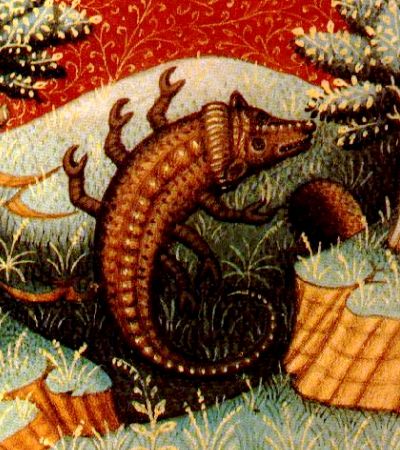
Scorpio2

What resonated with this interview concerned the movement of Pluto and how these long transits (248 years to circle the zodiac) influence generations. With Pluto in a given sign anywhere from 11 to 32 years, it defines a whole generation. In a way, this is the opposite of personal because I share influences with everyone in my age group. As a writer for young people, this idea intrigues me. It especially drew me in as the astrologer talked about my adult children’s group (Pluto in Scorpio). He talked about the attraction for this group to pagan religions and pure philosophy. My daughter describes herself as pagan and my son is currently exploring nihilism and its intricacies. Further extrapolating, I thought- wow, this was the perfect market for Harry Potter. Some people think JK Rowling had a unique idea or that the books were exceptionally well done. But most of us realize that young wizards going off to school has been done before. Perhaps then, Pluto in Scorpio almost guaranteed Harry Potter would make publishing history.

Sagittarius2

The youngest of the children of the Pluto in Scorpio generation will turn twenty soon so as a children’s writer, I bid them farewell. My attention turns to the Pluto in Sagittarius (1995- 2008) group. This would be my target audience and astrology should help me see who these kids are. What are the characteristics of this generation? Sagittarius rules religion, philosophy, long distance travel, and foreign countries. This generation should have a keen interest in these areas and Sagittarius has a can do enthusiasm that Scorpio lacks. They value freedom, are easily bored, and may not be as well-grounded and realistic as some. If I were to try to predict what would appeal to the Pluto in Sagittarius generation in terms of books (and movies), I’d list novels with far away settings, diverse cultures, exciting plots, maybe some quirky humor. I’m not sure dystopia like Hunger Games and Divergent will continue to appeal. Those seem more tied to earlier Scorpio themes. The Sags should be interested in religion and philosophy so perhaps visionary fiction will find its place. Time will reveal what this generation gravitates toward and what the next big blockbuster will be. Just about the time we start to see how obvious it all should have been, the Pluto in Capricorn (2008-2024) kids will show up and we’ll be scratching our heads all over.

Capricorn2

27 Comments

Filed under Books, Reading, YA

I Write Visionary Fiction- Who Knew?

Photo: Salvatore Di Giovanna (2008)

Photo: Salvatore Di Giovanna (2008)

I’ve always bristled at categorizing my writing although I recognize it’s important for marketing purposes. Writing for kids seemed natural because I always saw promise and openness in young people.  Adults can be very set in their identities, roles, and futures. Kids play with new ideas, try them out. The distinction between writing for older or younger kids also was easy. I like both age groups and have a tendency to jump from one to the other once I finish a given novel. Having to adapt to a different audience allows me an opportunity to play in different ways.

But then an agent or publisher wants to know sub-genre. What’s my sub-genre? Here’s where things get tough. Traditionally, my work would be lumped into fantasy or science fiction, sometimes paranormal. But is it?

Photo: Ole Anders Flatmo (2013)

Photo: Ole Anders Flatmo (2013)

This week I learned about a newly emerging genre called visionary fiction. According to the Visionary Fiction Alliance (VFA), this category of writing “embraces spiritual and esoteric wisdom, often from ancient sources, and makes it relevant to our modern life.” It does this without preaching to the reader. Furthermore, there is a strong emphasis on the growth of consciousness while often employing reincarnation, dreams, visions, and psychic abilities within the novel. Human characters in visionary fiction point to our limitless potential to transform and evolve.

I write visionary fiction. For more information on this genre and books which fall into it, visit the VFA by clicking on the link on the sidebar.

46 Comments

Filed under Books, writing

ENTER TO WIN A FREE COPY OF MY BOOK

snow scene

TreeHouse Arts is running a contest through July 10th (Th.). Enter with a poem about snow. Winner’s poem will be published on their site. Good luck!

Part III: Summer Reading Giveaway and Haiku Contest!

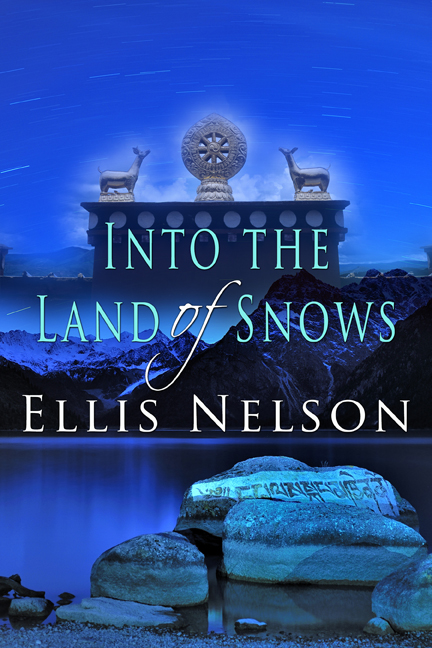
Into the Land of Snows

4 Comments

Filed under Book Review, Books

INTERVIEW WITH NAOMI C. ROSE, AUTHOR OF:

WHERE SNOW LEOPARD PROWLS

Tibetan Wildlife Cover.2.indd

This is my first author interview and it seems fitting to welcome Naomi as my first guest. We met several years ago when I was first working on Into the Land of Snows. Naomi was a children’s author/illustrator who had already published a book on Tibetan culture and I sought her out for guidance. She graciously supplied it. I am happy to welcome her here to talk about her fourth picture book entitled Where Snow Leopard Prowls.

Thanks, I’m very honored to be your first interviewed author!!

NaomiRose

Naomi, your first three picture books dealt with Tibetan culture and Where Snow Leopard Prowls marks a change for you. This book is all about wildlife on the Tibetan plateau. Can you talk about how your vision shifted and you were drawn to paint these images?

I’ve had the joy of creating books for children for many years. Two of my previously published books are wisdom tales from Tibet. Several years ago, while painting the illustrations for these books, I found myself painting more and more Tibetan wildlife into the scenes. And as I painted, I felt more and more endeared to these animals. When I finally painted a snow leopard, I knew the animals were calling me. It was time to create a book for and about them. 

I’ve always thought of picture books as a child’s first introduction to art. The time and care that goes into the production of a picture book is amazing. How long was it from the time you decided to write and illustrate this book until you held it in your hands? What was the process like?

I think it was about five years from conception to birth. I really try to give each book the time it needs, to let the inspiration, the art, the book itself lead the way. When I first felt the call to do a book on Tibetan wildlife, I envisioned an activity book. But when I had completed that, I realized there was something more wanting to emerge. So I switched gears and created a full 32-page picture book. Then I posted the activity book as a free companion book off my website.

Baby Leopard

The paintings also evolved in an interesting way. I painted Snow Leopard’s portrait first. To my surprise, I felt very compelled to paint Snow Leopard’s eyes before any other feature. This was NOT how I was taught to paint portraits, but I couldn’t resist the urge. Once the eyes were painted, it felt like Snow Leopard was watching me paint, and guiding me on various details of its portrait. This turned out to be the case with each portrait, culminating in a deeper connection with each animal. 

Some of the animals in the book readers may be familiar with but there are some that were new for me. I’d never heard of a Himalayan Tahr, for example. Was there an animal you researched that was totally new to you? I know the book is full of animal facts and I wonder if there is anything in your research that surprised or even shocked you.

Many of the animals were new to me. Himalayan Tahr is a good example. I don’t remember what drew me to this particular animal, but somehow Tahr popped out at me as I studied the animals and the land of Tibet. Once Tahr showed up on my radar, I had to paint it and give it a place in the book. That’s sort of how it went. I think the animals found me as much as I found them. I had great fun learning about them and finding fun tidbits to put in the book. They’re all so amazing!  These animals became so personal to me that I had to treat them as individuals, thus referring to them by name (“Snow Leopard” instead of “a snow leopard”).

You’ve talked about the importance of having children connect with wildlife. It is in that connection and caring that we may be able to do a better job protecting whole environments. Can you outline a few of the factors that threaten some of the species in your book?

That’s a really interesting question because I ended up choosing to not study those factors.  When I first worked on the book, I focused on how these amazing animals were at risk of extinction as a way to motivate children to care for Mother Earth. Then I realized that approach wasn’t right for me.  I wanted to motivate from the same place that motivated me to do the book, a growing personal connection. I believe that’s another way to motivate; by fostering a love, respect, and connection with wildlife and nature, children will naturally grow to care about Mother Earth and her precious animals. In hopes the book has motivated children to care, I’ve listed things we can do to help in the back of the book. I’ve also listed activities for cultivating a personal connection to the natural world. 

Baby Monkey

My favorite illustrations were the baby snow leopard and the red panda. What animal or animals were the most fun for you to paint and why?

I loved painting them all, of course. But I had a special fondness for the baby animals. They are all soooo cute!  And painting Mama Snow Leopard was especially powerful.  I invite folks to see more of the animals in the short video on my website:  http://www.naomicrose.com/books/wslp-books

Thanks, Naomi for sharing your wonderful book with us. Please visit Naomi’s sites to see more of her beautiful work.

Website link(s):  http://www.naomicrose.com

Facebook:  www.facebook.com/naomicrose

Youtube: www.youtube.com/user/naomicrose

21 Comments

Filed under Book Review, Books

GHOST STORIES FOR MIDSUMMER

I love a good ghost story and not just around Halloween. Right now I’m reading You Came Back by Christopher Coake. It has the elements I like- mystery and creepy atmosphere and steers clear of horror and bloodbath. At least, that is, so far.

One of my pet peeves about ghost stories is that I don’t like it when a book purports to be a ghost story and then it turns out, the main character is either crazy or a drug addict. I think this is a cop out. Call me crazy, but I think it is necessary to have a ghost in a ghost story. I don’t want to read about alternative takes on ghosts. I want to read about ghosts.

 A little (and I mean very little) research online into ghost stories revealed two facts which were rather interesting. First, all cultures around the world have some kind of ghost story. And here I admit to being an Asian ghost story freak. I like Chinese, Korean, Japanese, and Indonesian ghost movies. These cultures offer a slightly different take on ghosts and I find these fascinating. Thank you Netflix for expanding my world! The second fact I uncovered is that literary critics often refer to the “Golden Age of the Ghost Story” and set that time period from the 1830s until WWI. Think Victorian Age and Edgar Allan Poe. It’s sad to think that we aren’t in the Golden Age of Ghost Stories any more.

In an effort to stimulate a new golden age of ghost stories, I propose we return to reading some this summer. Read these on the bus, at picnics, at sleepovers, near the pool, on the beach, and of course, at night- alone, during fearful thunder storms.  

 For the Younger Set: middle grade novels:

Breathe by Cliff McNish (innovative and creepy)

Wait Til Helen Comes by Mary Downing Hahn

Time For Andrew by Mary Downing Hahn

The Headless Cupid by Zilpha Keatley Snyder

 For Young Adults:

Ruined- A Ghost Story by Paula Morris

Giving Up the Ghost by Sheri Sinykin

Beating Heart- A Ghost Story by AM Jenkins (creepy & mature)


34 Comments

Filed under Books

WHY READ FICTION?

There has long been talk amongst educators and parents regarding the importance of reading for children and young adults. Good reading and comprehension skills are tied to good grades and we all know how competitive we are. Lately, there has been a focus on how reading fiction teaches and instills empathy and fosters the development of compassion. A reader can walk in the shoes of a character and gain an appreciation of others’ experiences and feelings. This is a very good thing and something society as a whole should appreciate.

And now there is an additional reason for why we should be reading fiction. It’s not just for children anymore. This week’s NY Times Sunday Review contained an article entitled “Your Brain on Fiction.” The piece details new research coming from neuroscience.

Among the findings:
Reading sensory words stimulate areas of the brain devoted to the particular sense. MRI scans show that “cinnamon” lights up the area devoted to smell.

“A velvet voice” or “leathery hands” lights up the sensory cortex which perceives texture.

Words associated with movement like “kicked the ball” stimulated the motor cortex which is associated with body movement.

We’ve known for a while now (scientists starting in the 70s and mystics for thousands of years) that the brain is crucial for constructing our reality, but it often has a tough time discerning it. And reading is one case in point. Whether actually experiencing a life event or reading about it doesn’t make a whole lot of difference to the brain. The neurological regions involved are the same. Fiction creates a simulated reality where the reader enters a world of vivid detail and rich emotion. The reader’s brain accepts the unfolding of story in much the same way it accepts events in our own lives. What more could the reader or novelist hope for?

Leave a comment

Filed under Reading