Category Archives: Spiritual/Mysticism

Free Online Conference, STARTS MONDAY, You Must Register First

QUANTUM HEALING, CONSCIOUSNESS, AND SOUL EVENT

I’ll be hanging out at this conference and so can you! I’ve heard some of these speakers before and they are worth the time investment. If you’re unavailable for the live event, they offer a replay you can watch anytime. Pick and choose what interests you most. Register today by providing an email address and get set to learn something new for 2013!

http://www.quantumhealingandsoul.com/

8 Comments

Filed under alchemy, Energy medicine, Event, Spiritual/Mysticism, Uncategorized

ARE YOU A POST MATERIALIST?

My son’s home from university and one of our conversations turned to the economy and how hard it is to find even part-time, entry level work. He’s sent out something like 80 applications, done some interviews, and over the course of months, has just recently landed something part-time. The talk eventually wound around to the idea that my husband and I are post materialists. Now that’s not a term I know and my son delights in sharing what he has learned. As a parent, I love these times when the kids get to educate me. “So what are your girlfriend’s parents then?” I ask him. “Materialists”, he answers as if I should already know that. I actually did know that.

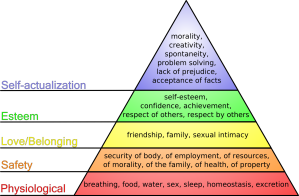
Anyway, further investigation on my part revealed that Ronald Inglehart developed the idea of post materialism in the 1970s as a sociological theory to explain an ongoing transformation of individual values within a society. He argued that as western nations achieved a level of economic prosperity and physical security, its members transformed their values seeking more autonomy and self-expression. Ah, this sounds a lot like Maslow’s hierarchy of needs. As people meet their basic survival requirements, we move up the pyramid until we are striving for self-actualization. Maslow confined his theory to how individuals are transformed and Inglehart wanted to see how societies as a whole might be transformed.

Maslow's Hierarchy of Needs, created by J. Finkelstein, 2006

Maslow’s Hierarchy of Needs, created by J. Finkelstein, 2006


So to be a post materialist, you must first meet your basic survival needs (food, shelter, security). OK, done. Once that is accomplished you move up Maslow’s hierarchy and as you do, you start to realize you’re no happier than when you were struggling. This brings to mind Daniel Gilbert’s book, Stumbling on Happiness. I believe it was in that book that I first learned American happiness peaked in the 1950s. BEFORE I WAS BORN! Sixty plus years later, we have higher incomes, higher levels of education, better health care, bigger houses, more cars but we are less happy overall. Remember when we were told (and believed) that he (or she) who has the most toys wins? We played the game, we toed the line, we consumed and bought all the right stuff, we competed with the Joneses, and we became… less happy. Maybe we were even miserable because the promise of happiness slipped away as we had to go looking for a storage shed to rent for all the loot that was supposed to make us positively giddy.

Stumbling on Happiness


We looked around and saw it wasn’t working. We stopped playing the game. We got rid of the excess stuff and looked inside to see what would fill the void. We began to talk about “downsizing”. The value shift from possessing things to experiencing and self- expression took hold.

Inglehart recognized that younger people (raised in economic security) were more likely to identify with the values of post materialism. But older people who were raised with the struggle of material existence may or may not shift out of that paradigm. Actually, Inglehart’s ideas remain controversial. Surprisingly, we don’t have good statistical information to measure value changes in the US. The World Value Survey of 2000 (Wikipedia) did give some indication of post materialism worldwide. The highest percentage of post materialists were found to be in Australia with 35%. Canada has 29% while the US has 25 % of the population being post materialist.

So being a minority in the US, I will be moving this year and continuing my efforts to downsize. I will continue to reject the notion that he who has the most toys wins. I will refuse to believe that my worth as an individual comes solely from consuming. I will pursue balance and harmony. And I will remember happiness is a choice for the post materialist and materialist alike. Happy 2013!


https://amzn.to/30oq1NL

137 Comments

Filed under Books, Political, Spiritual/Mysticism

THE LINE BETWEEN FACT & FICTION

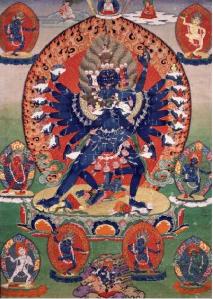
tantra

Since the release of INTO THE LAND OF SNOWS, there have been some questions concerning what’s real and not real in the book. From the perspective of this being a book whose main theme concerns defining that very line, it’s a somewhat amusing question. I concern myself with it because I’ve heard some people dismiss the book as fantasy. But that’s not the whole story.

The book is set in the magical Himalayas surrounded by a rich cultural tradition. In such a place, my job as author was relatively easy. I chose concepts and ideas already present there to create a story around an American teenager. I made up very little.

Now as to the facts.

1. Locations- The map at the beginning of the book accurately depicts the placement of real locations Blake would visit along his route, had Blake actually gone there. But the careful reader will notice that about half way through the book, Blake continues his journey, but the map stops. This is because Blake has left the material reality of our world. An alternate reality opens up for him to fully experience the magic and potential for enlightenment.

2. Mallory& Irvine- The story of these climbers disappearing into legend while on the Third Step is true. The camera Mallory carried that day is still missing. We don’t know (for sure) who summited Everest first, although Hillary is officially credited with it.

3. Yetis- These animals/beings remain a mystery. Sherpa culture recognizes different kinds of yetis. I took great liberty with the Tantric yidam concept.

4. Baian-Kara-Ula Mountains- There are legends of star people and an origination story. As late as the 1950s, stories of the Chinese gathering evidence in the region exist.

5. Chakra points- There are many different systems. Tibetans usually depict 5 while Indian schools generally have 7. Research by Dr. Hiroshi Motoyama revealed the heart chakra produced measurable physical light.

6. Singing Bowls- Are used for healing.

7. Lung-gom-pa/Tumo/Yidam- Are Tantric practices.

8. Birds- The sneaky placement of rare birds in the region was my invention and homage to HH. The 16th Karmapa, who loved birds.

25 Comments

Filed under Books, Spiritual/Mysticism, Story behind ITLS

CAN A JELLYFISH BE THE SECRET TO IMMORTALITY?

jellyfish

To everything, turn, turn, turn

     There is a season turn, turn, turn

          A time to be born, a time to die (The Byrds)

And so we thought. One of the most accepted, basic truths is that we are born and we die but what if that’s not the whole truth? Enter Christian Sommer, a German marine-biology student who in 1988 scooped up some Turritopsis dohrnii. He placed the tiny, obscure jellyfish in a petri dish for observation. Soon he was witness to the creatures doing the unthinkable. Over time, they grew younger and younger and eventually began a new life cycle. Biologists continued to study the species, and in 1996, a paper was published describing how the jellyfish could revert to a polyp “thus escaping death and achieving potential immortality.” Of course, it’s not totally immortal in the conventional sense, and we really need to view the subsequent life forms as clones, but still it is pretty amazing.  The jellyfish, the size of your pinky nail, became known as the immortal jellyfish although I’d be inclined to call it the Benjamin Button jellyfish, just for the literary connection.

For reasons beyond my comprehension, very few people took much notice of this discovery. Big pharma and well-heeled universities did not rush in to take up studying our bizarre little friend. Some scientists think the immortal jellyfish may lead to breakthroughs in cancer research and longevity, but so far very little research has been done.

In fact, there is only one Japanese researcher, Shin Kubota who is consistently culturing and studying these creatures. He works alone without a staff or major funding. This seems incredible considering what molecular biologist Kevin J. Peterson told a NY Times Magazine reporter in a recent article. Peterson said, “There’s a shocking amount of genetic similarity between jellyfish and human beings.”  Kubota himself thinks the species has the potential to unravel immortality but interestingly, he doesn’t think humans are spiritually evolved enough to handle the responsibility for it. So there might be something good in only having one person doing this work. Even slight gains in life expectancy rate can wreak havoc in a society and who wants to wait to be 100 before you can apply for Social Security. Maybe immortality is for jellyfish.

See NY Times Article: http://www.nytimes.com/2012/12/02/magazine/can-a-jellyfish-unlock-the-secret-of-immortality.html?smid=fb-share&_r=0

https://amzn.to/30oq1NL

41 Comments

Filed under Spiritual/Mysticism

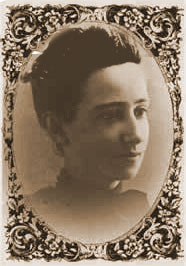
THE CURIOUS CASE OF FRANCIS SCHLATTER: the Denver Messiah

Francis Schlatter

At the turn of the last century, a French cobbler took up residence in Denver. He was a quiet unassuming man who plied his trade until he had a transformative experience in which he was told by “the Father” to give up his business and devote his life to healing. He spent the next two years wandering the American West. His first efforts at healing began in California with the Indians of the San Jacinto Valley. By July 1895, he was in Albuquerque treating hundreds who gathered for his hands-on treatment.

Francis Schlatter lived simply refusing all forms of payment. He taught no new doctrine and healed by grasping the hands of the sufferer. Sometimes he was overheard to say The Lord’s Prayer, but a good portion of his healings was done in silence. He healed the blind, the deaf, the lame, and all sorts of maladies while crediting “the Father” for all of them.

In the fall of 1895, he was back in Denver staying with a friend. Outside a small house Schlatter stood near the front fence as thousands passed by for healings. So impressed was the Union Pacific Railroad executive, Superintendent K. Dickenson, after his wife’s treatment, that he allowed any of his railroad workers to leave his job and travel to Denver at the expense of the company to seek treatment. And come they did! In the short two month period in which Schlatter stood on a platform in that Denver neighborhood, it is estimated that 60,000 people received healings. Each day, the mail arrived requesting the healer bless and return hundreds of handkerchiefs. Schlatter did his best to keep up with those as well.

Newspapers picked up the story and soon other cities were clamoring for Schlatter to visit them. Men came offering Schlatter all kinds of deals in return for his presence. People who took up their places in line for the daily healing were now offered money as the wealthy and privileged sought to exploit them. Schlatter was deeply offended by the practice and some believe it was what convinced him to give up his work and flee in the night. The people of Denver were outraged when their healer disappeared. Hundreds were still arriving daily to see the healer. Search parties were sent out to find Schlatter and bring him back to Denver, against his will if necessary.

Francis Schlatter’s story is detailed in Denver’s Extraordinary Faith-Healing Messiah edited by Bill Blanning. The book contains the newspaper accounts from the time Schlatter appears in New Mexico until his disappearance. It’s interesting to read the articles written over a hundred years ago because the language is so formal and foreign to the way we write today. However, you do get a good feel for the way Schlatter was received. Hundreds of individuals who received healings are named and people genuinely felt Schlatter was doing good work. His simple way of living and goodness are portrayed. There were a few dissenters, who felt Schlatter was a fraud, but they can be counted on one hand and their motives even at the time were seen as suspect.

What is also interesting is looking back and seeing Schlatter in his own time. I was surprised to see that Spiritualism was well known and I found no derisive comments in the newspaper coverage of it. In addition, the terms animal magnetism, Christian Science, and psychic science were all used without explanation. People over a century ago were familiar with those terms. I came away feeling that mainstream people at the turn of the last century were far more open to these things than we are today.

And the end of the story. Schlatter disappeared into New Mexico for a few months where he managed to dictate his autobiography. The Life of the Harp in the Hand of the Healer by Ada Morley was released in 1897. That same year, Schlatter’s bones and possessions were discovered on a mountain in the Sierra Madre.

82 Comments

Filed under Books, Spiritual/Mysticism

DO YOU HAVE A GRATITUDE PRACTICE?

It’s Thanksgiving again and many will fleetingly acknowledge a few (or many) things they are grateful for today. Maybe you’ll go around the dinner table asking friends and family to share a few words. That reminds me of the year we did that. The kids were little and we had gathered pinecones from Plymouth and I thought it’d make a meaningful ritual to pass a pinecone and mention something we were grateful for. It was a disaster. Everyone was caught off guard and a few adults even seemed offended. How dare I require something of them when the whole idea of Thanksgiving was to stuff yourself to bursting? The pinecones sit at the bottom of a box of fall decorations never to see the light of day again. I learned.

I’ve always been a cup half-empty person. My focus was on a compulsive need to fill up the cup so I could at last be happy. When I achieve the right job, the right income, the right family, the right set of possessions, and the right body – then I will have earned the right to be happy. That’s how I was raised after all. Then I will celebrate and be grateful for having it all. For decades I existed like this (maybe you do too?).

Eventually I did come to understand how toxic this attitude is.

Nowadays, I have a gratitude practice which is simple and has turned me into more of a cup half-full person. Every night I take a few minutes to focus on the myriad of good things in my life. By choosing to see the world this way, I banish thoughts of not being good enough and not having enough. I am good enough and I certainly have enough. That’s blasphemy in our consumer driven, material world. I am a revolutionary. Are you?

98 Comments

Filed under Spiritual/Mysticism

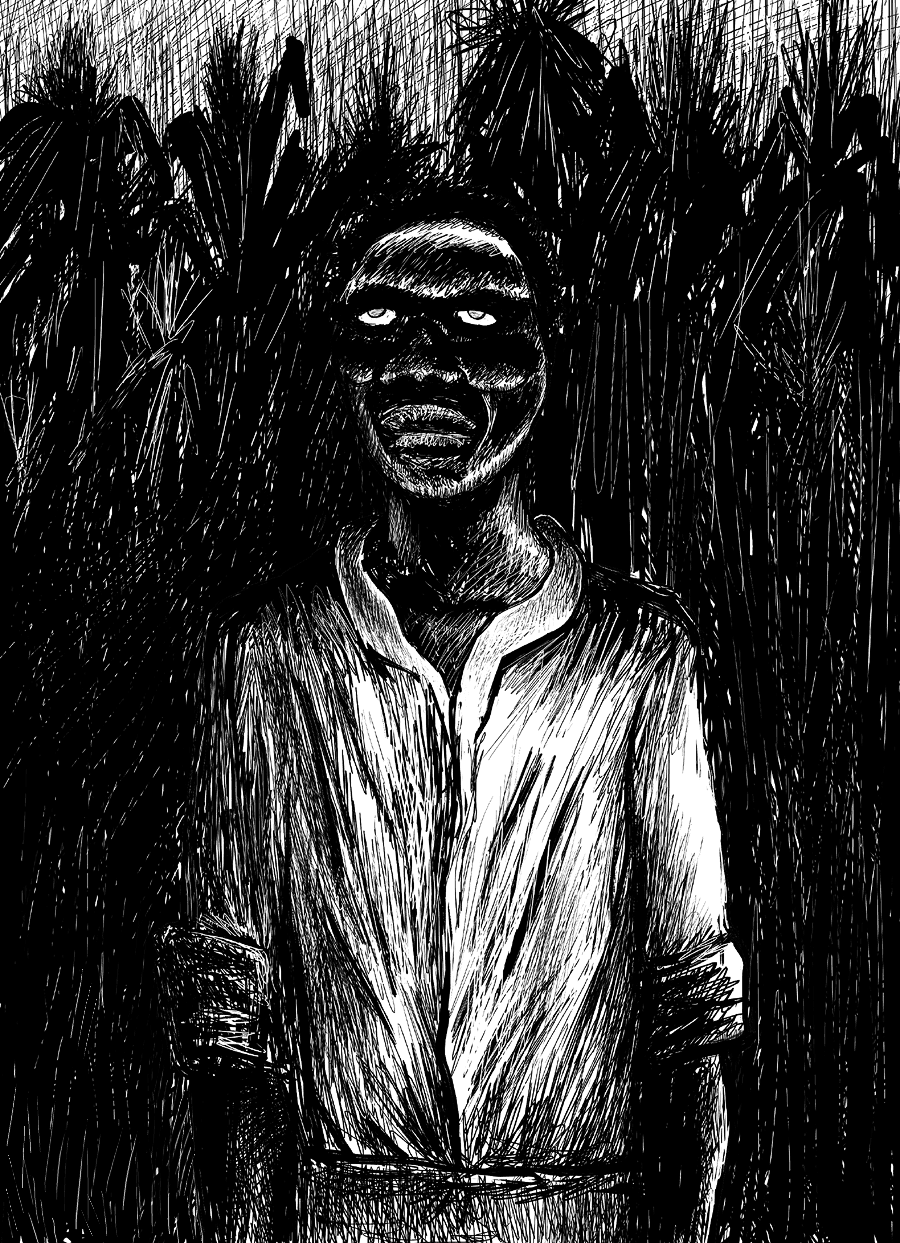
HOW TO MAKE A ZOMBIE

Another Tale for Halloween


Wade Davis is a Canadian anthropologist and ethnobotanist. He has written extensively about culture, botany, the environment and he has become a noted photographer. He has done hundreds of interviews, inspired many documentaries, and even was the source for three X-files shows. And Wade Davis has met a zombie. Not the made-up kind delighting so many Americans nowadays, but the very real kind. A poor, unschooled man who was victimized by his family.

Back in the 80s Wade Davis wrote about his experience investigating the zombification process in Haiti. His book The Serpent & the Rainbow propelled him to worldwide fame and a Hollywood movie followed in 1988.

Drawn to Haiti by legends concerning the existence of zombies, Davis wanted to investigate the botanical or chemical aspects of the phenomena. Soon he was drawn into the vodoun culture of the Haitian witchdoctor (bokor). Escape the cities of Haiti for the countryside and fear and magic play a very real role in the society. Wade Davis knew the story of Clairvius Narcisse and before long the two would meet.

In 1980, Clairvius Narcisse approached a woman in a marketplace and identified himself as her long gone, well- dead actually, brother. She was shocked to say the least but then so is his story. Shocking. Clairvius told a tale of being drugged, buried, resurrected, and made a slave on a sugar plantation. Apparently a brother wanting Clairvius’ land sold him to a bokor. Having “died” in 1962, Clairvius escaped the plantation a couple of years later only to wander aimlessly for the next sixteen. Now having learned of his brother’s recent death, he felt safe enough to make himself known to the sister. A local doctor developed a questionnaire to establish once and for all, if the man was who he claimed to be. Clairvius answered everything correctly and the doctor along with his village accepted him as the true Clairvius. Had the curious tale of Clairvius Narcisse been isolated, maybe it could have been dismissed easily. But there are many tales of zombies in Haiti long before Clairvius and after.

Davis’ investigation into the world of vodoun and the zombie led him to advance the hypothesis that tetrodotoxin (TTX) was the chemical agent used by the bokor to induce a death-like state. A mixture of toad skin and puffer fish, either rubbed on the skin or ingested through food, seems to accomplish this. Breathing slows, the heartbeat weakens, and victim appears dead even to medical personnel. In the tropical climate of Haiti, bodies are buried quickly and the bokor likes it that way. A zombie in the ground for more than eight hours risks asphyxiation. The zombie is dug up and restored to life possibly with an antidote. Delivered to a plantation, the zombie is kept in a semi-permanent induced psychotic state by force feeding a datura paste. Datura destroys memory and wreaks havoc with gaining any sense of reality. It is also known to produce powerful hallucinations.

All of the chemicals used or potentially used are powerful enough to cause real death so the bokor has to be knowledgeable and proficient in their use to be successful. Davis also credited the culture of fear and belief that underlies the creation of the zombie. There are powerful cultural influences that must be in place to create and maintain a zombie.

Are zombies scary? Maybe not, they’re victims, but the idea that you or I could be made into one makes me uncomfortable. That’s why I try to make sure my siblings are happy with me and I’m not more valuable “dead” than alive. Happy Halloween!


34 Comments

Filed under Books, Spiritual/Mysticism

NEWTON AS ALCHEMIST

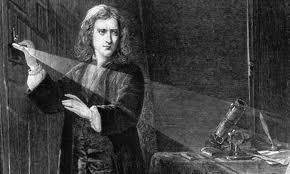
When we think of Isaac Newton, most of us probably return to high school physics. Laws of motion, gravity, incline experiments, and lists of equations come to mind. Newton was a great scientist and collective thought has enshrined him this way. But this is a very modern way to see him and casts aside and discards him as a spiritual being, for Newton was an alchemist. Sir Isaac wrote more on Biblical hermeneutics and occult studies than on math and science. He placed great emphasis on rediscovering the occult wisdom of the ancients and probably considered his scientific work to be of much less importance.

Although alchemy is generally viewed as a precursor to science (and it has that role), it was so much more. Alchemy incorporates Hermetic principles which include ideas from mythology, religion, and spirituality. Below HJ Sheppard outlines the dualistic nature of alchemy as both external (in the material world) and internal (spiritual) practices.

Alchemy is the art of liberating parts of the Cosmos from temporal existence

     and achieving perfection which, for metals is gold, and for man, longevity,

     then immortality and, finally redemption. Material perfection was sought

     through the action of a preparation (Philosopher’s Stone for metals;

      Elixir of Life for humans), while spiritual ennoblement resulted from some

      form of inner revelation or other enlightenment.

 We will probably never know the full extent of Newton’s alchemical work. Much was destroyed by fire. He also worked in a time when many alchemical experiments were banned and religious views differing from what was considered mainstream was heresy. Historians are still trying to piece things together.

An auction at Sotheby’s in 1936 created a worldwide sensation. Previously unpublished and unseen documents (Portsmouth Papers) surfaced and were presented for sale. About one-third of them were considered alchemical in nature. The papers show Newton’s keen interest in the philosopher’s stone. To this day, several projects are underway to catalog, transcribe, and make Newton’s papers available.

Other writings point to Newton’s interest in occult knowledge, sacred geometry, and prophesy. Throughout his life, Newton associated with members of various esoteric groups but his actual membership in any of them has never been confirmed. Certainly he shared many of the same interests these groups had. At the time of his death, Newton’s library contained 169 alchemical books and for its time, it would have been one of the best alchemical libraries in the world.

Recently I read Ghostwalk by Rebecca Stott. This is a fictional story which revolves around Newton’s life at Cambridge. Stott is a professor who bases the book on actual records of Newton’s life. At its core are the mysteries of Sir Isaac’s rise to power and position, a series of murders near the university, and the influence of alchemy. A very interesting read.

58 Comments

Filed under alchemy, Book Review, Spiritual/Mysticism

THINKING INSIDE THE BOX

A HALLOWEEN TALE

Over the past few years my husband has endured a long commute from our home to his work in Colorado Springs. To make life easier, we will relocate to a small town nearby. Now this isn’t just any town, this is QUITE a town.

 Manitou Springs got its start by catering to the tuberculosis sufferer of the Nineteenth Century. Emma Crawford and her family (practicing Spiritualists) relocated there in 1889 seeking relief for Emma through the mineral springs and mountain air. Young Emma was engaged to a railroad engineer, William Hildebrand. Legend has it that one day she hiked to the top of Red Mountain where her spirit guide appeared. She tied a red scarf to a tree and later it became her dying wish to be buried there. Emma never married William. She died on Dec.4th, 1891 at the age of nineteen.

Her fiancé and a dozen others carried Emma’s coffin to the top of Red Mountain where they buried her fulfilling Emma’s request. Emma’s grave became a popular hiking location for other Spiritualists throughout the next couple of decades. In 1912, the railroad removed her remains and reinterred her on the south side of the mountain. Heavy rains in August of 1929 unearthed her coffin and sent it careening down Red Mountain. Her bones were discovered 7200 feet down in a canyon. Emma was eventually reburied in Crystal Valley Cemetery in an unmarked grave. And that could be the end of the story, but it’s not.

Remember, I told you, Manitou is a different kind of place. Enter the quirky creativity and entrepreneurial instincts of this town’s folks.  Around Halloween each year the town celebrates The Emma Crawford Festival with a parade and coffin races. The coffin races feature a team of five (one person plays Emma and the other four act as pallbearers and push the coffin). Creativity and speed both play a role in judging the races. There are also prizes for best Emma and best coffin. It’s quite a spectacle and a great day out for family fun. Not your thing? That’s OK. There’s always the fruitcake toss early next year.


48 Comments

Filed under Spiritual/Mysticism

ENERGY MEDICINE: The Reiki Experiments

Over the last few decades we’ve seen the rise of alternative medicine. As we become frustrated with allopathic choices, more and more of us are looking for another way. And some of those ways are going to challenge us. I take supplements, do biofeedback for migraine, meditation for stress, and see an integrative physician. And recently I had a Reiki session.

For those of you who haven’t heard of Reiki, it is a form of energy medicine grounded in a spiritual practice in which universal energy (ki) is transferred through the palms to promote balance and healing. The original system was developed by Mikao Usui in 1922 and has been adapted over the years by subsequent teachers.

The scientific effectiveness of Reiki has yet to be established as most of the limited studies have been either flawed or inconclusive. I did find a fascinating study of Reiki healers and their ability to influence the growth of E. coli bacteria however. University of Arizona researcher Gary Schwartz (PhD) and Beverly Rubik, a biophysicist, conducted this study at a NIH funded center. The work is detailed in The Energy Healing Experiments.


Fourteen Reiki healers would each come in on three separate days and work with a set of E. coli filled test tubes. After completing a standardized form which asked about their well-being, the healer performed a Reiki treatment on a box of test tubes. In another part of the laboratory, a control group of test tubes was placed without the knowledge of the healers. These tubes received no treatment. There were 42 boxes of Reiki treated test tubes and 42 boxes of untreated test tubes.

All of the test tubes were heated to slow the growth of the bacteria to 50 percent of the normal growth rate. If a Reiki practitioner was successful, one would expect more surviving cells in the test tubes which received Reiki than those tubes which had not received the treatment.

So what happened? Shockingly, Schwartz and Rubik found that the untreated Reiki control samples fared better than about half the samples given the healing. How was that possible? After several days of head shaking, Schwartz wondered about the emotional state of the healer. Could that have been a player?

Luckily the researchers had gathered that data and were able to take another look. In cases where the Reiki healer reported feeling physically and emotionally healthy, there was a positive correlation between giving a healing and cell growth. However, when the practitioner reported being stressed or unwell, those samples tended to be negatively impacted.

Obviously, there is a lot of work to be done in this area. But the point really is to know that Reiki (and other methods like it, including Quantum Touch) is on the horizon and offers the possibility of healing. It wasn’t that long ago that most Americans regarded chiropractors as dubious and now they’re mainstream health care providers. Some of these new energy modalities are likely to do the same.

Further reading:

The Energy Healing Experiments- Gary E. Schwartz, PhD

Soul Medicine- Norman Shealy, MD and Dawson Church

Energy Medicine: Balancing Your Body’s Energies- Donna Eden

The Magick of Reiki-Christopher Penczak


47 Comments

Filed under Books, Energy medicine, Spiritual/Mysticism