
Woke up this morning and discovered this very thoughtful and insightful review. Couldn’t help myself from sharing. Thanks for making my day (or week) bookpeeps!
http://bookpeeps.org/2012/11/17/into-the-land-of-snows-a-novel-by-ellis-nelson/#respond
Woke up this morning and discovered this very thoughtful and insightful review. Couldn’t help myself from sharing. Thanks for making my day (or week) bookpeeps!
http://bookpeeps.org/2012/11/17/into-the-land-of-snows-a-novel-by-ellis-nelson/#respond
Filed under Book Review, Books
We’ll never totally get over Newton. His system explains lots about daily life. But we will need to move forward and embrace new ideas and try new things that challenge our worldview. It is said that when a person has direct experience of reality (a metaphysical experience) things become blurry. Literally blurry. Welcome to that new reality.
The understanding of a solid, material existence is constantly being called into question by quantum physics. Quantum physics isn’t new and we only choose to believe that the question is still there. It’s not. We live in an energy filled world. Things aren’t solid, they just look that way. The universe isn’t empty, it’s filled with energy.
Enter a new paradigm for seeing yourself. Quite simply you are an energy being. Here’s one example. Your electromagnetic heart field extends 8 to 12 feet around you. When you walk into a room this field interacts with others. If you sat across from me, our hearts would act on each other. Scientific equipment could “find” your rhythm in my EEG recording and vice versa.
As we start to understand ourselves as energy beings a whole new way of thinking opens to us. We are energy and so is everything else around us. We interact with everything in our environment (and how big that is, is only constrained by how you define it), all the time energetically. These ideas have ushered in a whole new set of treatments and modalities of healing. To access these new methods, we must push forward fighting established ways just like Columbus pushed forward to pursue the idea of a new world. I’m working with two of these new systems currently.

The first is called EFT (Emotional Freedom Technique). Developed by Gary Craig in the 1990s, it is based on the discovery that tapping on traditional meridian points defined in acupuncture systems brings relief from pain, disease, and emotional issues. The other system called The Emotion Code brings relief with the use of magnets run along meridian paths. Both modalities rely on the idea that negative emotion disrupts the body’s energy system and is a major contributor to pain and disease. EFT is widely regarded as helpful in many kinds of cases. Recently there’s been a lot of successful work done with EFT with post-traumatic stress disorder (PTSD). Both systems are easily accessible through books and online training. There are also practitioners throughout the country who are trained to give these treatments.

On a personal level, I have had some success with EFT in aborting low intensity migraines. It’s sort of similar to my ability able to use bio-feedback to raise finger temperature to abort a migraine early in my cycle. The real test for the system will come as I see if EFT can help me avoid aphasia after an emotional trauma. I’m just starting with The Emotion Code but it is far more complex that EFT. If you’d like to learn more about either system, resources are found below.
The Subtle Body: An Encyclopedia of Your Energetic Anatomy- Cyndi Dale
The EFT Manual- Gary Craig
www.garythink.com (FREE tutorials on how to do basic EFT)
The Emotion Code- Dr. Bradley Nelson
Filed under Book Review, Books, Energy medicine
In an effort to satisfy my hunger for a good ghost story around Halloween, I stumbled on two firmly planted in the horror genre. Read at your own peril. Spoiler alert.
Beyond- A Ghost Story by Graham McNamee
Seventeen year old Jane was born dead and revived. In her short life she has escaped death four more times, but her shadow is after her. While Jane wrestles with these issues her best friend, Lexi, provides necessary comic relief. As the “Creep Sisters”, Jane and Lexi have to deal with being outsiders at school. Jane must find out why death haunts her before it’s too late and the opportunity comes when a skull is unearthed on the edge of town. Solving that mystery brings her face to face with a serial killer and reveals why her shadow is after her. McNamee successfully incorporates the idea of a dark, lost region that contrasts sharply to the bright light bliss of near death experiences. It’s a nice twist making it a unique ghost story. Sufficiently creepy, fast paced, and satisfying.

Anna Dressed in Blood by Kendare Blake
Cas Lowood has inherited the job of ghost killer from his dad. Armed with a powerful knife, he seeks his prey. His next case draws him to Anna, a girl killed in 1958 on her way to a dance. Anna has the nasty habit of killing anyone who enters the house where she resides. This is a fairly well-crafted story, but not as original as Beyond. It has garnered quite a following seemingly attracting the Twilight crowd because of the romance between Cas and Anna. That part didn’t resonate with me. Cass witnessed a kid being ripped apart by Anna and yet he falls for her. The most unique aspect of the story comes from the idea of the Obeah- a creature seeking power and the Wicca traditions brought to the story by some of the lesser characters. This is a fast read, entertaining, but a bit familiar.

Filed under Book Review, Books

Lawrence Anthony
From Facebook Thula Thula Reserve
In no way am I a soft touch, but this one got me and got me good.
Not that I’m a stranger to animal stories. I’ve always had pets (mostly cats and dogs) and animals around me. Surrounded by the daily activity of birds, squirrels, and bunnies, nature and nature watching are part of my day. I even spent a couple of years teaching humane education classes to children in schools. And there’s my first full length book on animal intelligence that never saw the light of day. But another of my books is closer to the heart of the story I’m going to tell. That book was about elephants.
Noted conservationist Lawrence Anthony died in March this year and, shortly after his death, two herds of elephants arrived at the family compound in South Africa. No one knows how the elephants could have known about Anthony’s death, but it seemed evident to the family that they had come to pay their respects to a friend who had saved their lives. The elephants lingered for two days before returning to the bush. This incident reminds us of the interconnectedness of all things and the many mysteries that tie our lives together in unimaginable ways. Simple, dignified, powerful, and heart-centered.
Lawrence Anthony was an insurance man and real estate developer before he undertook the running of one of South Africa’s largest game sanctuaries. In the mid-1990s, he purchased the 5000 acre reserve known as Thula Thula. Adding luxury accommodations and fine dining, he promoted eco-tourism.
An out of the blue phone call in 1999 came and changed his life. He was offered a herd of nine problematic elephants who were going to be shot if he refused them. He was also told the herd was violent and the matriarch was a talented escape artist. Knowing the job would be difficult, Anthony took it anyway. There was a chance to save the elephants and reintroduce them onto Zulu lands. Only seven of the elephants were delivered to Thula Thula. Two had been killed in the transfer and in the presence of the surviving seven. The herd arrived traumatized and angry.
That first night the elephants broke out of their containment area. They first smashed an electric generator and then, acting as a team, two adults used a tree to take down the electric fence. Racing against time and locals armed to shoot to kill, Anthony and his reserve rangers managed to get the elephants back onto safe ground. Later, as Anthony looked at the matriarch, he realized that it was just a matter of time before they’d break out again. And that’s when inspiration struck. In order to foster trust and understanding, Anthony decided he’d live with them. His experience with the herd is the subject of his book The Elephant Whisperer.

From Facebook Thula Thula Reserve
Many may also remember it was Lawrence Anthony who raced to Baghdad in 2003 after the American invasion to rescue the zoo animals left abandoned in the city. More about his life can be found in his three published books and on the Thula Thula FACEBOOK page.
Another Tale for Halloween

Wade Davis is a Canadian anthropologist and ethnobotanist. He has written extensively about culture, botany, the environment and he has become a noted photographer. He has done hundreds of interviews, inspired many documentaries, and even was the source for three X-files shows. And Wade Davis has met a zombie. Not the made-up kind delighting so many Americans nowadays, but the very real kind. A poor, unschooled man who was victimized by his family.
Back in the 80s Wade Davis wrote about his experience investigating the zombification process in Haiti. His book The Serpent & the Rainbow propelled him to worldwide fame and a Hollywood movie followed in 1988.
Drawn to Haiti by legends concerning the existence of zombies, Davis wanted to investigate the botanical or chemical aspects of the phenomena. Soon he was drawn into the vodoun culture of the Haitian witchdoctor (bokor). Escape the cities of Haiti for the countryside and fear and magic play a very real role in the society. Wade Davis knew the story of Clairvius Narcisse and before long the two would meet.
In 1980, Clairvius Narcisse approached a woman in a marketplace and identified himself as her long gone, well- dead actually, brother. She was shocked to say the least but then so is his story. Shocking. Clairvius told a tale of being drugged, buried, resurrected, and made a slave on a sugar plantation. Apparently a brother wanting Clairvius’ land sold him to a bokor. Having “died” in 1962, Clairvius escaped the plantation a couple of years later only to wander aimlessly for the next sixteen. Now having learned of his brother’s recent death, he felt safe enough to make himself known to the sister. A local doctor developed a questionnaire to establish once and for all, if the man was who he claimed to be. Clairvius answered everything correctly and the doctor along with his village accepted him as the true Clairvius. Had the curious tale of Clairvius Narcisse been isolated, maybe it could have been dismissed easily. But there are many tales of zombies in Haiti long before Clairvius and after.
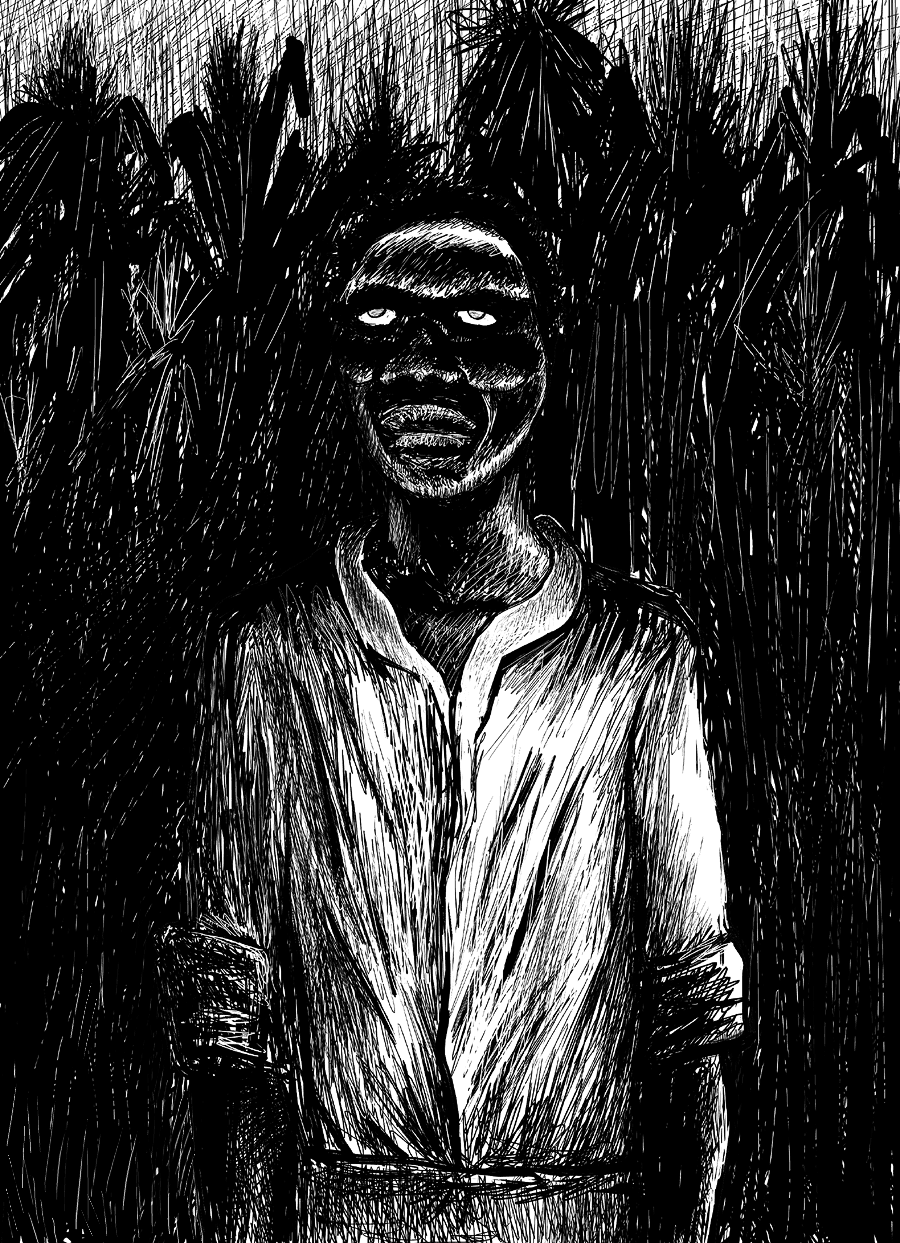
Davis’ investigation into the world of vodoun and the zombie led him to advance the hypothesis that tetrodotoxin (TTX) was the chemical agent used by the bokor to induce a death-like state. A mixture of toad skin and puffer fish, either rubbed on the skin or ingested through food, seems to accomplish this. Breathing slows, the heartbeat weakens, and victim appears dead even to medical personnel. In the tropical climate of Haiti, bodies are buried quickly and the bokor likes it that way. A zombie in the ground for more than eight hours risks asphyxiation. The zombie is dug up and restored to life possibly with an antidote. Delivered to a plantation, the zombie is kept in a semi-permanent induced psychotic state by force feeding a datura paste. Datura destroys memory and wreaks havoc with gaining any sense of reality. It is also known to produce powerful hallucinations.
All of the chemicals used or potentially used are powerful enough to cause real death so the bokor has to be knowledgeable and proficient in their use to be successful. Davis also credited the culture of fear and belief that underlies the creation of the zombie. There are powerful cultural influences that must be in place to create and maintain a zombie.
Are zombies scary? Maybe not, they’re victims, but the idea that you or I could be made into one makes me uncomfortable. That’s why I try to make sure my siblings are happy with me and I’m not more valuable “dead” than alive. Happy Halloween!
Filed under Books, Spiritual/Mysticism

ELLIS NELSON, author of INTO THE LAND OF SNOWS
All the way from Edinburgh, Katharine Griffiths interviews me on writing young adult novels and the influence of Buddhism on my work. Join us for the fun. Feel free to comment or ask questions. Anything goes. http://wp.me/p2Jcvv-4v
Filed under Blog Interview, Books
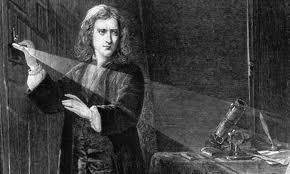
When we think of Isaac Newton, most of us probably return to high school physics. Laws of motion, gravity, incline experiments, and lists of equations come to mind. Newton was a great scientist and collective thought has enshrined him this way. But this is a very modern way to see him and casts aside and discards him as a spiritual being, for Newton was an alchemist. Sir Isaac wrote more on Biblical hermeneutics and occult studies than on math and science. He placed great emphasis on rediscovering the occult wisdom of the ancients and probably considered his scientific work to be of much less importance.
Although alchemy is generally viewed as a precursor to science (and it has that role), it was so much more. Alchemy incorporates Hermetic principles which include ideas from mythology, religion, and spirituality. Below HJ Sheppard outlines the dualistic nature of alchemy as both external (in the material world) and internal (spiritual) practices.
Alchemy is the art of liberating parts of the Cosmos from temporal existence
and achieving perfection which, for metals is gold, and for man, longevity,
then immortality and, finally redemption. Material perfection was sought
through the action of a preparation (Philosopher’s Stone for metals;
Elixir of Life for humans), while spiritual ennoblement resulted from some
form of inner revelation or other enlightenment.
We will probably never know the full extent of Newton’s alchemical work. Much was destroyed by fire. He also worked in a time when many alchemical experiments were banned and religious views differing from what was considered mainstream was heresy. Historians are still trying to piece things together.
An auction at Sotheby’s in 1936 created a worldwide sensation. Previously unpublished and unseen documents (Portsmouth Papers) surfaced and were presented for sale. About one-third of them were considered alchemical in nature. The papers show Newton’s keen interest in the philosopher’s stone. To this day, several projects are underway to catalog, transcribe, and make Newton’s papers available.
Other writings point to Newton’s interest in occult knowledge, sacred geometry, and prophesy. Throughout his life, Newton associated with members of various esoteric groups but his actual membership in any of them has never been confirmed. Certainly he shared many of the same interests these groups had. At the time of his death, Newton’s library contained 169 alchemical books and for its time, it would have been one of the best alchemical libraries in the world.

Recently I read Ghostwalk by Rebecca Stott. This is a fictional story which revolves around Newton’s life at Cambridge. Stott is a professor who bases the book on actual records of Newton’s life. At its core are the mysteries of Sir Isaac’s rise to power and position, a series of murders near the university, and the influence of alchemy. A very interesting read.
Filed under alchemy, Book Review, Spiritual/Mysticism
A HALLOWEEN TALE
Over the past few years my husband has endured a long commute from our home to his work in Colorado Springs. To make life easier, we will relocate to a small town nearby. Now this isn’t just any town, this is QUITE a town.
Manitou Springs got its start by catering to the tuberculosis sufferer of the Nineteenth Century. Emma Crawford and her family (practicing Spiritualists) relocated there in 1889 seeking relief for Emma through the mineral springs and mountain air. Young Emma was engaged to a railroad engineer, William Hildebrand. Legend has it that one day she hiked to the top of Red Mountain where her spirit guide appeared. She tied a red scarf to a tree and later it became her dying wish to be buried there. Emma never married William. She died on Dec.4th, 1891 at the age of nineteen.
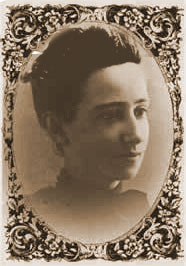
Her fiancé and a dozen others carried Emma’s coffin to the top of Red Mountain where they buried her fulfilling Emma’s request. Emma’s grave became a popular hiking location for other Spiritualists throughout the next couple of decades. In 1912, the railroad removed her remains and reinterred her on the south side of the mountain. Heavy rains in August of 1929 unearthed her coffin and sent it careening down Red Mountain. Her bones were discovered 7200 feet down in a canyon. Emma was eventually reburied in Crystal Valley Cemetery in an unmarked grave. And that could be the end of the story, but it’s not.
Remember, I told you, Manitou is a different kind of place. Enter the quirky creativity and entrepreneurial instincts of this town’s folks. Around Halloween each year the town celebrates The Emma Crawford Festival with a parade and coffin races. The coffin races feature a team of five (one person plays Emma and the other four act as pallbearers and push the coffin). Creativity and speed both play a role in judging the races. There are also prizes for best Emma and best coffin. It’s quite a spectacle and a great day out for family fun. Not your thing? That’s OK. There’s always the fruitcake toss early next year.
Filed under Spiritual/Mysticism
Several years ago I had a particularly bad year. My father died, my son was hospitalized, and I came face to face with my own health crisis. All in one year. My illness effectively took me out of the world and focused my attention inward. I returned to basics and found my interest in Buddhism waiting for me. Silent, I think, since at least my teenage years.
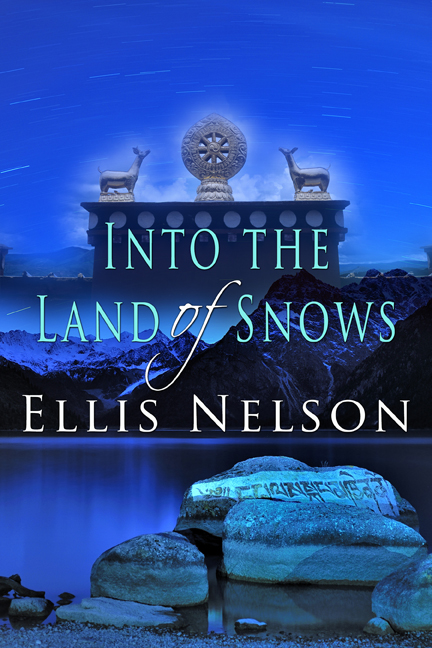
I began taking classes offered in faraway Dharamsala, India. Thanks to the internet, I was able to study with a master who had fled Chinese-occupied Tibet to follow His Holiness, the Dalai Lama into exile in 1959. Listening to Geshe Sonam Rinchen’s patient lectures aided my understanding of Tibetan Buddhism. That along with my friendship with a young monk in India helped me to process and write, Into the Land of Snows. The novel explores many of the themes I was exposed to as I learned Eastern concepts.

The process of the inward journey continues for me. Living in the material world is not easy. I know the majority of readers will read the book as an adventure in a foreign land, but I hope the book finds a few fellow spiritual travelers.
Filed under Book Review, Books, Story behind ITLS

I’ve always loved the Winnie-the-Pooh stories. The Disney version is OK, but I really treasure the books with the pastel wash illustrations by EH Shepard. My son’s nursery had six of these prints which I still have and can’t manage to part with despite him being twenty-one and off to university. Why is that?
AA Milne became famous for a series of stories and poems about a little boy named Christopher Robin and his adventures with his animal friends in the Hundred Acre Wood. Up until this point Milne had been known for his plays, but in 1926 he published Winnie-the-Pooh and Christopher Robin, Eeyore, Kanga and Roo, Rabbit, Piglet, Owl, and Tigger made their way into children’s literature and the hearts of millions on both sides of the pond.
The character of Christopher Robin was based on Milne’s small son by the same name. When the real Christopher Robin was young, he helped his father work on the stories. The fictional Hundred Acre Woods was modeled on nearby Ashdown Forest where father and son would walk together. Young Christopher had a stuffed bear named Edward. The fictional story bear was named after a bear in the London Zoo he had seen called Winnie (the bear came from Winnipeg, Canada) and Pooh after a swan the boy also saw. There is a bridge in Ashdown Forest where it is alleged that the first game of Poohsticks was played. The bridge has become a tourist site and since 1984, the annual World Poohsticks’ Championship has been held at Day’s Lock on the Thames.

Unfortunately, Christopher Robin grew up to resent his father immortalizing his childhood in the stories and poems. Once he was off to boarding school, he was teased and his life made difficult by other boys. So much so, that he learned to box to defend himself. Christopher Milne served in WWII, graduated from Cambridge, and ran a bookshop for most of his life. He also wrote several books, one called The Enchanted Places examined his life as a child. The stuffed toys Christopher played with were given to an editor who donated them to the New York City Public Library where they can be seen today.
Trivia Question: AA Milne attended school and was taught by another famous writer. Who was that? Feel free to answer in the comments. (I’ll post the answer if no one gets it.) mike75 got it with HG Wells. Sorry, no big prize but I am impressed!! I had no idea until I read it in Milne’s biography.
Filed under Book Review, Books

 ellisnelson