THE GHOST OF SPIRIT BEAR by Ben Mikaelsen


There are a lot of books available for teens today.  For a smart, discerning young adult, the range and quality of the work has never been better.  But I’m often dismayed by the lack of value (my judgment call here) a good portion of the popular literature offers.  At least, insofar as what sells best.  There are those books that entertain (and they should), and fill an afternoon, but don’t remain. Don’t challenge the teen, don’t teach the teen, don’t inspire the teen – in short, they’re fluff.  Like an ice cream sundae soon consumed and soon forgotten.  I know as parents, we’re just happy our kid is reading. There are so many who don’t.

That’s why when I find one of those quiet books, that don’t sell phenomenally well but offer something of depth for the soul, I want to highlight it. I read The Ghost of Spirit Bear a few months ago and it is one of those special books that continues to resonate.

The Ghost of Spirit Bear is a sequel to Touching Spirit Bear, a book that is being used in schools to combat bullying. In the first book, an angry and defiant teenager who has severely beaten a school mate chooses Circle Justice over jail. Cole Matthews finds himself exiled to a remote Alaskan island to do penance for his crime. In that year, Cole is mauled by a bear and faces surviving the harsh environment of the north. Alone on the island he faces his demons and takes responsibility for what he did. The Ghost of Spirit Bear picks up with Cole returning to his urban high school and facing all the same challenges that existed before his exile. Bullying is rampant, the school is dangerous, and the administrators don’t care. The rage that Cole conquered on the island begins to return.

 The heart of the story concerns how Cole uses the Tlingit wisdom tradition’s teachings in a modern world. During the banishment Cole is forced inward to find out who he is and how to control his emotions. Back in the real world, he must work to maintain his sense of peace and develop a new place for himself. As he holds onto his center, he reaches out to change the negative conditions around him.

I have found very few fiction books for kids that depict a wisdom tradition and expose youth to detailed meditation practices. This is one of them. It is refreshing to see how Cole’s inner transformation becomes externalized and in doing so, changes his world.

 

27 Comments

Filed under Book Review, Books

CHARLES A. LINDBERGH- Mystical Experience

Last week I was sure this week’s blog would be on John Dee. I’ve read several books about the Elizabethan alchemist, queen’s spy, and magus. But John Dee is a complicated subject, and well, I got sidetracked in a synchronistic sort of way. Consulting Harper’s Encyclopedia of Mystical and Paranormal Experiences, I was shocked to find John Dee not included, but stumbled on a fascinating little entry on Charles Lindbergh. Lindbergh? THE Lindbergh? Yup!

I suppose some of you may have heard of John Dee, but I’m sure all of you recognize Charles Lindbergh. The twenty-five year old, unknown air mail pilot became an overnight, worldwide household name in 1927 when he completed his non-stop transatlantic flight. You might even remember the tragic loss of his son in 1932 in what was called “the crime of the century”.  And there are a few of you who are mulling over the tag Nazi sympathizer, but I suspect few of you (including myself) are thinking … mystic.

The mystical experience happened in 1927 during the thirty-three plus hour flight over the Atlantic. During the long and lonely flight, Lindbergh experienced an altered state of consciousness. In this state, he became aware of three parts of himself. His body, his mind, and his spirit existed as separate entities. He was not afraid. The plane was filled with ghostly beings which were transparent and weightless. Lindbergh described seeing with “one great eye” the beings around him without having to turn around. These beings consoled and reassured him in friendly human voices. As things progressed, Lindbergh lost the sense of his physical body, something reported in many mystical experiences. He recognized that although he was still attached to life, the beings were not. Furthermore, the famous transatlantic pilot seemed to experience a shift in his view of death. Death no longer seems the final end it used to be, but rather the entrance to a new and free existence which includes all space, all time (Lindbergh The Spirit of St. Louis, 1953).

So what are we to make of this? In his first book describing the transatlantic crossing published in 1927, Lindbergh remained silent on this issue. It wasn’t until 1953 with the release of The Spirit of St. Louis that readers first learn of this incident. More follows after his death with the publication of Autobiography of Death (1977). Unfortunately, my library has none of Lindbergh’s books, not even The Spirit of St. Louis. On face value, it’s easy to dismiss the account. Lindbergh could easily have been hallucinating due to fatigue, boredom, or maybe even fuel fumes. But Lindbergh himself doesn’t seem to dismiss the incident. I’m inclined to think Lindbergh must have viewed the experience as personally significant and important enough to risk ridicule for by coming forward publicly with the account. This is another one of those areas in which readers will have to decide for themselves what the incident means.

 Further reading:

Any or all of Lindbergh’s books.

Lindbergh– A. Scott Berg (one paragraph on p. 124 about the mystical experience)

The Mystical Side of Life– Michael Murphy (audio; this is hard to find)

Harper’s Encyclopedia of Mystical & Paranormal Experience– R.E. Guiley, see Lindbergh entry

Cemetery John- The Undiscovered Mastermind Behind the Lindbergh Kidnapping

Robert John (new release, profiled in newspaper), nothing mystical here but the latest on the Lindbergh case.


https://amzn.to/30oq1NL

46 Comments

Filed under Books

CHAOS CODE by Justin Richards

In an effort to offer an alternative to all the paranormal romance books available, I have a book recommendation for teen boys. Of course, girls are free to read this as well. As a teenager this is the kind of book I would have chosen for myself. Chaos Code by British author Justin Richards is a great, fast-paced adventure book.

Turning up on his archeologist father’s doorstep for the start of a school break, Matt finds his dad missing. A trace of sandy footprints and a mysterious coded message left by Dad soon has young Matt hot on his father’s trail. With his new friend, Robin, and her father, Matt discovers Dad has been kidnapped in order to help an egomaniac find and decode a system that will allow world domination. The stakes are high. Matt and Robin must rescue Matt’s father and prevent the villain from executing his plan. Connections to the mythology of the great flood, quantum theory, and the power of computer technology all add to the plot and suspense.

 Justin Richards consults for the BBC on the Doctor Who books and has published several books for young readers including Death Collector, Parliament of Blood, and the Invisible Detective series. If you like action and technology, you might want to give him a try.

24 Comments

Filed under Books

ON BODY-HEAT YOGA (TUMO)

His bare skin was draped in a blanket that had been submerged in a frigid, mountain stream. In order to pass the test, the young monk must completely dry the blanket using only his body heat. Once he accomplishes that, he will be challenged to dry two more saturated blankets. Only then will he be declared proficient in tumo.

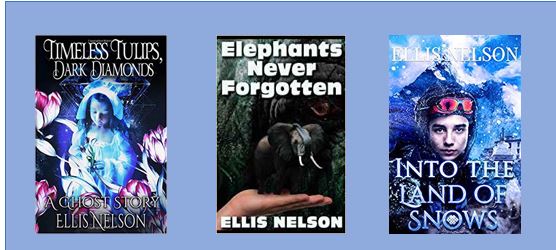
In my book, INTO THE LAND OF SNOWS, Blake has the opportunity to watch young monks practicing tumo. Mesmerized by what he sees, Blake wants to join in. He soaks his own repa garment and begins to imitate what he sees the adepts do. But Blake hasn’t had the training necessary to accomplish the generation of body heat and he soon is in the throngs of hypothermia.

Tumo requires a lengthy training process of three years, three months, and three days. Those who complete the training and maintain it, sometimes meet in high mountain snow fields to compete against one another. The monk who melts the largest circle of snow beneath his body is declared the winner. Without any preparation, Blake is lucky to survive his attempt to dry his repa.

Like many Tantric practices, tumo requires the passing of an empowerment from master to student. The spiritual bond between these two is characterized by a telepathic link which even survives the death of the master. In this way, the master always remains available to the student. In the esoteric practice of tumo, a monk will learn to generate heat at the base chakra by practicing elaborate visualizations, advanced breath work, and body posturing. In 1982 researchers who studied yogis in India, reported that the tumo practitioners could raise the temperature of their fingers and toes by as much as 8.3°C.

Additional reading:

Occult Tibet by JH Brennan

The Bliss of Inner Fire: Heart Practice of the Six Yogas of Naropa by Lama Thubten Yeshe

33 Comments

Filed under Books

ENTER TO WIN FREE COPY OF INTO THE LAND OF SNOWS

In the last month or so, I’ve been happy to welcome many new blog readers, and to celebrate, I’m inviting everyone to enter to win a free, signed copy of Into the Land of Snows. All you have to do is leave a comment below to be entered. There are a couple of rules, though. I’m only going to be able to mail to a location in the US. Comments will close midnight (MT) on Wednesday, August 15th (2012). I will conduct a random drawing at that point and notify the winner. Enter only once. Just to have a theme, I’m requesting you comment on something about the blog (mention something you liked or learned about) or something about the book (Buddhism, Tibet, Himalayas, Mt. Everest, Nepal, yeti, magic, etc.). To start us off, I’ll post a comment so no one feels awkward to be the first to post.

Thanks to everyone who entered. I enjoyed reading your comments and seeing the diversity of thoughts and experiences this group represents.

And the winner is…. fakename2. Congratulations!!! I’ve left a message on your blog. You can contact me at himalayaspencerellis@yahoo.com. I will need your mailing address.  

61 Comments

Filed under Books

HAS (MS 408): THE VOYNICH MANUSCRIPT BEEN DECIPHERED?

This is an update to a blog I did in 2012 about the Voynich Manuscript. Recent work done by Dr. Stephen Bax (Professor of Applied Linguistics, University of Bedfordshire) has resulted in some startling findings.

voynich botanical

I love tales of missing manuscripts especially in fiction, but also in non-fiction. Last week, I finished The Swerve which featured the true story of the recovery of Lucretius’ poem, On the Nature of Things, and how it influenced our modern world. I liked the idea of a Renaissance book hunter slipping into monasteries looking for ancient wisdom. But I have a better story to share.

In 1912, Wilfrid Voynich recovered a mysterious manuscript that bears his name and resides in the Yale Library as Manuscript 408. The curious document has defied the patient and persistent attempts by all amateur and professional cryptographers to break it.

Its exact history is sketchy, but the document is alleged to have belonged to an Emperor, several practicing alchemists, and a religious order. Some have even proposed that Roger Bacon or John Dee authored the manuscript.

Consisting of 240 vellum pages with colored illustrations, the writing script is unknown and unreadable. Many of the illustrations resemble herbal texts of the 15th Century except that only a few of them can be identified. Aside from the herbal renderings, there are also illustrations covering topics on astronomy, biology, cosmology, medicines, and recipes. The drawings are fanciful, colorful, and complicated. Carbon-14 dating in 2009, dates the manuscript to between 1408 and 1438.

The text itself has puzzled for decades and even modern computer tools have proved ineffective. The writing itself seems to progress left to right with no punctuation. There are no obvious corrections, the document being very carefully executed. There are some 170,000 separate glyphs utilized throughout and many are used only once or twice. Statistical analysis of the work reveals that it resembles the flow of natural language. But what language? It seems to share some correspondences to English and Latin, but not entirely. The repetition of the glyphs is not a characteristic of European language.

Manuscript 408 remains the only undeciphered Renaissance manuscript and it continues to draw many into its mystery. Some think it’s an early herbal or medical text. Others see it as a work of alchemy (early chemistry) or hermeneutical teaching. Still others have declared it a hoax, but if it is a hoax of some kind, it goes beyond anything produced in the 15th Century. It goes beyond the codes and cyphers used then, and continues to evade codebreakers today. What is this curious work and who penned its bizarre contents?

For those intrigued enough to read further:

The Voynich Manuscript- Gerry Kennedy & Rob Churchill

The Friar & the Cypher- Lawrence Goldstone

Six Unsolved Ciphers- Richard Belfield

Drawing on work done to date, Dr. Bax undertook a detailed look at some of the plants and signs in the manuscript. He began with some of the speculations on plant names to decipher letters within the text. He believes he has deciphered ten words and fourteen signs to begin the process of identifying the language MS 408 was written in. Dr. Bax believes the manuscript is not a hoax, but rather a 15th Century book on nature written not in code but rather an unknown language. Now, the hard work begins to try to reveal more of the manuscript. It seems like this is an instance when having the right experts makes all the difference.  


https://amzn.to/30oq1NL

50 Comments

Filed under alchemy, Book Review, Books, health

ALICE WAS A REAL GIRL

Rev. Charles Dodgson (Lewis Carroll)

Several years ago, I became interested in Lewis Carroll (Rev. Charles Dodgson). I had read about him possibly having migraines, and experiencing migraines myself, I went on a search to uncover the truth. Quickly I was caught up in the man (who quite likely did have migraines) but also shared my background in mathematics, my interest in religion, and in all things psychic. Who would have thought this rather stuffy (by all accounts), conservative Victorian deacon would have been a founding member of the Society for Psychical Research?

Of course, most of us are familiar with Lewis Carroll for his nonsense poems and the Alice books. I have to confess that I never read the books as a child and only as an adult have I been drawn to them.

In 1862, the Rev. Dodgson, who was a mathematics don at Oxford, took three little neighbor girls out for a ride on a boat. On a hot, sunny July day, and in the company of his friend, Robinson Duckworth, the don began to spin yet another fantastic story for the amusement of the girls. Alice, who was ten at the time, begged Mr. Dodgson to write down the tale for her. She was presented with a handwritten copy of Alice’s Adventures Under Ground, illustrated by the author, during Christmas 1864. That copy resides in the British Museum and is probably the most famous book in all children’s literature. The next year the rest of the world welcomed Alice’s Adventures in Wonderland into history.

Alice Liddell

The Rev. Charles Dodgson was a fascinating man and I was caught up in the many mysteries and complexities of his life. So much so, that I spent the next year writing my own tale of Wonderland where he and Alice get swept up in their own adventure tale. So far, I’ve been unable to secure a publisher for this mid-grade novel but then again, Alice’s Adventures in Wonderland was self-published. Will you and I, Mr. Dodgson, also share this?                                                                                                                                                                  

96 Comments

Filed under Books

LET’S LOOK AT CREATIVITY!

IMAGINE: HOW CREATIVITY WORKS by Jonah Lehrer

Over the years I’ve looked for books on creativity. I haven’t found much and that’s why I was excited to see this book in the paper one day. It’s getting a lot of attention. So many news and book entities are stumbling over each other to say nice things, I had to read it. So I patiently waited for my turn at the library and eventually I made off with the coveted treasure.

Alone at home I perused the book’s pages looking for THE secret. What would make this writer…more creative? I did learn a few things. Like how the brain solves puzzles. Most of us will try logic until the left hemisphere gets frustrated. When we become stumped, we tend to complain and whine, or storm off. Eventually we might try a new approach which causes a spike in gamma waves. The epiphany moment, the breakthrough we all want, is signaled by increased activity in the anterior superior temporal gyrus. While interesting, this hasn’t actually made me much more creative. I shake the book and plead, what can I DO to be more creative???

The author insists we stay with the process. Now if you get stuck in the creative process, he does offer some help. There are times when walking away and taking a break can be beneficial. The conventional wisdom of clearing your head is quite effective. And the author cautions that drugs which increase attention tend to decrease the likelihood of the “Aha” moment. So that means lay off the coffee and ADHD meds. Go ahead and daydream. Your teachers were partially wrong about that. Daydreaming can be very helpful in stimulating new ideas and approaches, but usually only if you’re the kind of dreamer who has the skill to identify solutions when they arise. I’m not sure I’m the proficient type, so I’ll have to be very observant when I put this idea into practice.

Additionally, your environment can help your creativity. Open sunny spaces may help us be more creative, so sit near a window or go outside whenever possible. The color blue seems to increase creativity, expansive thinking, and alpha wave production. Red, on the other hand, is better for focus and attention to details.

The other part of the equation on creativity has to do with utilizing the ideas or insights we get and bringing them into the world. This is the part where the real focused, butt-in-chair action has to happen. Actually this is the part I’m pretty good at. I’m able to skim this section of the book.

So what did I do with all my new-found knowledge? I have a blue blotter on my desk to expand my thinking. Is it working? No idea.

39 Comments

Filed under Books

GHOST STORIES FOR MIDSUMMER

I love a good ghost story and not just around Halloween. Right now I’m reading You Came Back by Christopher Coake. It has the elements I like- mystery and creepy atmosphere and steers clear of horror and bloodbath. At least, that is, so far.

One of my pet peeves about ghost stories is that I don’t like it when a book purports to be a ghost story and then it turns out, the main character is either crazy or a drug addict. I think this is a cop out. Call me crazy, but I think it is necessary to have a ghost in a ghost story. I don’t want to read about alternative takes on ghosts. I want to read about ghosts.

 A little (and I mean very little) research online into ghost stories revealed two facts which were rather interesting. First, all cultures around the world have some kind of ghost story. And here I admit to being an Asian ghost story freak. I like Chinese, Korean, Japanese, and Indonesian ghost movies. These cultures offer a slightly different take on ghosts and I find these fascinating. Thank you Netflix for expanding my world! The second fact I uncovered is that literary critics often refer to the “Golden Age of the Ghost Story” and set that time period from the 1830s until WWI. Think Victorian Age and Edgar Allan Poe. It’s sad to think that we aren’t in the Golden Age of Ghost Stories any more.

In an effort to stimulate a new golden age of ghost stories, I propose we return to reading some this summer. Read these on the bus, at picnics, at sleepovers, near the pool, on the beach, and of course, at night- alone, during fearful thunder storms.  

 For the Younger Set: middle grade novels:

Breathe by Cliff McNish (innovative and creepy)

Wait Til Helen Comes by Mary Downing Hahn

Time For Andrew by Mary Downing Hahn

The Headless Cupid by Zilpha Keatley Snyder

 For Young Adults:

Ruined- A Ghost Story by Paula Morris

Giving Up the Ghost by Sheri Sinykin

Beating Heart- A Ghost Story by AM Jenkins (creepy & mature)


34 Comments

Filed under Books

Dalai Lama’s Birthday: July 6th

On Friday, His Holiness Tenzin Gyatso, 14th Dalai Lama will turn 77. In the past few years my family has marked the occasion by sharing birthday cake and reflecting on the contribution of a man who describes himself as “a simple Buddhist monk.” Of course, that statement is always accompanied by his ever- present smile and slightly raised eyebrow as if to see who has gotten the private joke. It seems to me like that anyway.

There is much to be said of a man who is undoubtedly one of the most recognized beings on the planet. He’s traveled to 62 countries and met with heads of state, religious leaders, scientists, and thousands of other equally important, average citizens. In 1989 he won the Nobel Peace prize and later a Nobel laureate for his environmental leadership. The Dalai Lama remains committed to non-violence, kindness, and compassion. On the worldwide stage, he is the most visible proponent of peace. He also has championed inter-religious understanding, universal responsibility and interconnectedness, and environmental protection. Some simple monk!

Tenzin Gyatso was born in rural, northeastern Tibet (Amdo) in 1935. He was recognized as the reincarnation of the 13th Dalai Lama at the age of two and installed as Tibet’s religious and secular leader. To Tibetans, the Dalai Lama is an emanation of the Bodhisattva of Compassion (Avalokiteshvara). The Chinese invasion of Tibet in 1950 finally resulted in deteriorating conditions with His Holiness fleeing his country after an uprising was brutally suppressed by the Chinese. In 1959, The Dalai Lama and many other Tibetans crossed into India. The Dalai Lama and the Tibetan Government-in-Exile now reside in Dharamsala, India.

With Americans celebrating the 4th of July this week, it’s interesting to note (in a synchronistic sort of way), how His Holiness shares democratic values and has done much to implement them for his own nation. In 1990, Tibetans elected their first Assembly in a one-man, one-vote system. This overturned a centuries-old political system headed by the Dalai Lama. In a further advancement of democratization, Tibetans- in-Exile elected their first top minister of the cabinet known as the Kalon Tripa.

His Holiness has advocated and supported these changes. In addition, the Dalai Lama continues to reach out to the Chinese government to open a dialog on the issue of Tibet.

  Long Life Prayer for His Holiness the Dalai Lama (short version)

In the land encircled by snow mountains

You are the source of all happiness and good;

All-powerful Chenrezig, Tenzin Gyatso,

Please remain until samsara ends.

17 Comments

Filed under Buddhism