Update: May 10th: The winner was drawn today. KDKH was the winner and has been notified. Thanks to all who entered!
ENTER TO WIN A FREE E-BOOK
Today (May 4th) is Alice’s (of Wonderland fame) birthday! This is a photo of Alice Liddell.
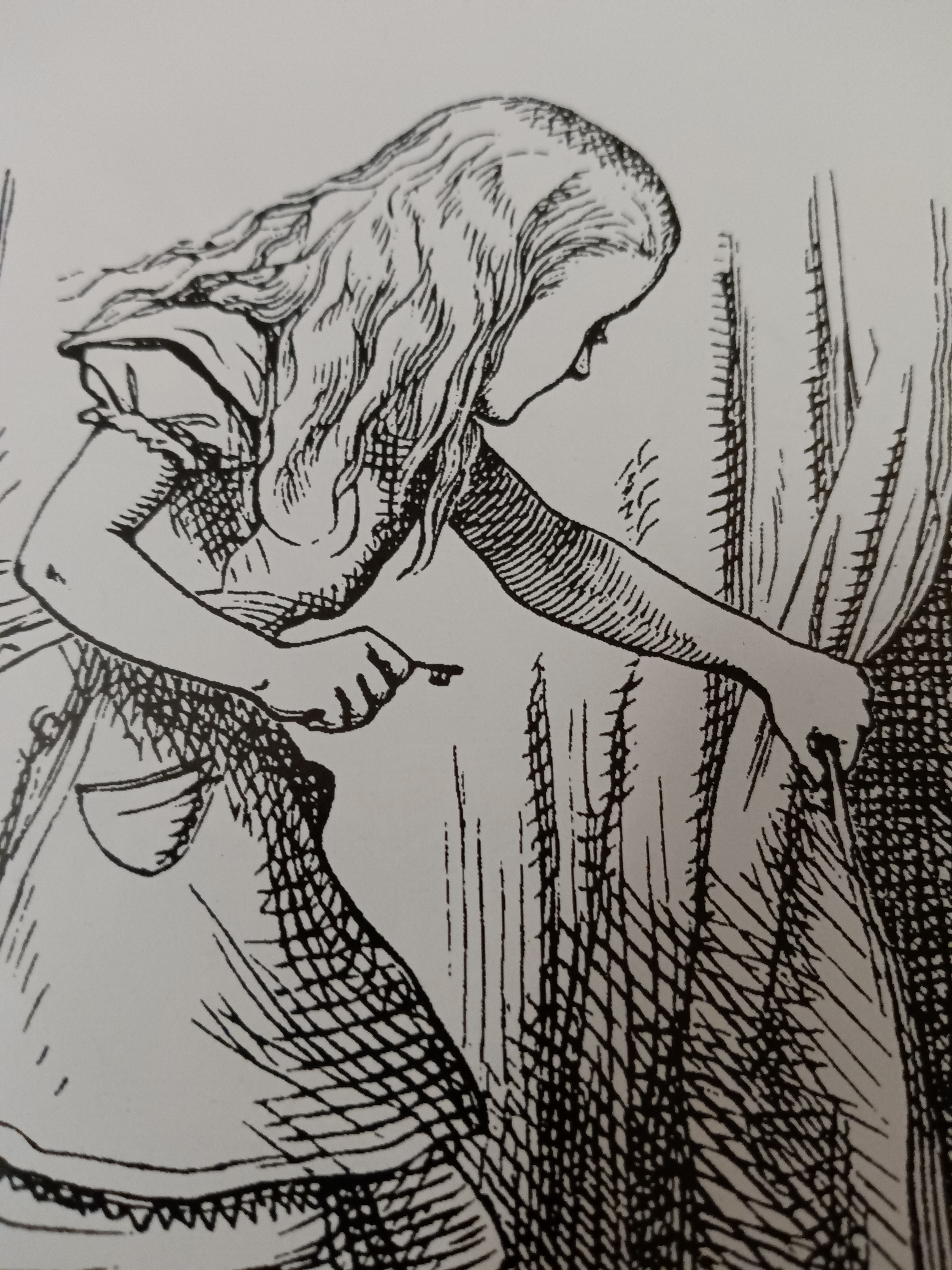
In 1862, the Rev. Dodgson (Lewis Carroll), who was a mathematics don at Oxford, took three little neighbor girls out for a ride on a boat. On a hot, sunny July day, and in the company of his friend, Robinson Duckworth, the professor began to spin yet another fantastic story for the amusement of the girls. Alice, who was ten at the time, begged Mr. Dodgson to write down the tale for her. She was presented with a handwritten copy of Alice’s Adventures Under Ground, illustrated by the author during Christmas 1864. That copy resides in the British Museum and is probably the most famous book in all children’s literature. The next year the rest of the world welcomed Alice’s Adventures in Wonderland into history.
To celebrate Alice’s birthday, I’ll be giving away one E-book of Down the Treacle Well. To enter the drawing, leave a comment below. Contest closes Friday, May 10th at 12:00 (MST).
Happy birthday Taurus! It’s your turn to shine this month.
You are a fixed, earth sign—tenacious, reliable, and sensual. Being practical and well-grounded, Taurus enjoys seeing the fruits of its labors. While slow to anger, you will defend what you have worked hard to obtain. You are at home in the material world surrounded by beauty and pleasure. Taste and touch are important senses to you. Because you tend to be conservative and unwavering in your approach, Taurus is considered to be one of the most dependable signs of the zodiac.
Having an innately strong sense of responsibility, your determination and commitment may make you appear stubborn. However, Taurus generally brings a realistic, well-grounded perspective to its endeavors that can ultimately prove highly successful. You can commit to long-term projects and have a knack for making money. Beware that the desire for money doesn’t rule your life.
You can act as a stabilizing force in times of conflict by bringing a rational perspective. As a fixed sign, Taurus does not like change. Criticism is difficult for you. You are very loyal in relationships and sensitive to the feelings of others. The negative side of Taurus can be an overattachment to the material world (money-making, status, titles). This can lead to actions that overprotect people or things that have been acquired.
Symbol:
Your symbol is the Bull.
Taurus is represented by the bull who is known for its strength, tenacity, and power. The bull is happy to graze in the field by itself but once it’s disturbed, it won’t hesitate to charge. This symbol shows how Taurus is slow to action but will take it forcefully when necessary.
Ruler:
Your ruler is Venus. Venus governs love, beauty, and money. Venus bestows Taureans with a romantic, sensitive, and sensual nature. Material benefits also gratify you.
Have you ever wondered what astrology has to say about your past lives?
(Check out my YouTube channel for more content. I post shorts and other in-depth videos there. @ellinelson6128)
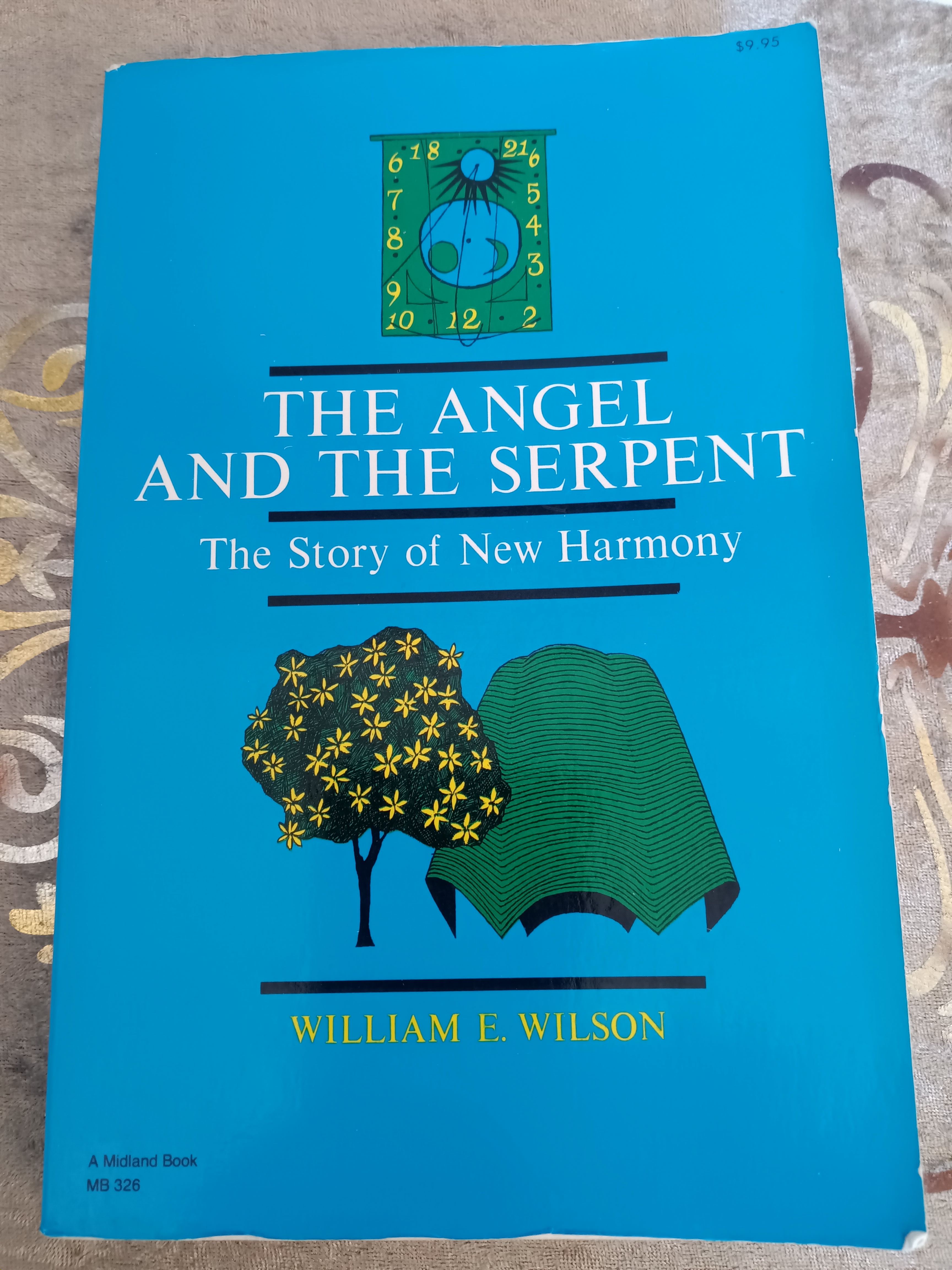
I suspect most of you have heard of the Shakers. But what about the Rappites (also called Harmonists)? The Owenites?
Tucked in southern Indiana is a small town called New Harmony that came to my attention a few months prior to the recent eclipse. A weird and out of the way place where two very different groups of people attempted to create their version of a Utopian society. It sounded like a perfect place to experience the solar eclipse in Aries.
In 1803, German born, George Rapp led a group of followers who had split from their traditional Lutheran roots to establish a town where they would follow an exemplary Christian life and await Christ’s imminent return. Rapp was inspired by the philosophies of Emanuel Swedenborg, Jakob Bohme, and other forms of Esoteric Christianity. His group may also have dabbled in alchemy. In a short ten-year period, the hard-working group which functioned as a commune, built a town and successfully traded goods along the east coast and down the Mississippi. Although some historians question exactly why George Rapp chose to uproot the entire town in 1814, the book I read indicates that the Rappites became too successful and Rapp feared that idle hands, well- you know how THAT goes. Rapp sold the whole town to a successful Welsh visionary looking to start his own Utopian social experiment.
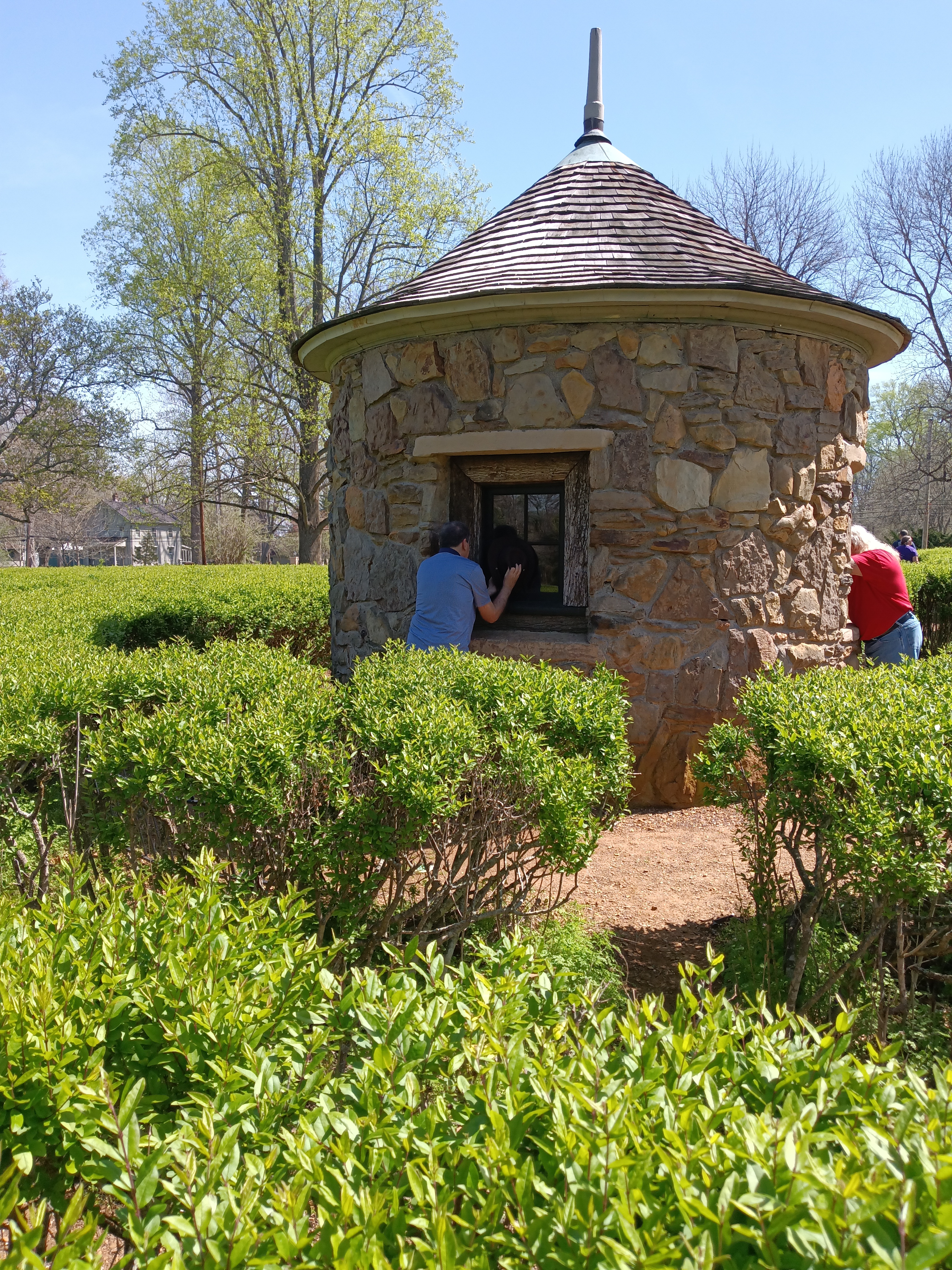
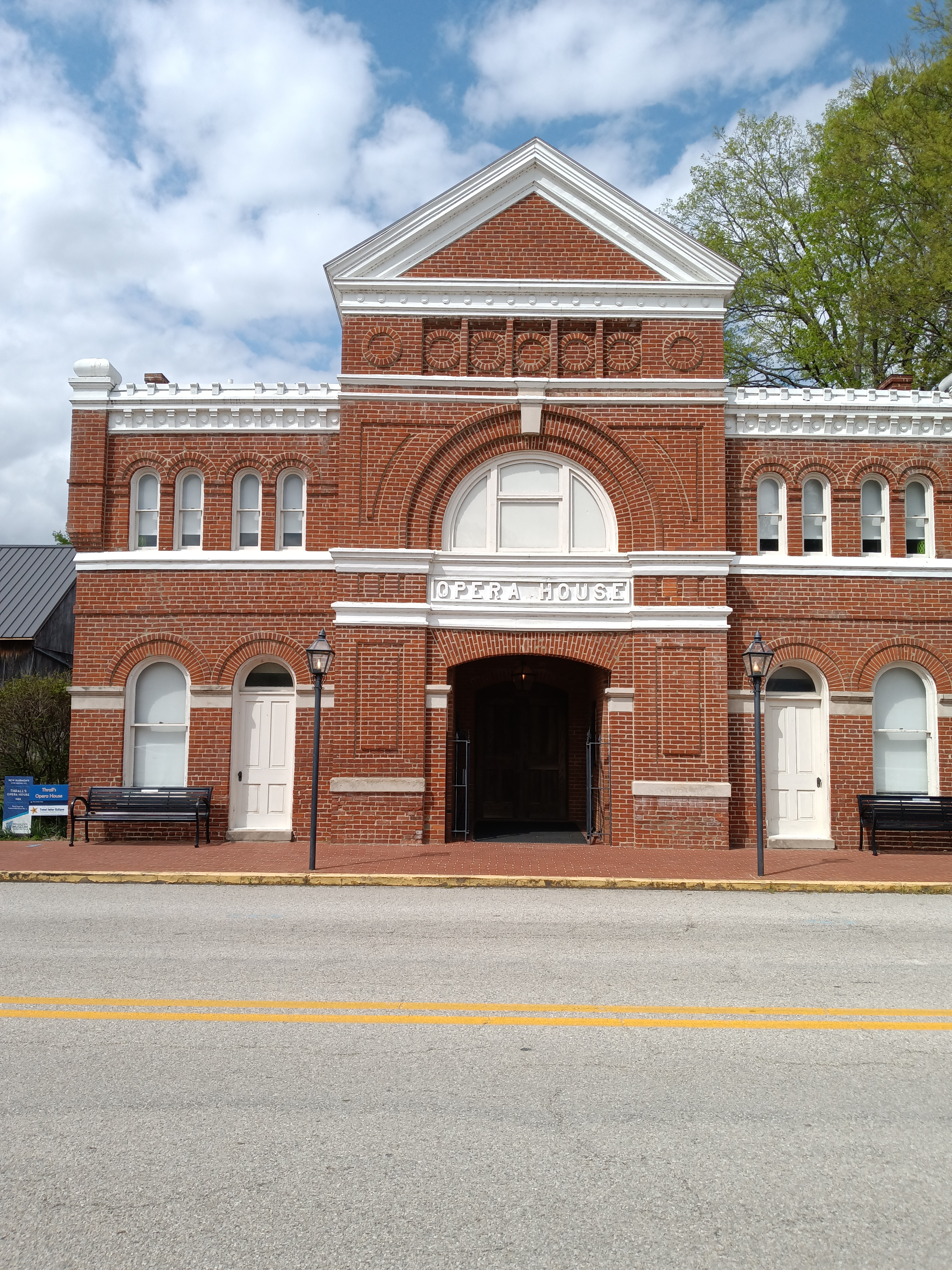
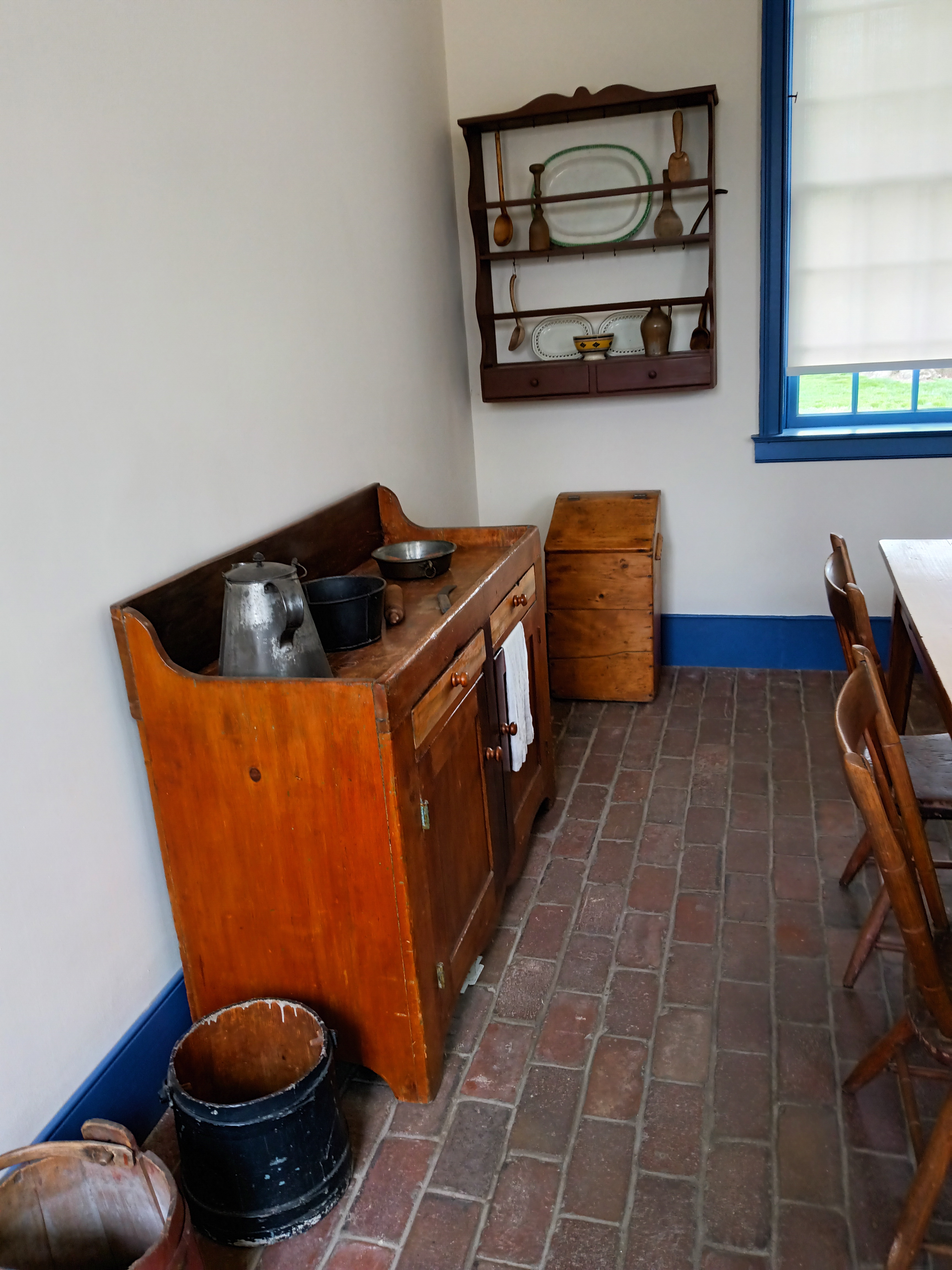
(Above: The Rappites built log cabins originally before construction began on the permanent town. Middle photo shows a natural, laurel bush labyrinth with center brick structure. Third is a communal residence building later used as a theatre by the Owenites. Last photo shows a massive communal granary built by the Rappites. The Owenites bought an entire functioning town from the Rappites and built virtually nothing.)
Robert Owen was a transformative voice for change. With his charisma, he enchanted many. Coming to the US after becoming hugely successful in the UK in the textile industry, he addressed join sessions of Congress twice. New Harmony was envisioned to be his idea of a Utopian society for the worker. Unfortunately, his experiment attracted high-minded thinker types and none of the workers necessary to run the town the Harmonists had built. Owens visionary style marked him as a man of ideas, but he lacked the ability to actually get anything up and running in the community. The New Harmony experiment lasted about two years. However, Owen’s ideas were influential and with the diligent work of his sons and the intellectuals of the town, notable lasting achievements did come. The dream of social change came through reforms in women’s (Robert Dale Owen) and worker’s rights (UK, especially), the establishment of free public libraries and museums (Smithsonian) and led to major innovations in public co-educational schools (New Harmony intellectuals).
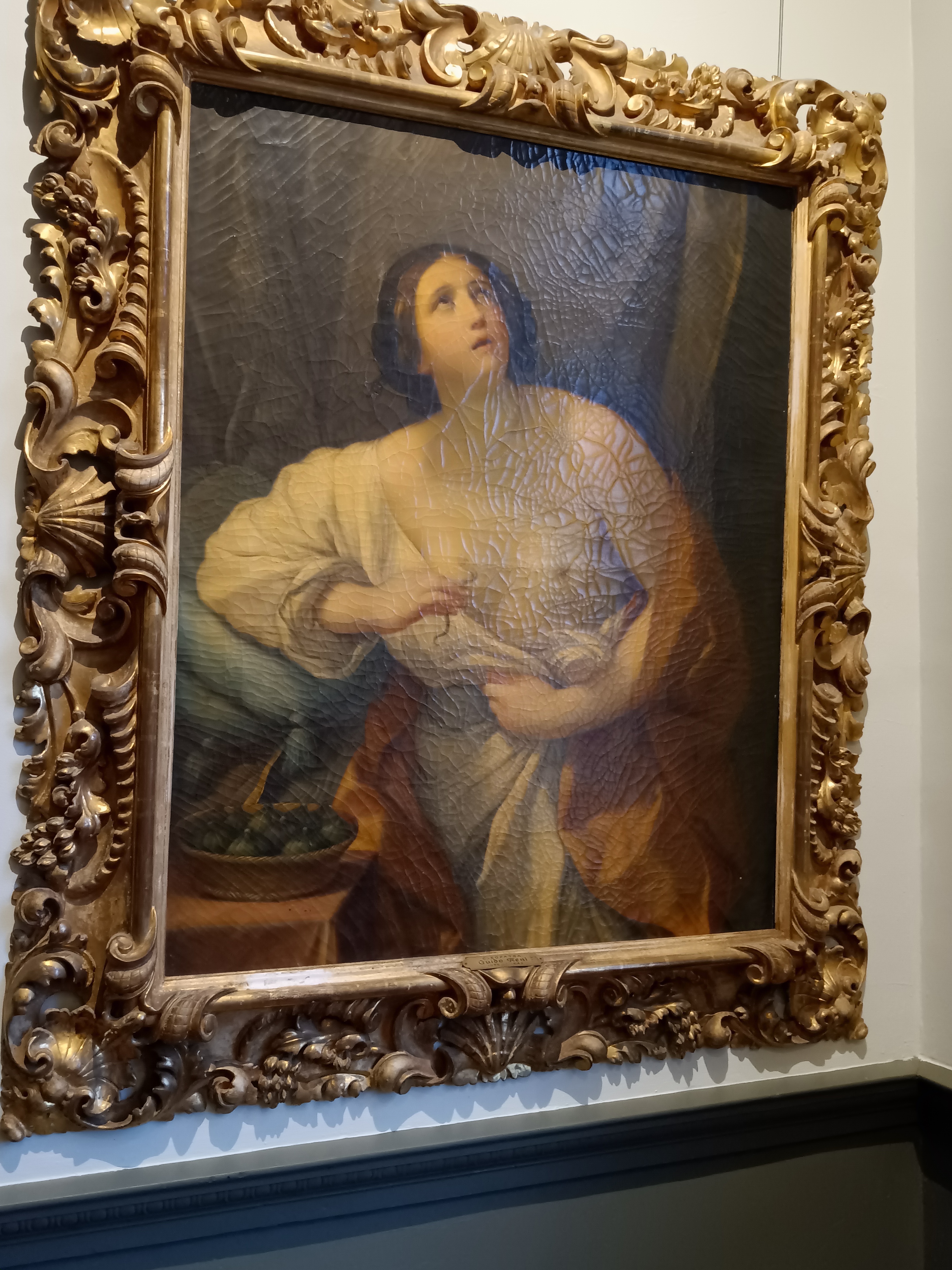
(Above: A building believed to have been built by Owenites. Second photo shows the specimen collections gathered by the Owenite intellectuals. They were known for their interest in science (especially geology) and educational reforms. Two photos of objects from the Owenite period. Last is a painting from a collection donated in the early 20th century to the Owenite community. The Owenites were also known for their active theatre productions.)
One of the major distinctions between the Harmonists and the Owenites was the way they treated religion. In the first community, religion was at the core of the founding of the society. The later Owenites were free to choose to practice any religion, or none. Robert Owen himself professed a belief in no religion. Until—late in life, Robert Owen met a trance medium and sat for several seances. A disbeliever in everything up until that point, he went on to communicate with (allegedly) Benjamin Franklin, Thomas Jefferson, and others. In the final years of his life, he became a firm believer in Spiritualism and its promise of an afterlife. Owen’s eldest son, Robert Dale Owen also found his way into the folds of Spiritualism. Robert Dale Owen had a significant career as an Indiana legislator, US Congressman, and diplomat. He implemented many lasting social changes for women’s property rights and advocated to give women the vote, urged Lincoln to abolish slavery on moral grounds, and had a role in the construction of the Smithsonian. Robert Dale Owen went on to pen two books about the phenomenon of Spiritualism. His books, Footfalls on the Boundary of Another World (1859) and The Debatable Land Between this World and the Next (1872) are still available today.
I found New Harmony to be disappointing today. It’s a sleepy, quaint little town. Very little remains of the once thriving Harmonist community. Some of the Owenite period exists, closed and cut off behind fences. There are many pretty, well-kept Victorian homes. The local university has a few buildings it maintains and is vested in telling a certain slant of history. In the 1950s a benefactor came in to restore parts of the village and create a new artists’ colony. It was a shame she didn’t do this in the 1960s when it might have taken hold. Like so many little towns, it struggles for its place in a new world.
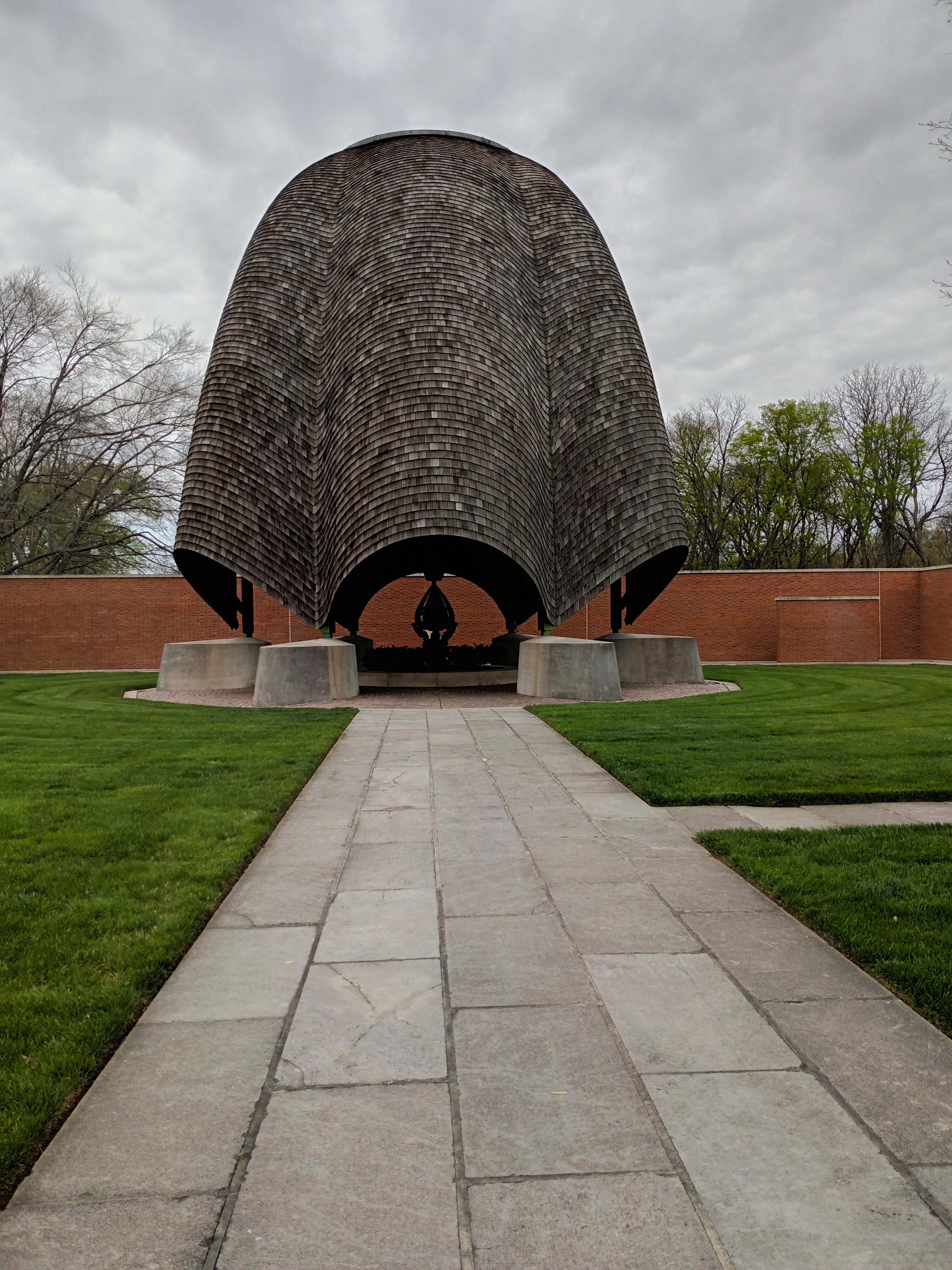
(Below are images from the modern period, post 1950. First photo is the Roofless Church, dedicated in 1960 as an interdenominational church designed by Philip Johnson. Cloisters and sculpture follow in the next two photos, also near the Roofless Church. Final photo shows the replica of the Chartres Cathedral Labyrinth built in New Harmony.)
THE FULL SOLAR ECLIPSE IN ARIES :
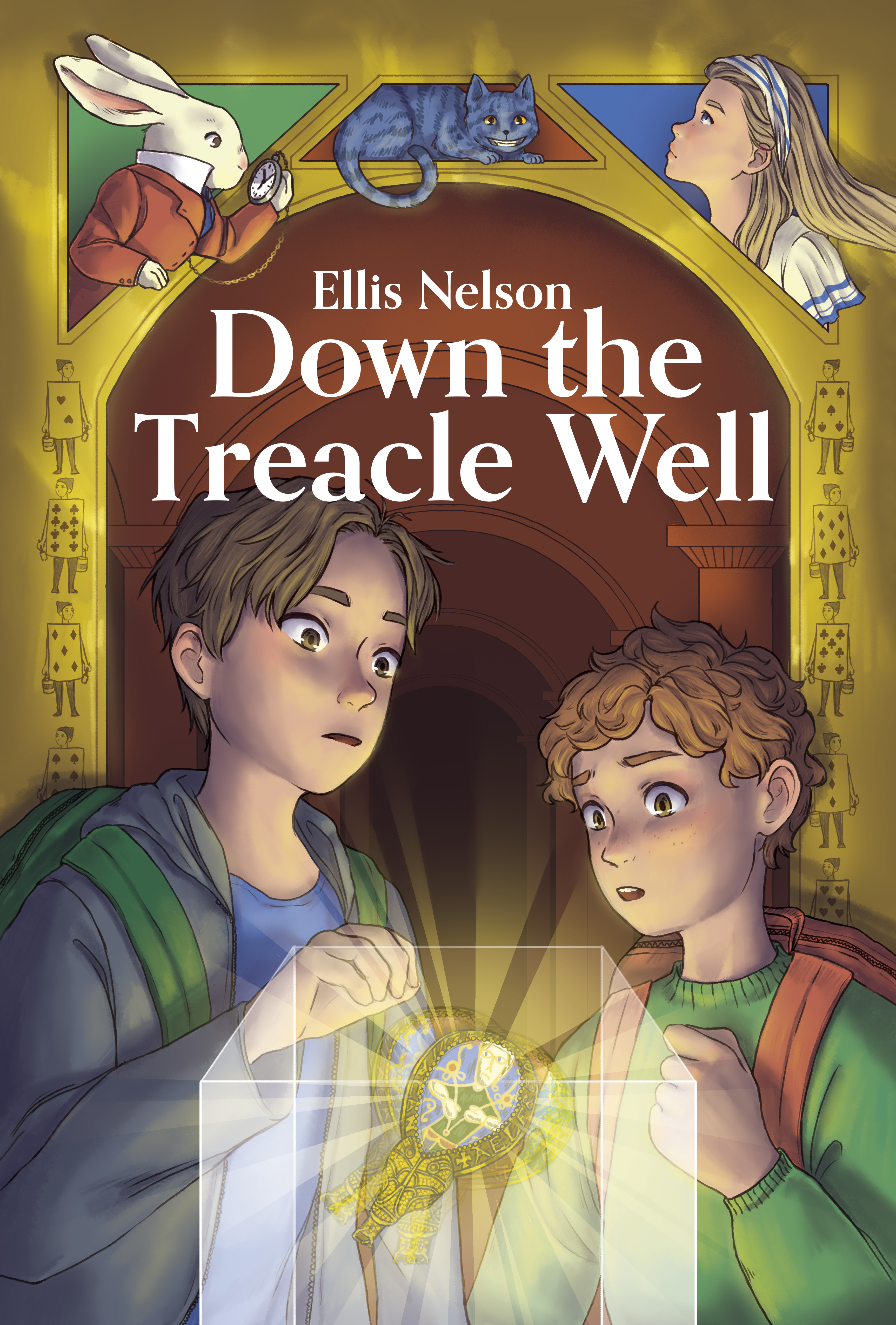
My Alice in Wonderland retelling is called Down the Treacle Well. The book trailer is below.
ORDER HERE:bit.ly/3roGX9f
SIGNED COPIES AVAILABLE: Contact himalayaspencerellis@yahoo.com for more info!
I discuss the life of Lewis Carroll and his interest in the paranormal. What do we know about his library and his associations? How much (if any of this) affected his writing?
My Alice in Wonderland retelling is called Down the Treacle Well. The book trailer is below.
ORDER HERE:bit.ly/3roGX9f
SIGNED COPIES AVAILABLE: Contact himalayaspencerellis@yahoo.com for more info!
Happy birthday Aries! It’s your turn to shine this month.
You are a cardinal, fire sign— passionate, independent, and competitive. Aries know themselves and have a strong sense of self-worth. Leadership comes naturally. Possessing personal magnetism, you often attract others to projects and causes without much effort. Many Aries are physically active incorporating sports into their lives.
As the first sign in the zodiac, Aries are newborns in a sense. Interestingly, Aries retain their youthful nature even as they age. Often more trusting or naïve than others, you will also tend to forgive quickly.
Aries are known for being adventurous, outgoing, and daringly bold. The negative side of Aries can be a reckless impulsiveness where consequences are not thought out or considered. There may also be a tendency to commit too fast to projects and not finish what is started.
Symbol:
Your symbol is the ram with large, curved horns. The ram represents Aries unyielding determination.
Ruler:
Your ruler is Mars. Mars was the Roman god of war. Mars is also associated with virility and fertility.
Mar’s energy is masculine and is associated with the physical. Aries tends toward impulsiveness. You hold strong opinions, crave adventure, and love competition.
Have you ever wondered what astrology has to say about your past lives?
Starting the week with a blessing from John O’Donohue’s book, Anam Cara (Soul Friend). I discovered his work several years ago during the Covid crisis. Diving deep into Celtic wisdom and honoring nature seems appropriate as spring takes hold and St. Patrick’s Day festivities happen next weekend.
“The several story lines were skillfully interwoven and while the story is targeted for younger folks there is enough depth and richness to satisfy adults.” (LibraryThing)
“WOW! This is the first time I have read a novel by Ellis Nelson and it won’t be my last.” (LibraryThing)
“Down the Treacle Well is well-written, flows nicely, and is easy to read. It is also brilliantly clever—fun, funny, warmhearted, and wonderfully descriptive.” (Goodreads)
“The several story lines were skillfully interwoven and while the story is targeted for younger folks there is enough depth and richness to satisfy adults.” (Goodreads)
“It is, however, the injection of main characters with a 21st-Century sensibility that make it a story to recommend highly for modern readers who love fantasy, speculative fiction, or whimsical adventures.” (Goodreads)
” …Nelson reveals a darker side of Wonderland, one you get a glimpse of in the book and barely see at all in the Disney version. Friendly characters take on a more sinister feel as Nelson imbues them with plausible, but darker, traits and actions, and the more chaotic and dangerous characters are rounded out with unexpected rationality and even-handedness.” (Amazon)
“Author Ellis Nelson weaves the venerated Wonderland traditions with 21st century characters and ideas into a fun “what-happens-next” page turner.” (Amazon)
“…readers will enjoy this faithful and clever modern-day retelling of a children’s classic.” (Amazon)
“It’s a historical novel wrapped in an adventure tied up with fantasy ribbons. This revisit to a children’s classic just might be a new classic itself.” (Amazon)
ORDER HERE:bit.ly/3roGX9f
SIGNED COPIES AVAILABLE: Contact himalayaspencerellis@yahoo.com for more info!
Happy birthday Pisces! It’s your turn to shine this month.
You are a mutable water sign, capable of diving to the deepest depths of emotion. Pisceans can adapt to changing circumstances and situations. Staying fluid and being able to almost shape-shift when required is not a weakness but a strength. Deeply compassionate and sensitive, Pisces often brings healing to events and people around them. Contemplation and a deep engagement in the search for inner truth comes naturally.
Since Pisces is the last sign in the zodiac, it has traversed all the signs and experienced many lessons. In all these situations you experienced hope and joy, fear and pain. All of these are deeply understood and felt by you, Pisces. This is what makes Pisceans so sensitive and vulnerable. Pisces needs to remember to stay grounded in the 3D world.
Symbol:
Your symbol is the two fishes seen in pairs in the gorgeous illustration above. The two fishes represent how Pisces’s attention is divided between fantasy and reality.
Ruler: (modern)
Your ruler is Neptune.
Neptune’s energy is feminine and associated with changeability and illusion. On the positive end, Neptune can be a source for dreams and creativity. But Neptune can also function as deception or delusion.
Have you ever wondered what astrology has to say about your past lives?
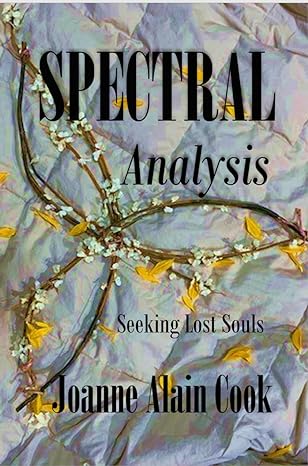
This novel follows the story of Janine Stinger, a tech specialist on the crew of a TV ghost-hunting show. Janine is deeply scarred by a previous relationship and especially vulnerable, although she does her best to hide it. When the team stumbles upon a story that dovetails with her own growing up, family history and local legend collide to confront Janine’s darkest fears. Is she part of a true haunting and curse? Her attempts to keep her past private start to crumble as her crush on the team’s lead paranormal investigator become mutual. How can she balance the past, the present, and the increasingly darker threats all while a river ghost lures people to their deaths?
Janine’s character is well-developed as are the other supporting characters. The personal dynamics of work, family, and romantic relationships all play a role in this historical ghost story. The author provides wonderful technical details on ghost hunting, the equipment, and the process. I loved the historical details and research that provided the backstory of the book. The reader learns about the culture in which ghost stories arise and grow. Although this book deals with one haunting, the reader is deeply invested in Janine’s experience and what is in store for her next.











 ellisnelson