The administration is buying and retrofitting warehouses across the country for mass deportation.
No Concentration Camps US (NoCCUS.org).
No Concentration Camps US is a coalition of grassroots organizers and national groups fighting these sites. Sharing resources and strategy, we’re pushing back every day.
On Christmas eve, the Trump administration announced a plan to open seven huge warehouse facilities that would act as centers for final deportation out of the country. Set to house up to ten thousand people, these concentration camps would far outsize anything the federal government has ever run for detention. The largest detention facility at Fort Bliss (known as Camp East Montana) at its highest capacity only held three thousand people and it has been riddled with charges of human rights abuses and is now rumored to be closing. Also part of the mass deportation scheme are the additional sixteen smaller warehouse sites located throughout the country. They would hold about fifteen hundred people and act as feeder sites for the massive warehouses.
Communities throughout the US are fighting back recognizing that warehouses were never intended to house people. Some fight warehouses on moral grounds and some fight from practical perspectives over how they affect neighborhoods. Broad based coalitions have united to push back and have won some significant victories. Real estate owners have refused to sell and have walked away from selling to ICE. Communities have been energized to go before city councils and demand the use of zoning and permits. People have used their right of free speech to hold rallies and protests raising awareness and demanding their elected politicians act on their behalf. Political pressure has been used to cancel warehouses in at least two incidents. Now efforts are underway to target contractors and employers doing business with ICE. More victories may be on the way. But we recognize the fight will be long and hard won.
Your support to these affected communities and on the national level make a difference. Awareness and education are key. Everyone has seen the violence on the streets in Minneapolis and elsewhere. ICE is active throughout the country. As the administration ramps up mass deportation and demands that this deportation system with warehouses becomes a reality, ICE will be forced to become even more aggressive in achieving its quotas which translates into more and more risky and violent behavior on the streets. This is not the America we want.
Your voice, your presence is needed more than ever. No Kings 3 is March 28th. No doubt the midterms will be consequential but we need you now too.
On a chilly, dark night we met our long-coated, derby wearing guide. He carried a very squeaky lantern that swung back and forth as we followed him through the notoriously haunted park. And why shouldn’t it be haunted? Today’s lovely spacious green park was once the site of several cemeteries dating as far back as1858 with Prospect Cemetery, but even before that legend held that Native Americans buried their dead here. Federalized in 1872, by then the cemetery was called Denver City Cemetery and contained various religious and ethnic groups. The Jewish section was reputed to be the most beautiful while the Chinese rituals of dismemberment and boilings at graveside drew the Denver curious in great numbers.
One of the first ghosts a visitor might encounter on any given night in Cheesman Park would be the that of John Stiles who suffered the fate of being the first man hanged in Denver. He is sometimes heard saying, “I did it! I did it.” Apparently, he murdered his brother-in-law back in the day and continues to confess to the crime even though he was executed in the cemetery over a century ago.
By the end of the 19th century several other cemeteries opened in Denver and this one fell into severe neglect. With an increasingly negative reputation, those who lived around it sought to have the cemetery converted into a park. The very costly undertaking (pun intended) to remove the bodies began…but not terribly successfully. After a scandal involving defrauding the city with a scheme involving breaking bodies into pieces and creating an endless trail of supposed separate children’s bodies in coffins, the work contract was cancelled. The city pressed forward with the park leaving thousands of bodies in their graves. Today evidence of this can be seen after fresh snow when depressed rectangles appear across fields. Media has captured these images as have individuals strolling the park. It’s a common event. Bones also have been known to float to the surface and are recovered in the park as coffins continue to break down. Construction in the nearby Botanic Garden or city grounds has also produced complete skeletons in lines.
Our guide pointed out various sections of the old cemetery including the Chinese, Jewish, and Catholic sections. There was once a boot hill, so named because the homeless buried with their boots on and without a coffin, was an area subject to the confounding habit of producing the odd boot or two after weather events. Further along a significant depression in the lawn was once the site of a flood that resurfaced skeletons.
We happened along a tree-lined path that was a road for Model-T cars for about a year. Apparently there were so many deaths due to the cars racing along at 35 MPH that the city had to intervene. The path is said to be haunted now by those victims, and you can still hear their screams. From that path, we gazed out into the park and were reminded that although the trees which lined the road were planted in straight lines, those out in the park were scattered because it was easier to drop trees into open graves when the city halted the contract to move the bodies than to pay workers to close the graves.
Because the original cemetery area covered more than the park, we had a chance to wander a few of the streets where Denver’s wealthy classes built estates right on top of the old cemetery. One of the most famous of these is the Stoiber Mansion. Today it is surrounded by tall hedges and hard to glimpse. It is said to be haunted by several ghosts. The one that guests repeatedly reported is a waiter in a tux who carries a tray. When you place your drink on the tray, it falls through, and he vanishes. The house also has a connection to the Titanic and the “Sacred 36” (a society card club which Molly Brown wanted to join but was never invited into). Across the street, one of Denver’s earliest newspaper men hosted Presidents TR and Taft. Next door lived the first Governor of Colorado.
A totally unexpected connection was made to the movie The Changeling (1980) starring George C. Scott. A couple of decades ago, in the Humboldt neighborhood, a Victorian house once stood where an apartment building does now. Back in the 1960s, Russell Hunter claimed to have had experiences in the Henry Treat Rogers’ mansion that provide the basis for the movie script. The mansion was demolished in the 1980s and the movie was set in Seattle.
Cheesman Park has a history worthy of hauntings. We didn’t sense or see anything but just knowing that the grounds are filled with unrecovered and unmarked graves makes me think twice about picnicking or hanging around too long. Wishing you a happy, haunted Halloween!
Have you ever had an encounter with a ghost? Share your story in the comments. I have had several. One I describe in the introduction of my ghost book. Read it on Amazon.
My Ghostly Tale: Timeless Tulips, Dark Diamonds: A Ghost Story
In this chilling ghost story, an act from the distant past is reawakened and afflicts the life of a modern teenage girl.
When Lydia travels to Amsterdam with her parents, bizarre things start to happen. Curtains flutter and unexplained shadows move unnerving her. With Dad interviewing for a job, Lydia is content to dismiss the oddities blaming them on jet lag and her migraine disease. But upon returning home to New York, the experiences intensify.
This is the haunting tale of two girls separated by four hundred years. Lydia is confused and in danger because the ghost of a little Dutch girl, Annika, wants revenge. When Lydia’s life is threatened, she is forced to solve a centuries’ old mystery to uncover the truth about Annika, her story, and how their past and present connect them. Can Lydia learn the truth in time to save herself and help Annika?
In mid-August the Washington Post broke an important story about Stephen Miller ramping up his mass deportation scheme. All over the country, ICE is eyeing defunct prisons and slowly re-opening some of them. Some communities have tried to fight these re-openings. Some see dollar signs and roll-over, often thinking they have no grounds to stop the feds making contracts with private companies like GEO and Core-Civic.
ICE’s new plan will double detention capacity to over 100,000 people and spread detention centers into new areas of the country. Fueled by the $45 Billion from the Big Beautiful Bill, ICE will hire 10,000 new employees and expand existing and soft-sided detention centers (like Alligator Alcatraz). Of special note is the impending growth in family detention facilities that the administration has said is its preferred method of deporting families. Apparently, we should expect to see a lot more of this in 2026 and onward.
In Colorado, ICE seems to be planning to open up to three new sites: Walsenburg, Hudson, and Ignacio. Reporting from Walsenburg indicates that their mayor is all in for ICE to come to town. He expects an economic boom. The problem is that there’s a body of research that suggests that prisons don’t actually lead to economic growth. The research indicates that employment growth doesn’t happen. Towns with prisons have lower retail sales, lower wages, and slower housing growth compared to towns without prisons. Property values decline near the prison with a shift to lower income households. Any jobs the prison might bring in generally go to senior people already in the system (or company). People in these small rural towns where ICE wants to re-open a defunct prison often don’t have the skillsets required to be hired. One study showed that prison employees commuted twice as far as other workers indicating prison workers often don’t reside in the communities where the prison is located.
And those wonderful economic benefits that are sure to flow back into a community with a prison? They just don’t materialize. A prison (or ICE detention facility) operates as a unique business model, a self-sustaining entity that takes care of its own food, laundry, maintenance, security, transportation, etc. It doesn’t link into the community to buy things or stimulate local businesses the way any other kind of operation might. In addition, prison or detainee labor can compete and crowd out local competition for services in the community.
And then there are the costs that local taxpayers would be required to bear to have the “privilege” of being stigmatized with having a morally repugnant entity in town. It’s a shame that so many towns have already had ICE reactivate these centers. More are scheduled to open unless something changes and changes fast.
•The Development of Last Resort: The Impact of New State Prisons on Small Town Economies, Terry L. Besser and Margaret M. Hanson, Iowa State University (paper under review at the Journal of the Community Development Society) Microsoft Word – Besser Hanson CDS 04.doc
Have you ever wondered what life in a medieval monastery or convent was like? This is a book that goes a long way into giving insight into that experience. Musings of a Medieval Abbess is written in diary form by the fictional character known as Isentrude, an Augustinian nun. She lives in the northernmost parts of England during the time of the War of the Roses (mid-1400s). The book is pastoral, following the ebb and flow of the seasons and the goings on at the abbey. It’s a fairly quiet and reflective book offering a respite from our own highly fraught time.
It’s difficult to tell how accurate the book is to the period because Isentrude often has remarkable insights about her station in life, the Church, and the politics of the time. Indeed, her journal would be regarded heretical, if ever discovered—so she keeps it hidden. As Abbess, she is in a unique position of running an abbey but having no real peers. Her only confidante is a younger nun who she took under her wing decades prior. They often function as a team taking on challenges together as the years go by.
One of the most interesting parts of the book concerns how much freedom women had in during the era. Most of the nuns Isentrude leads do not have any religious calling but end up in the abbey as a kind of last resort. Trying to lead a group of women with different backgrounds, motivations, and talents during trying times constantly tests Isentrude. Because the Augustinian Order is a teaching and healing order, the abbey runs an orphanage, copies manuscripts, and tries to minister to the local community all while trying to be self-sufficient.
Also portrayed in the book are some of the tumultuous secular politics and shifting allegiances during the War of the Roses. The Abbey tries to stay neutral while knowing certain power players could dissolve their religious institution. Church politics are also something Isentrude learns to negotiate in her years being Abbess. Running an institution of women in a man’s world requires a set of skillfully acquired tools.
If you like medieval, historical fiction especially that explores the lives of women in the Church, this may be for you.
Most of us are struggling to understand what is going on in the country. A country that seems to have gone off-rail and is headed for disaster. This is the go-to book to start to understand the history and current dynamics at work behind it all. Best of all, Stanley’s book is easily readable and short. It also seems to be on sale on Amazon. Because it’s a bestseller, you can probably get a copy at your library as well. Grab it, it’s your sanity blanket as we navigate these turbulent times. It has been said that no other single book is more relevant to this moment in history.
Stanley used to teach at Yale but has recently relocated to Canada because of the current political situation. You’ll have a deeper understanding of how universities, who are on the frontlines of free speech always become targets under fascism, once you read his chapter on anti-intellectualism. Stanley also brings his unique perspective of being the child of WWII refugees who fled Europe to come to the US and begin a new life.
Photo by Paul Sableman
How Fascism Works contains ten chapters outlining the structure of fascist politics, how they become established, complete with historical examples including those from Poland, Hungary, Myanmar, India, and (sadly) the US. Stanley explores the powerful tactics used by a fascist regime that if not checked successfully can ultimately lead to authoritarianism. These tactics involve many policies including:
Fracturing a society into believing there’s an “US” versus a “Them,” which can be based on color, religion, or culture.
Creating a mythic past about the nation, steeped in nostalgia, intangible, and not based on reality. A place where patriarchy was strong and unthreatened.
Using propaganda to deliberately pervert meaning. Masking corruption under the guise of anti-corruption is a hallmark strategy. Ultimately, the twisting of democratic language through propaganda is aimed at dismantling the “rule of law” and replacing it with authoritarian rule. Propaganda elevates the irrational over the rational, emotion over intellect. Fascists reject Enlightenment ideals because they conflict with “natural law.”
Crafting a society that is anti-intellectual. Universities and experts are attacked and debased. Education is remade to support the mythic past where only that viewpoint is tolerated. Certain areas of study are suspect or eliminated (especially gender studies, African American studies, Middle Eastern studies, Women’s studies, etc.). In the US, fascist policy attacked government, science, academia, and the media. Fascism dumbs down the message and loves repeating slogans.
Building a state of unreality in which truth is in constant doubt. Fascism attacks information spaces that allow lively debate. Lying without consequence destabilizes causing a sense of loss and mistrust. Conspiracy theories target an outside group to benefit an in-group. Trusted media sources are questioned or vilified. These techniques stoke fear and allow the regime to curb freedoms with support from the populace. In Fascist politics, speech isn’t about truth it’s about stirring emotion. Truth is not necessary. In this world of unreality, news becomes sport, tribal identification extreme, and the strongman becomes the star.
Photo by Jvrijman
Supplanting democracy’s fundamental principle of equality with hierarchy. Hierarchy is the idea that a given society is at the top with regard to power and dominance and that this is a consequence of nature. The idea is inconsistent with everyone being equal or having human dignity. When a society faces outside pressure or is in decline, and its loss of exceptionalism is possible, liberal democracy frequently falls prey to fascist attacks. Fascist forces flourish in a fearful, uncertain society.
Cultivating victimhood. Fascism exploits feelings of victimization by a dominant group when a subordinate group achieves or tries to achieve a sharing of power. In the US, there has been a popularization of the fact that by 2050 the racial makeup of the country will be very different. This has been done purposely by certain activists to create and exaggerate fear and uncertainty. Additionally, there has been a general lack of education about how far blacks have come economically. Figures suggest we are still at Reconstruction levels, although most Americans think we have achieved close to equity. Affirmative Action has been attacked for decades and presented as something detached from merit when it never was. Immigrants have been targeted as criminals and usurpers stealing jobs. All of these kinds of things have allowed a part of society to decide it is being victimized. Fascism allows the victimhood to be manipulated to justify the past, to continue policies, or implement new policies of oppression.
Advancing a policy of “law and order” based on the underlying assumption that minority groups are criminals. Fascist policies reinforce “US v. Them.” In 2016, Trump ran on expelling criminal aliens. During his second term, Homeland Security has created an office to track crimes by aliens. These stories flood the headlines distorting reality and sparking fear. Fascism utilizes the intentional use of words like riot over protest, invasion over entry.
Exploiting a climate of sexual anxiety. Fascism promotes a fear of interbreeding where defending white purity becomes a calling. Anything that departs from the patriarchy and traditional values degrades purity and is seen as threatening. Fascism distorts male anxiety especially when the society already has outside pressures. This perceived existential crisis rallies the fearful into rejecting those outside the traditional structure. LGBT, trans, feminists, etc. become targets.
Rejecting pluralism (power sharing among parties) and tolerance. The rural v. urban divide is exploited as fascism promotes the idea that cities are parasites-filled with weak unproductive people, crime, and urban blight. The rural country is seen as full of healthy, productive, sacrificing citizens who haven’t been corrupted. Diversity is a city thing where low birthrates prevail. Cities become proxy targets as representing liberals, elites, cosmopolitans, religious diversity, sexual expression, and diverse culture. Everything fascism hates. The fact that cities are the economic powerhouse of the nation doesn’t matter because facts have been left behind.
Photo by All-Night Images
Curing laziness with hard work. (Albeit Macht Frei– work shall make you free, written on the gates of Auschwitz) Fascist ideology bases an individual’s worth on struggle and achievement over others. If you win, you get resources. Fascist society doesn’t grant worth based on merely being a human being (that’s a liberal democratic value). Therefore, anyone’s worth is strictly associated with productivity. Those who are not deemed productive or are branded lazy and are of no use to the state. They become disposable. Social programs are not seen as necessary to support productive citizens. Anything that supports the old, the weak, or the ill drain resources from a productive fascist society. Also under this category, is an attack on unions by fascists. Unions bring together diverse people in an attempt to gain resources. That solidarity threatens a fascist regime, and so unions become targets.
During the campaign of 2024, the American public seemed allergic to the use of the word fascism. It seemed extreme and was associated with the past and foreign regimes. Now, the word is everywhere, and it should be. We are in peril. Is there any one of the ten tenets above that we don’t see at work every day in American society? Some of them are a little better veiled than others but they are all in play. This is an important book. If you read only one book this year, let it be this one. The insights you’ll gain will help you to understand emerging Republican policy. It will all make sense.
“This is a nationwide mobilization to stop the most brazen power grab in modern history.,” according to the organizers. “Trump, Musk, and their billionaire cronies are orchestrating an all-out assault on our government, our economy, and our basic rights—enabled by Congress every step of the way.”
Things are moving fast and gaining momentum. A recent article in the Times Weekly, reported that 2,085 events protesting the Trump administration happened nationwide in Feb. 2025. More than 500 events were scheduled during the recent congressional recess that became notable for the Republicans who refused to meet their constituents and the lively interaction that resulted from those Congressmen and women who actually showed up.
April 5this a day of what organizers hope will be the biggest single day of protest since DJT took office. More than 1000 events are planned across the US and in multiple foreign countries. That’s what happens when you turn on your friends, become a bully, and threaten democracy worldwide. In Washington DC, Maryland congressman Jamie Raskin will headline the event along with multiple other speakers scheduled.
The crisis is here. Up close and personal, and it’s time to act. Fascism is on the march in the US. The last I saw, 14 countries had travel advisories out warning their citizens about traveling to the US. Social media is full of every-day-Americans warning citizens of other countries, “don’t come here, we’re not safe.” Not safe to travel, not safe to work, not safe to study abroad, not safe to do research. We are busy stripping human rights away, allowing the consolidation of power, building concentration camps, eliminating protective social systems, and gutting economies. And make no mistake about it, there is a level of cruelty that underlies all of this. When some Americans see photos of the El Salvadoran prison that the Trump administration has funded which looks remarkably like Holocaust pictures, they react with glee. Humanity and empathy have been surrendered at the feet of the anointed savior, DJT.
Another milestone passed this week. We have known since the election that people are leaving the country. Although it’s too early to assess the brain drain occurring as a result of those fleeing (and the effects of not receiving the necessary infusion of academic minds from other nations who normally would have come to the US), three professors from Yale jumped ship. One of them, Jason Stanley, is considered an expert on fascism (I’ll be talking about his book soon). If a leading expert on fascism thinks it’s getting too dangerous and is leaving the US for Canada, what does that say about the current state of the country?
Links are below to find an event near you. You should also consider joining a rapid respond team in your area to help protect immigrants, your neighbors, and yourself. They teach basic rights in the face of the continued assault by ICE. Once upon a time in America, immigration was an activity done without a paramilitary organization armed to the teeth, sidestepping the rule of law. Those days may be gone forever.
Perhaps the shock of the election has worn off. But I sense that many of us are looking at the change in leadership with fear and apprehension. There are only a few days left before we find out what happens now. The second Trump administration is set to come storming into office and even if they only manage half of what’s on the agenda, the US will be a very different place indeed.
The People’s March on Washington will take place this weekend (Jan. 18th). It will bring together many groups to protest the inauguration. This includes a partnership with Abortion Access Now, Climate Action Campaign, Ben and Jerry’s, The Frontline, Feminist, National Women’s Law Center, National Organization for Women, Planned Parenthood Federation of America, Popular Democracy Action, Reproductive Freedom for All, Sierra Club, Time to Act, Women’s March, and the Women’s March Network. An intentional group of speakers has been chosen to inspire, energize, and unite the movement. Resources will be made available to sustain long-term resistance and to participate in training that will help people develop critical skills to protect yourself and your community. A crowd of 50,000 is expected.
The only thing necessary for the triumph of evil is that good men do nothing. (Edmund Burke)
But if you haven’t already committed to this event or some other local happening, what can you do?
I learned too late that I could have requested inauguration tickets and then stayed home. Damn! I missed that window.
I think finding an answer to what can you do will require you to look inside yourself to see where you want to draw the line, because a line will (eventually) be drawn. What will it take to awaken in each one of us a spirit of resistance? When we feel isolated and powerless, we tend to stay frozen. We have all been through a ton of demoralizing and depressing events that have left us exhausted. It was natural to seek a down-time to rest and restore but— that time is over. Look into your soul and decide which side of history you want to be on.
I won’t be in DC. But I will do what I can, where I am. On inauguration day, when the country turns down this dark and dangerous path, I will announce to the world that I’m not OK with it. I am not a supporter of MAGA-land. A place that stomps on freedoms, targets individuals and groups, rewards tyrants, ignores the environmental crisis, attacks friendly nations, and all the rest of it.
My house will be draped in black mourning bunting again. The flag will fly upside down indicating the nation is under severe duress. It is a form of protest and protected speech. I will also wear black on Monday. I’ve mentioned before that I live in a red county with red neighbors. So, there is a risk of being targeted now or in the future. That’s where I’m making my stand. If I can’t do this one easy thing to show that Donald J. Trump does not have a mandate, how will I ever stand up to what’s coming? By doing this, I’m signaling to parts of the wider community who also don’t support what’s happening that they are not alone. They too can stand up and protest.
Let me know if you are going to a protest event or if you’ve created your own unique way to resist. Be aware that 2025 is a year where we will see massive protests in the streets. Fascism won’t surrender easily. We are in historic times.
Shortly after Trump was elected in 2016, we moved to Belgium. I was happy to be out of the country after the shocking and devastating defeat of Hillary Clinton. I wasn’t alone feeling sucker punched. In Europe, the news focused on NATO and Brexit. I avoided all but the top headlines coming from the US, and I was grateful to turn a blind eye. It wasn’t until I met up with my brother on his stopover during a river cruise that I felt I missed something important. He mentioned Charlottesville and I had barely a passing acquaintance with the events. But the way he wouldn’t let go of it gave me the impression, it was big. Still, I was in Europe and wanted no part of the US scene. I was free to ignore it, and I did.
Those of you who read this blog, know I’m an astrologer and all of us in that community, knew something big (and traumatic) was going to happen in 2020. It was looking like a time to be home and circle the wagons. Besides that, my first granddaughter was turning one. We had already missed so much. Home we came in late 2018. But recent events and especially the close (how is that possible????) election has me wanting to fill in the missing pieces of 2017/2018.
Black Pillby Elle Reeve is a book about how small groups in the darkest corners of the internet gained power and led to Charlottesville and beyond. As a journalist uniquely positioned to report on the rise of the alt-right, Reeve draws a line from Charlottesville to the siege on the Capitol. Along the way, she teaches us “normies” a lot of vocabulary, dispels common myths, and fills in the blanks of what was happening behind the scenes in parts of society that most of us are afraid to look at. Let’s start with the obvious—black pilled. To be black pilled is to believe that times are bad, the system is corrupt and beyond saving, and the end is coming. People who buy into this philosophy lack hope for a better tomorrow. Societal collapse is guaranteed. This fatalistic attitude prevails in many of these fringe groups who have recently had massive effects on society. A solid case can be made that the concept of black pilling has spilled into mainstream America. (More than once, I asked myself, have I been black pilled? I certainly have met young Americans who are expressing a lack of faith in being able to change anything about society. Have we all been black pilled to a certain extent?)
Elle Reeve starts her book talking about “incels” (a group of men who are involuntarily celibate). These guys banned together on the internet to banter about their frustrations over the unattainable beautiful “Staceys” and the lucky “Chads” who always get the girls. The larger frame here has to do with how the isolation of relatively small groups is overcome on internet platforms especially where there is little to no regulation. Places like 4chan and 8chan gave what became known as the alt-right, a home to gather together, multiply, and go unchecked. A new white supremacism grew on the internet to challenge the old traditional, racist power structure. It was fueled by internet savvy, disenfranchisement, what was termed “isms” (where people with autism spectrum were attracted), and radical political beliefs. Unite the Right was an attempt by the movement to leave the internet and be seen in real life. Charlottesville was shocking and violent. The way the book reads, however, if more people had been paying attention we probably wouldn’t have been so surprised. The tell-tale signs were there. Of course, even in the aftermath of Charlottesville many questions remain. Why do we bend over backward to allow Nazi and white power protests? (Would we allow armed black power protests?) Why did the police fail to protect the citizens of Charlottesville? Do we have one kind of policing for whites and one kind of policing for blacks?) Even the verdict in Sines v. Kessler seemed way off. Although the white defendants were found guilty of conspiracy and racially motivated harassment or violence, the judgement was reduced from $26 M to $300K.
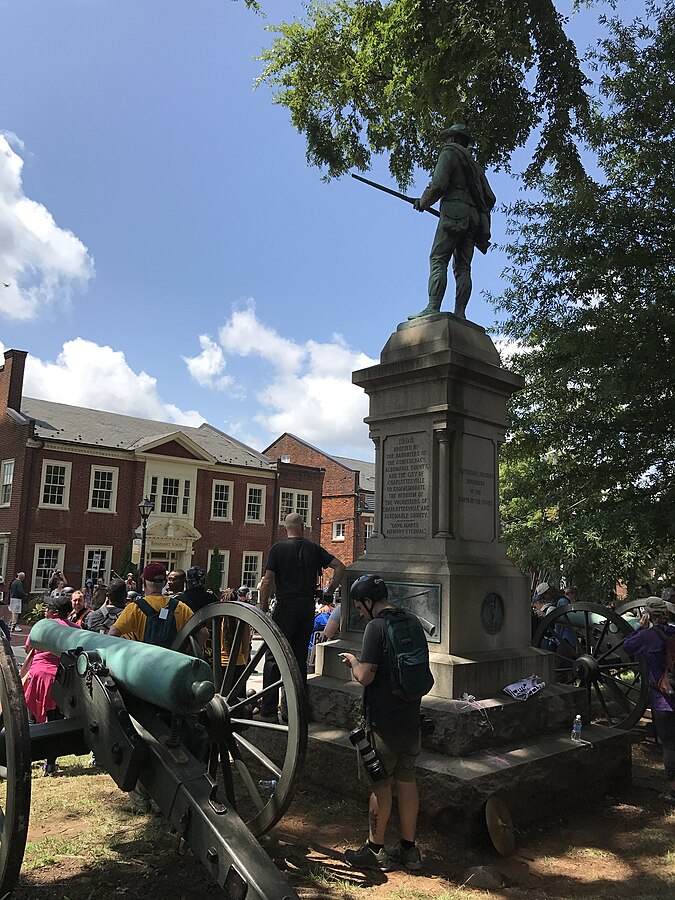
(photos: Anthony Crider, Agnostic Preachers Kid, Redneck Revolt)
Mainstream America was appalled. The alt-right did take a hit in the court of public opinion. Initially, recruitment into the alt-right swelled after Charlottesville but as infamy and shame as well as real world consequences grew, their numbers and leadership suffered. They were kicked off social media, lost credit cards, jobs, and became pariahs.
In a bizarre twist, back in 2017, a 4chan user claimed to know details about Hillary Clinton’s imminent arrest and the countries that would extradite her should she flee the US. This unknown individual claimed to have a top government clearance called Q. This was the start of QAnon. QAnon moved to 8chan and grew into even more peculiar conspiracy theories attracting greater numbers than the alt-right and especially notable—many women.
Echoes of the internet and Charlottesville connections played out in violent episodes across the globe in the following years. In Toronto, in April 2018, Alex Minassian, an incel, drove a van into a crowd killing 11 and wounding 15. The following spring saw 51 killed in attacks on mosques in Christchurch, NZ. The killer posted his manifesto on 8chan and called on others to act to destabilize and radicalize society. Poway, CA became the scene of another death and 3 injured just a month later. The killer cited the Christchurch shooter as his inspiration. The one I remember the most happened in August 2019. A 21-year-old white man went into a Walmart and killed 23. He also cited the Christchurch shootings as well as the far-right, Great Replacement conspiracy theory. He posted his ideas on 8chan.
Elle Reeve spent most of 2020 covering Seattle and Portland during the right-wing backlash to the Black Lives Matter Movement. This is where the reader gets an introduction to the Proud Boys. She describes them as a group without a political agenda. “They had a vibe and they had a look.” In the northwest, they acted as a security force for conservative groups, but they were most known for street fighting. The Proud Boys attracted young, disenfranchised men who wanted to fight.
On January 6th, 2021, Reeve was at the Capitol watching events unfold. Since she had followed so many of these groups, she was not surprised at what happened.
(Jan. 6th violent insurrection at the Capitol, showing Oath Keepers)
The book did fill in some of the blanks for me. All are now part of history. Reeve makes a case for how personal choice can be exercised in the making of history. We are still standing on a precipice. Trying to decide who we are as a nation. The consequences couldn’t be higher. Lives are at stake. Holding a mirror to ourselves is not easy but how can we go forward without confronting our past? Black Pill is a cautionary tale about how small, radical groups can use technology to mobilize and influence American life. It is also a call to understand the deeper psychological forces at work which produce these movements in order to combat their negative effects on society. Highly recommended!
TO FIND MY BOOKS:
LOOK FOR A $.99 Promotion on Timeless Tulips, Dark Diamonds (Kindle edition- now through Halloween!!) Scary, ghost read for the fall chill. Grab yours today!
(Check out my YouTube channel for more content. I post shorts and other in-depth videos there. @ellinelson6128)
I suspect most of you have heard of the Shakers. But what about the Rappites (also called Harmonists)? The Owenites?
Tucked in southern Indiana is a small town called New Harmony that came to my attention a few months prior to the recent eclipse. A weird and out of the way place where two very different groups of people attempted to create their version of a Utopian society. It sounded like a perfect place to experience the solar eclipse in Aries.
In 1803, German born, George Rapp led a group of followers who had split from their traditional Lutheran roots to establish a town where they would follow an exemplary Christian life and await Christ’s imminent return. Rapp was inspired by the philosophies of Emanuel Swedenborg, Jakob Bohme, and other forms of Esoteric Christianity. His group may also have dabbled in alchemy. In a short ten-year period, the hard-working group which functioned as a commune, built a town and successfully traded goods along the east coast and down the Mississippi. Although some historians question exactly why George Rapp chose to uproot the entire town in 1814, the book I read indicates that the Rappites became too successful and Rapp feared that idle hands, well- you know how THAT goes. Rapp sold the whole town to a successful Welsh visionary looking to start his own Utopian social experiment.
(Above: The Rappites built log cabins originally before construction began on the permanent town. Middle photo shows a natural, laurel bush labyrinth with center brick structure. Third is a communal residence building later used as a theatre by the Owenites. Last photo shows a massive communal granary built by the Rappites. The Owenites bought an entire functioning town from the Rappites and built virtually nothing.)
Robert Owen was a transformative voice for change. With his charisma, he enchanted many. Coming to the US after becoming hugely successful in the UK in the textile industry, he addressed join sessions of Congress twice. New Harmony was envisioned to be his idea of a Utopian society for the worker. Unfortunately, his experiment attracted high-minded thinker types and none of the workers necessary to run the town the Harmonists had built. Owens visionary style marked him as a man of ideas, but he lacked the ability to actually get anything up and running in the community. The New Harmony experiment lasted about two years. However, Owen’s ideas were influential and with the diligent work of his sons and the intellectuals of the town, notable lasting achievements did come. The dream of social change came through reforms in women’s (Robert Dale Owen) and worker’s rights (UK, especially), the establishment of free public libraries and museums (Smithsonian) and led to major innovations in public co-educational schools (New Harmony intellectuals).
(Above: A building believed to have been built by Owenites. Second photo shows the specimen collections gathered by the Owenite intellectuals. They were known for their interest in science (especially geology) and educational reforms. Two photos of objects from the Owenite period. Last is a painting from a collection donated in the early 20th century to the Owenite community. The Owenites were also known for their active theatre productions.)
One of the major distinctions between the Harmonists and the Owenites was the way they treated religion. In the first community, religion was at the core of the founding of the society. The later Owenites were free to choose to practice any religion, or none. Robert Owen himself professed a belief in no religion. Until—late in life, Robert Owen met a trance medium and sat for several seances. A disbeliever in everything up until that point, he went on to communicate with (allegedly) Benjamin Franklin, Thomas Jefferson, and others. In the final years of his life, he became a firm believer in Spiritualism and its promise of an afterlife. Owen’s eldest son, Robert Dale Owen also found his way into the folds of Spiritualism. Robert Dale Owen had a significant career as an Indiana legislator, US Congressman, and diplomat. He implemented many lasting social changes for women’s property rights and advocated to give women the vote, urged Lincoln to abolish slavery on moral grounds, and had a role in the construction of the Smithsonian. Robert Dale Owen went on to pen two books about the phenomenon of Spiritualism. His books, Footfalls on the Boundary of Another World (1859) and The Debatable Land Between this World and the Next (1872) are still available today.
I found New Harmony to be disappointing today. It’s a sleepy, quaint little town. Very little remains of the once thriving Harmonist community. Some of the Owenite period exists, closed and cut off behind fences. There are many pretty, well-kept Victorian homes. The local university has a few buildings it maintains and is vested in telling a certain slant of history. In the 1950s a benefactor came in to restore parts of the village and create a new artists’ colony. It was a shame she didn’t do this in the 1960s when it might have taken hold. Like so many little towns, it struggles for its place in a new world.
(Below are images from the modern period, post 1950. First photo is the Roofless Church, dedicated in 1960 as an interdenominational church designed by Philip Johnson. Cloisters and sculpture follow in the next two photos, also near the Roofless Church. Final photo shows the replica of the Chartres Cathedral Labyrinth built in New Harmony.)
THE FULL SOLAR ECLIPSE IN ARIES :
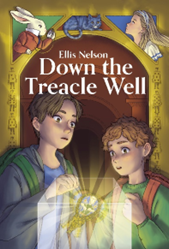
My Alice in Wonderland retelling is called Down the Treacle Well. The book trailer is below.
ORDER HERE:bit.ly/3roGX9f
SIGNED COPIES AVAILABLE: Contact himalayaspencerellis@yahoo.com for more info!
If you have been a follower of this blog for a while and are interested in becoming an advance reviewer for the release of my new middle grade novel, DOWN THE TREACLE WELL, please send me a message via himalayaspencerellis(at)yahoo.com. Put ARC in the subject line. I have a limited number of e-copies available for reviewers.













 ellisnelson