Tag Archives: ghostly phenomena

Lantern Guided Ghost Tour: Cheesman Park (Denver)

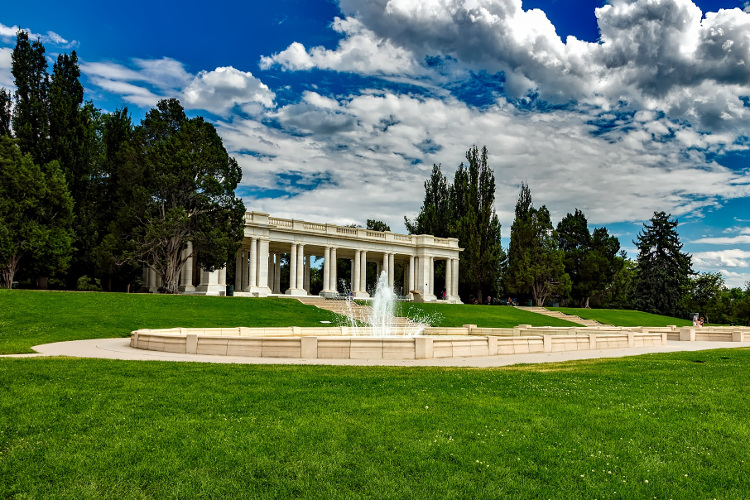
On a chilly, dark night we met our long-coated, derby wearing guide. He carried a very squeaky lantern that swung back and forth as we followed him through the notoriously haunted park. And why shouldn’t it be haunted? Today’s lovely spacious green park was once the site of several cemeteries dating as far back as1858 with Prospect Cemetery, but even before that legend held that Native Americans buried their dead here. Federalized in 1872, by then the cemetery was called Denver City Cemetery and contained various religious and ethnic groups. The Jewish section was reputed to be the most beautiful while the Chinese rituals of dismemberment and boilings at graveside drew the Denver curious in great numbers.

One of the first ghosts a visitor might encounter on any given night in Cheesman Park would be the that of John Stiles who suffered the fate of being the first man hanged in Denver. He is sometimes heard saying, “I did it! I did it.” Apparently, he murdered his brother-in-law back in the day and continues to confess to the crime even though he was executed in the cemetery over a century ago.

By the end of the 19th century several other cemeteries opened in Denver and this one fell into severe neglect. With an increasingly negative reputation, those who lived around it sought to have the cemetery converted into a park. The very costly undertaking (pun intended) to remove the bodies began…but not terribly successfully. After a scandal involving defrauding the city with a scheme involving breaking bodies into pieces and creating an endless trail of supposed separate children’s bodies in coffins, the work contract was cancelled. The city pressed forward with the park leaving thousands of bodies in their graves. Today evidence of this can be seen after fresh snow when depressed rectangles appear across fields. Media has captured these images as have individuals strolling the park. It’s a common event. Bones also have been known to float to the surface and are recovered in the park as coffins continue to break down. Construction in the nearby Botanic Garden or city grounds has also produced complete skeletons in lines.     

Our guide pointed out various sections of the old cemetery including the Chinese, Jewish, and Catholic sections. There was once a boot hill, so named because the homeless buried with their boots on and without a coffin, was an area subject to the confounding habit of producing the odd boot or two after weather events. Further along a significant depression in the lawn was once the site of a flood that resurfaced skeletons.  

We happened along a tree-lined path that was a road for Model-T cars for about a year. Apparently there were so many deaths due to the cars racing along at 35 MPH that the city had to intervene. The path is said to be haunted now by those victims, and you can still hear their screams. From that path, we gazed out into the park and were reminded that although the trees which lined the road were planted in straight lines, those out in the park were scattered because it was easier to drop trees into open graves when the city halted the contract to move the bodies than to pay workers to close the graves.
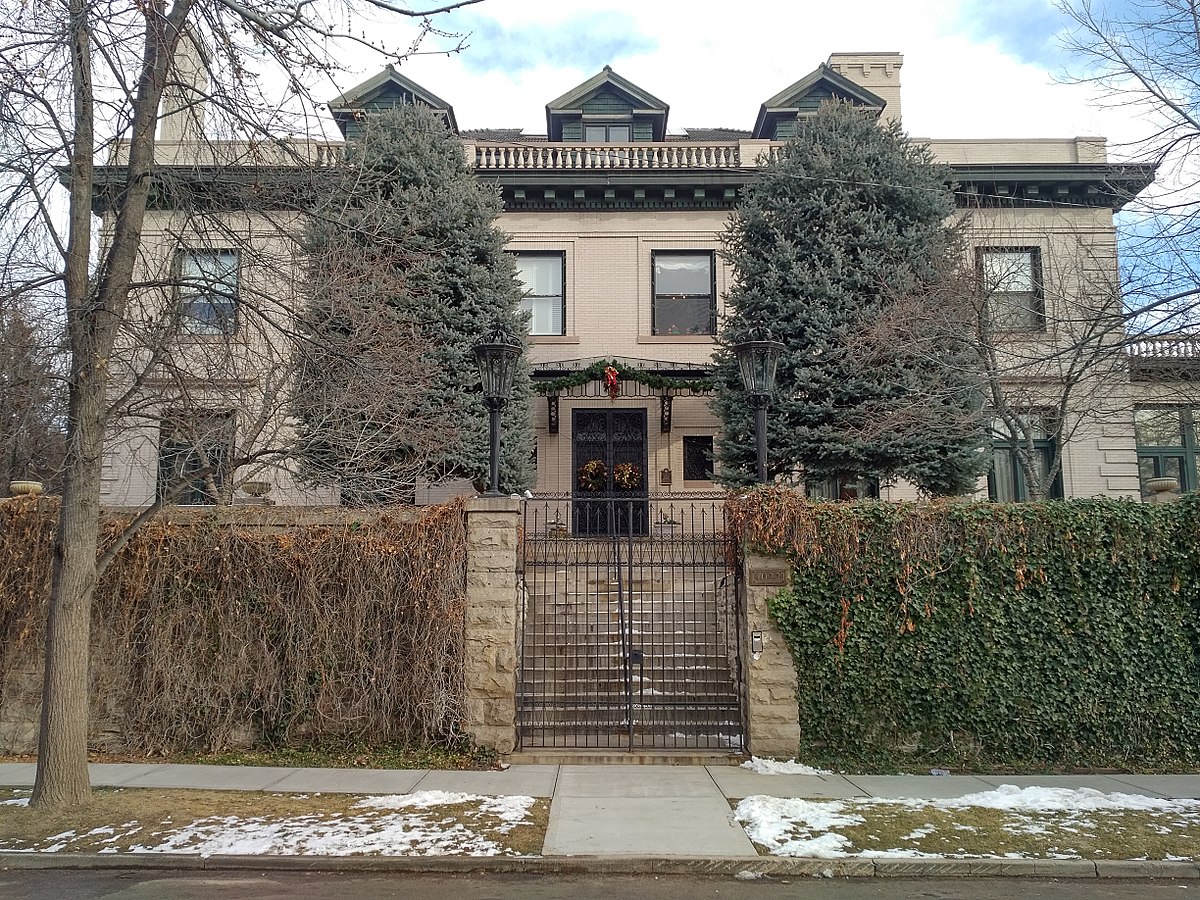
Because the original cemetery area covered more than the park, we had a chance to wander a few of the streets where Denver’s wealthy classes built estates right on top of the old cemetery. One of the most famous of these is the Stoiber Mansion. Today it is surrounded by tall hedges and hard to glimpse. It is said to be haunted by several ghosts. The one that guests repeatedly reported is a waiter in a tux who carries a tray. When you place your drink on the tray, it falls through, and he vanishes. The house also has a connection to the Titanic and the “Sacred 36” (a society card club which Molly Brown wanted to join but was never invited into). Across the street, one of Denver’s earliest newspaper men hosted Presidents TR and Taft. Next door lived the first Governor of Colorado.

A totally unexpected connection was made to the movie The Changeling (1980) starring George C. Scott. A couple of decades ago, in the Humboldt neighborhood, a Victorian house once stood where an apartment building does now. Back in the 1960s, Russell Hunter claimed to have had experiences in the Henry Treat Rogers’ mansion that provide the basis for the movie script. The mansion was demolished in the 1980s and the movie was set in Seattle.     

Cheesman Park has a history worthy of hauntings. We didn’t sense or see anything but just knowing that the grounds are filled with unrecovered and unmarked graves makes me think twice about picnicking or hanging around too long. Wishing you a happy, haunted Halloween!

Have you ever had an encounter with a ghost? Share your story in the comments. I have had several. One I describe in the introduction of my ghost book. Read it on Amazon.

My Ghostly Tale: Timeless Tulips, Dark Diamonds: A Ghost Story

In this chilling ghost story, an act from the distant past is reawakened and afflicts the life of a modern teenage girl.

When Lydia travels to Amsterdam with her parents, bizarre things start to happen. Curtains flutter and unexplained shadows move unnerving her. With Dad interviewing for a job, Lydia is content to dismiss the oddities blaming them on jet lag and her migraine disease. But upon returning home to New York, the experiences intensify.

This is the haunting tale of two girls separated by four hundred years. Lydia is confused and in danger because the ghost of a little Dutch girl, Annika, wants revenge. When Lydia’s life is threatened, she is forced to solve a centuries’ old mystery to uncover the truth about Annika, her story, and how their past and present connect them. Can Lydia learn the truth in time to save herself and help Annika?

10 Comments

Filed under Halloween

Part II: THINGS THAT GO BUMP IN THE NIGHT

Sir Robert Ottley, Royalist

Sir Robert Ottley, Royalist

 Continuing with JH Brennan’s, Whisperings: The Secret History of the Spirit World, I wanted to mention the research conducted by Dr. A.R. G. Owen a few years after Bacheldor’s work. A Canadian research group led by Owen wondered if they could create a ghost.

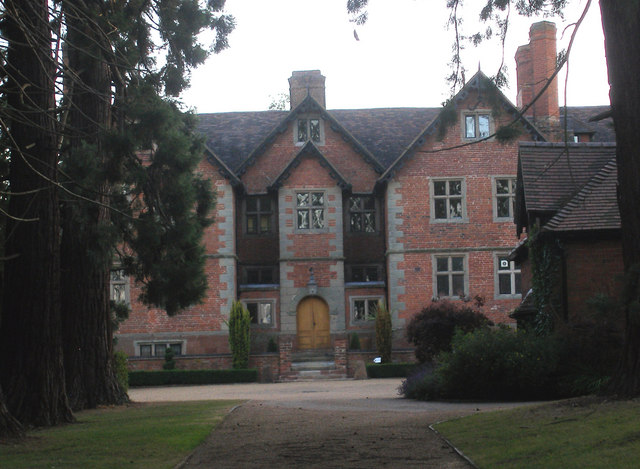
Working a lot like fictional writers, the group created “Philip” and gave him a whole history. Philip had been a Cavalier officer during the English Civil War and had resided at Diddington Hall (a real place). The story of his life was a fabrication and went like this. Although Philip was married, he had an affair with a gypsy girl which had enraged his wife. The wife managed to have the girl denounced as a witch and burned. So distraught was Philip that he threw himself off the battlements of the hall committing suicide. Poor Philip!

Diddington Hall. Photo: John Evans

Diddington Hall. Photo: John Evans

The group held séances for a year trying to contact the Cavalier with no luck. I think it’s pretty amazing they’d keep at it that long with no result. One of the group eventually read Bacheldor’s work and wondered if a lighthearted atmosphere might make a difference. Giving it the old college try, they sang and told jokes, and oddly enough, after a few more séances, things started to happen. They heard their first rap and the table slid across the floor. Success at last! Encouraged, someone asked if Philip was doing it and was answered back with a loud rap. Having contacted the entity, the group used the one knock for yes and two for no method, to go on to communicate with Philip. Phillip affirmed the basic facts of his fictional life story and went on to reveal additional details the group had not created. The séances also produced various physical phenomena. The most spectacular was recorded for a television program. A table climbed a set of steps joining the panelists being interviewed.

Battle of Marston Moor, 1644

Battle of Marston Moor, 1644

I’ll leave you to ponder the significance of the Philip research. As a fiction author, I’m already concocting plots about how the other side conspires to have a good laugh at Owen and the other sitters.

7 Comments

Filed under Book Review, Books

THOSE THINGS THAT GO BUMP IN THE NIGHT

whisperers

JH Brennan’s, Whisperers: The Secret History of the Spirit World explores the powerful undercurrents flowing just beneath the surface of the history we’re taught in school. Whether or not you believe in ghosts, spirits, or faeries, is immaterial (pun intended). The fact that various phenomena have been occurring throughout pre-history right up until today is undeniable. Brennan doesn’t set out to prove the existence of ghosts as disembodied, earth-bound entities but rather he examines the effect they may have played on history.

It’s a fascinating book with lots of little surprises. I read the last two sections first and went back to the older histories later. While I love a good ghost story (and Brennan does share two personal experiences), it was some of the research into the phenomena that caught my attention.

ghost1

There have been many theories put forth to explain all manner of ghostly happenings, but none seem to fully explain everything. Indeed, although we tend to lump everything under the vast heading of the paranormal (or PSI), different phenomena may be different things entirely.

Brennan cites two studies which are fascinating. I’m going to outline the first one here and then take on the second in a follow-on piece.

In 1966, Kenneth Batcheldor (a UK psychologist) published findings in the Journal of the Society for Psychical Research concerning the levitation of tables. Recall from the Victorian era, the spiritualism craze which involved spirit contact and various physical manifestations including rappings, materializations, levitation, etc.

ghost2

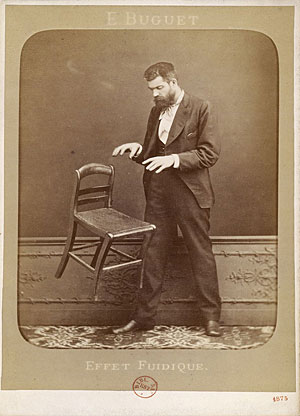
In 1964, Batcheldor conducted a series of 200 séances with a small group of sitters. In 120 of the sessions, no phenomena were observed but in 80 of them (40%), physical phenomena was seen. While table movement early in the trials could possibly be dismissed by involuntary muscle movement, by the 11th session, Batcheldor watched as a table rose and floated in the air. At this point he couldn’t rule out fraudulent means so he worked with an engineer to tighten his experimental controls. Once the controls were in place, the phenomena stopped- but over time, the phenomena returned. This was a pattern Batcheldor saw over and over again. Introduced slowly, the sitters appeared to acclimate to the controls and the happenings would start anew. Astonishingly enough, Batcheldor observed not only table movement and levitation, but a whole range of spirit phenomena reported by Victorian spiritualists and witnesses. Amongst the phenomena observed were rapping sounds, breezes, lights, the feeling of being touched, movement of objects including the pulling back of chairs, apports, and holding the table to the floor so it couldn’t be lifted.

levitation

The experiments seem to indicate people have the ability, through unconscious means, to produce a variety of physical phenomena. While it doesn’t definitively rule out spirit action, it does point toward interesting avenues for further research. Batcheldor theorized that early movement of the table due to muscle contractions conditioned sitters to expect phenomena and opened them up to actually producing it. This is something later PSI researchers discovered when examining other kinds of phenomena in a lab setting. Belief makes a difference, and in Batcheldor’s case, seeing the phenomena may have led to its manifestation. So here we learn nothing really about spirits, but it does indicate how little we (or science) know about the mind.

The book on Amazon:http://www.amazon.com/Whisperers-Secret-History-Spirit-World-ebook/dp/B00EOARZGY/ref=sr_1_1?s=books&ie=UTF8&qid=1395336244&sr=1-1&keywords=whisperers+the+secret+history+of+the+spirit+world

11 Comments

Filed under Book Review, PSI