Tag Archives: Ellis Nelson

HOW TO MAKE A ZOMBIE

Another Tale for Halloween


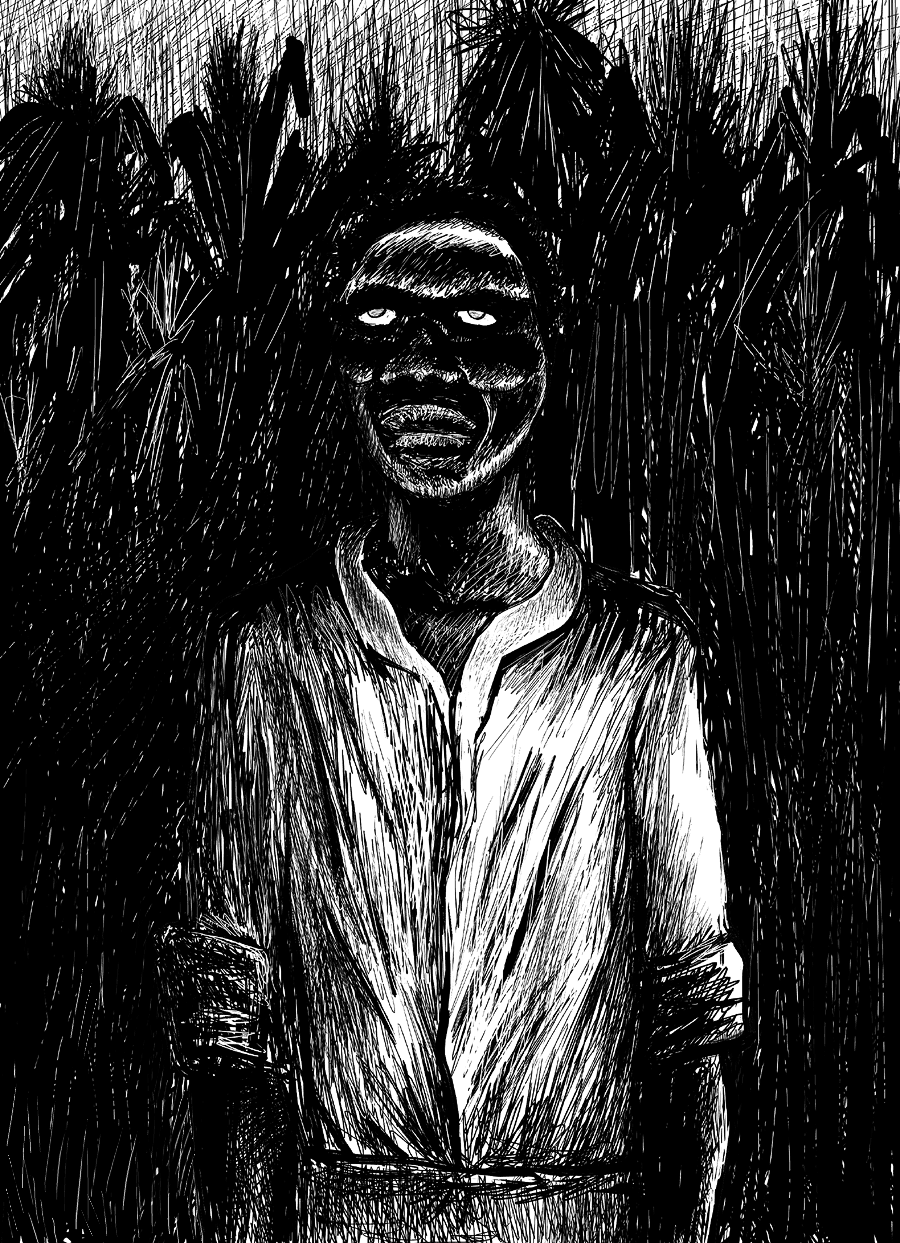
Wade Davis is a Canadian anthropologist and ethnobotanist. He has written extensively about culture, botany, the environment and he has become a noted photographer. He has done hundreds of interviews, inspired many documentaries, and even was the source for three X-files shows. And Wade Davis has met a zombie. Not the made-up kind delighting so many Americans nowadays, but the very real kind. A poor, unschooled man who was victimized by his family.

Back in the 80s Wade Davis wrote about his experience investigating the zombification process in Haiti. His book The Serpent & the Rainbow propelled him to worldwide fame and a Hollywood movie followed in 1988.

Drawn to Haiti by legends concerning the existence of zombies, Davis wanted to investigate the botanical or chemical aspects of the phenomena. Soon he was drawn into the vodoun culture of the Haitian witchdoctor (bokor). Escape the cities of Haiti for the countryside and fear and magic play a very real role in the society. Wade Davis knew the story of Clairvius Narcisse and before long the two would meet.

In 1980, Clairvius Narcisse approached a woman in a marketplace and identified himself as her long gone, well- dead actually, brother. She was shocked to say the least but then so is his story. Shocking. Clairvius told a tale of being drugged, buried, resurrected, and made a slave on a sugar plantation. Apparently a brother wanting Clairvius’ land sold him to a bokor. Having “died” in 1962, Clairvius escaped the plantation a couple of years later only to wander aimlessly for the next sixteen. Now having learned of his brother’s recent death, he felt safe enough to make himself known to the sister. A local doctor developed a questionnaire to establish once and for all, if the man was who he claimed to be. Clairvius answered everything correctly and the doctor along with his village accepted him as the true Clairvius. Had the curious tale of Clairvius Narcisse been isolated, maybe it could have been dismissed easily. But there are many tales of zombies in Haiti long before Clairvius and after.

Davis’ investigation into the world of vodoun and the zombie led him to advance the hypothesis that tetrodotoxin (TTX) was the chemical agent used by the bokor to induce a death-like state. A mixture of toad skin and puffer fish, either rubbed on the skin or ingested through food, seems to accomplish this. Breathing slows, the heartbeat weakens, and victim appears dead even to medical personnel. In the tropical climate of Haiti, bodies are buried quickly and the bokor likes it that way. A zombie in the ground for more than eight hours risks asphyxiation. The zombie is dug up and restored to life possibly with an antidote. Delivered to a plantation, the zombie is kept in a semi-permanent induced psychotic state by force feeding a datura paste. Datura destroys memory and wreaks havoc with gaining any sense of reality. It is also known to produce powerful hallucinations.

All of the chemicals used or potentially used are powerful enough to cause real death so the bokor has to be knowledgeable and proficient in their use to be successful. Davis also credited the culture of fear and belief that underlies the creation of the zombie. There are powerful cultural influences that must be in place to create and maintain a zombie.

Are zombies scary? Maybe not, they’re victims, but the idea that you or I could be made into one makes me uncomfortable. That’s why I try to make sure my siblings are happy with me and I’m not more valuable “dead” than alive. Happy Halloween!


34 Comments

Filed under Books, Spiritual/Mysticism

NEW AUTHOR INTERVIEW

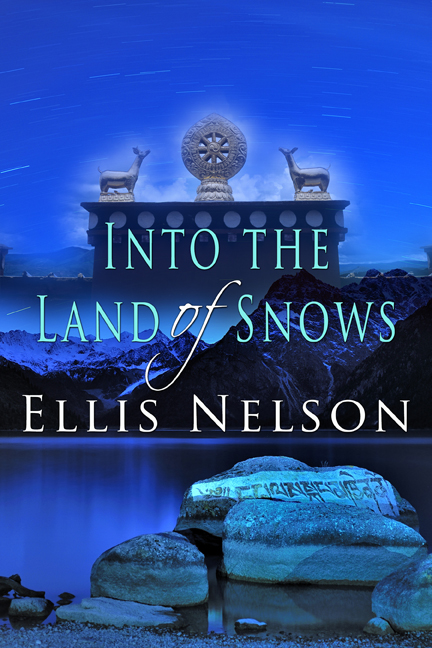
ELLIS NELSON, author of INTO THE LAND OF SNOWS

All the way from Edinburgh, Katharine Griffiths interviews me on writing young adult novels and the influence of Buddhism on my work. Join us for the fun. Feel free to comment or ask questions. Anything goes. http://wp.me/p2Jcvv-4v

13 Comments

Filed under Blog Interview, Books

NEWTON AS ALCHEMIST

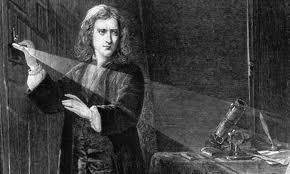
When we think of Isaac Newton, most of us probably return to high school physics. Laws of motion, gravity, incline experiments, and lists of equations come to mind. Newton was a great scientist and collective thought has enshrined him this way. But this is a very modern way to see him and casts aside and discards him as a spiritual being, for Newton was an alchemist. Sir Isaac wrote more on Biblical hermeneutics and occult studies than on math and science. He placed great emphasis on rediscovering the occult wisdom of the ancients and probably considered his scientific work to be of much less importance.

Although alchemy is generally viewed as a precursor to science (and it has that role), it was so much more. Alchemy incorporates Hermetic principles which include ideas from mythology, religion, and spirituality. Below HJ Sheppard outlines the dualistic nature of alchemy as both external (in the material world) and internal (spiritual) practices.

Alchemy is the art of liberating parts of the Cosmos from temporal existence

     and achieving perfection which, for metals is gold, and for man, longevity,

     then immortality and, finally redemption. Material perfection was sought

     through the action of a preparation (Philosopher’s Stone for metals;

      Elixir of Life for humans), while spiritual ennoblement resulted from some

      form of inner revelation or other enlightenment.

 We will probably never know the full extent of Newton’s alchemical work. Much was destroyed by fire. He also worked in a time when many alchemical experiments were banned and religious views differing from what was considered mainstream was heresy. Historians are still trying to piece things together.

An auction at Sotheby’s in 1936 created a worldwide sensation. Previously unpublished and unseen documents (Portsmouth Papers) surfaced and were presented for sale. About one-third of them were considered alchemical in nature. The papers show Newton’s keen interest in the philosopher’s stone. To this day, several projects are underway to catalog, transcribe, and make Newton’s papers available.

Other writings point to Newton’s interest in occult knowledge, sacred geometry, and prophesy. Throughout his life, Newton associated with members of various esoteric groups but his actual membership in any of them has never been confirmed. Certainly he shared many of the same interests these groups had. At the time of his death, Newton’s library contained 169 alchemical books and for its time, it would have been one of the best alchemical libraries in the world.

Recently I read Ghostwalk by Rebecca Stott. This is a fictional story which revolves around Newton’s life at Cambridge. Stott is a professor who bases the book on actual records of Newton’s life. At its core are the mysteries of Sir Isaac’s rise to power and position, a series of murders near the university, and the influence of alchemy. A very interesting read.

58 Comments

Filed under alchemy, Book Review, Spiritual/Mysticism

How This Book Came Into the World

Several years ago I had a particularly bad year. My father died, my son was hospitalized, and I came face to face with my own health crisis. All in one year. My illness effectively took me out of the world and focused my attention inward. I returned to basics and found my interest in Buddhism waiting for me. Silent, I think, since at least my teenage years.

I began taking classes offered in faraway Dharamsala, India.  Thanks to the internet, I was able to study with a master who had fled Chinese-occupied Tibet to follow His Holiness, the Dalai Lama into exile in 1959. Listening to Geshe Sonam Rinchen’s patient lectures aided my understanding of Tibetan Buddhism. That along with my friendship with a young monk in India helped me to process and write, Into the Land of Snows.   The novel explores many of the themes I was exposed to as I learned Eastern concepts.

The process of the inward journey continues for me. Living in the material world is not easy. I know the majority of readers will read the book as an adventure in a foreign land, but I hope the book finds a few fellow spiritual travelers.

43 Comments

Filed under Book Review, Books, Story behind ITLS

PHILIP K. DICK- MYSTIC

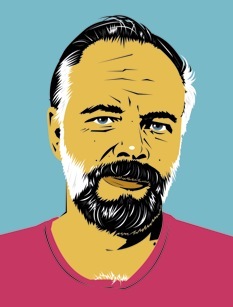
Philip K. Dick Portrait by Pete Welsch Washington, DC

Philip K. Dick
Portrait by Pete Welsch
Washington, DC

Most people know Philip K. Dick (PKD) by way of two main venues- either his science fiction novels or his movies (Minority Report, Blade Runner, etc). If fact, he is more famous now then he ever was in life. Such is the nature of being a visionary- the art world is rife with this. The thing I find fascinating about PKD though, is something most people have never heard about. PKD had many mystical experiences and he wrote about them.

His first encounter happened in Feb. 1974 and what followed would direct a line of inquiry for the rest of his life. After oral surgery and under the influence of sodium pentothal, he opened his door to a delivery girl who was wearing a gold necklace with a pendant in the shape of a fish- an early Christian symbol. The sun glinted off the fish producing a pink beam. The resulting mystical experience involved an encounter with an intelligence which allowed PKD to receive wisdom and clairvoyant messages. Throughout Feb. and Mar., the experiences continued with visions and more encounters. At one point while in trance, PKD received detailed medical information about his son and a life-threatening condition. Rushing the baby to the hospital, doctors indeed confirmed the condition and saved the boy.

exegesis

In the years of exploration and searching that followed, PKD kept detailed journals, totaling some 9000 pages. Whittled down to 900 pages, Exegesis is a collection of his mystical experiences and the author’s attempts to make sense of what was happening to him. It makes for fascinating reading. There is real passion and honesty in his efforts to understand and deal with what was going on. On one hand, it’s very inspiring but on the other, it’s unsatisfying too. PKD never really accepts any one answer and scholars who view the material are also at a loss. What really happened to PKD during the period known as 2-3-74 (and after) and what did it mean?

PKD’s last novel was entitled The Transmigration of Timothy Archer. It is considered to be one of his best, and truly, it is a metaphysical work. Reading Exegesis and then Transmigration, the reader is encouraged to search for their own answers and fully engage the mind. Happy reading!

Leave a comment

Filed under Spiritual/Mysticism