Update: May 10th: The winner was drawn today. KDKH was the winner and has been notified. Thanks to all who entered!
ENTER TO WIN A FREE E-BOOK
Today (May 4th) is Alice’s (of Wonderland fame) birthday! This is a photo of Alice Liddell.
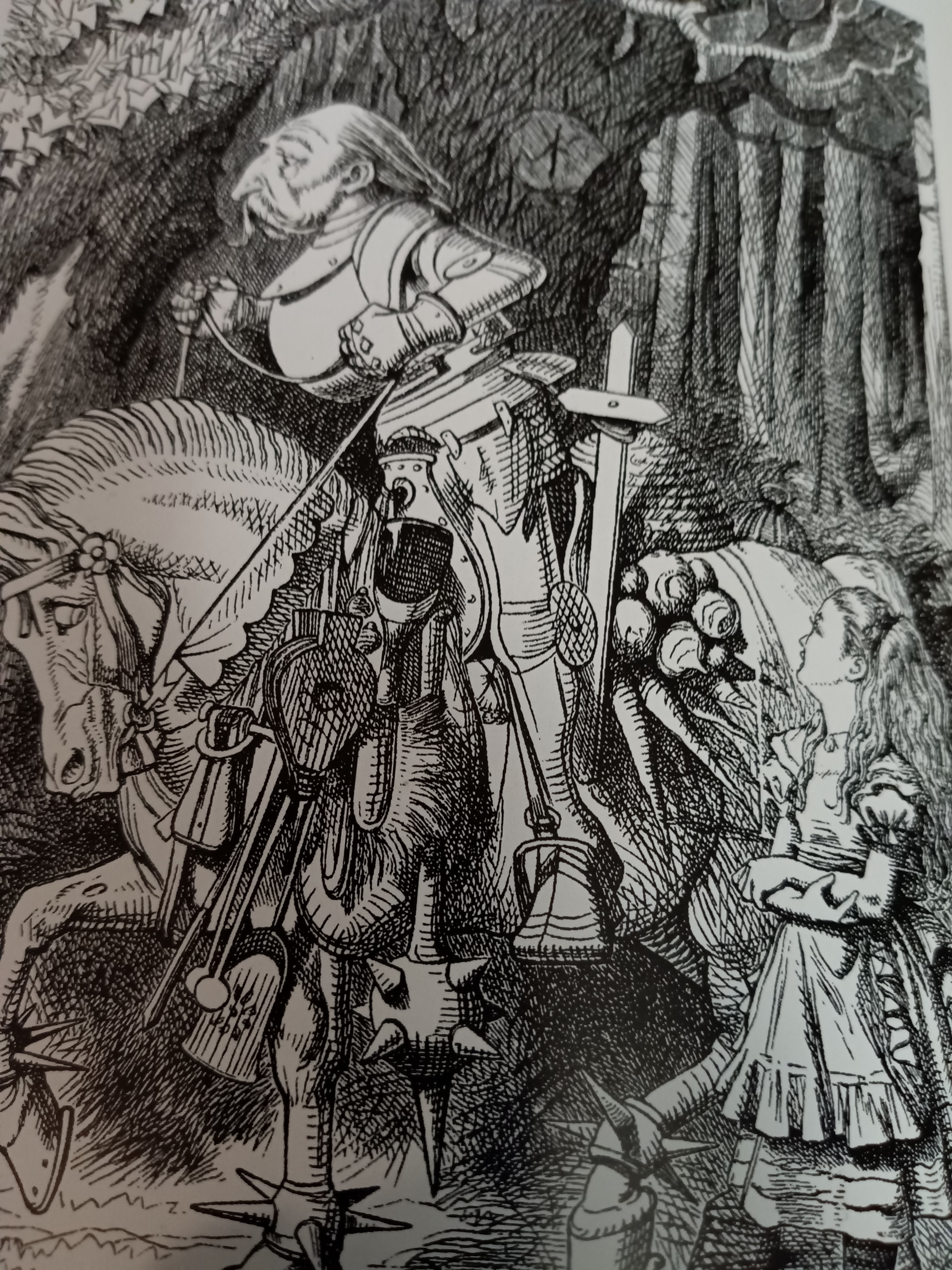
In 1862, the Rev. Dodgson (Lewis Carroll), who was a mathematics don at Oxford, took three little neighbor girls out for a ride on a boat. On a hot, sunny July day, and in the company of his friend, Robinson Duckworth, the professor began to spin yet another fantastic story for the amusement of the girls. Alice, who was ten at the time, begged Mr. Dodgson to write down the tale for her. She was presented with a handwritten copy of Alice’s Adventures Under Ground, illustrated by the author during Christmas 1864. That copy resides in the British Museum and is probably the most famous book in all children’s literature. The next year the rest of the world welcomed Alice’s Adventures in Wonderland into history.
To celebrate Alice’s birthday, I’ll be giving away one E-book of Down the Treacle Well. To enter the drawing, leave a comment below. Contest closes Friday, May 10th at 12:00 (MST).
(Check out my YouTube channel for more content. I post shorts and other in-depth videos there. @ellinelson6128)
I suspect most of you have heard of the Shakers. But what about the Rappites (also called Harmonists)? The Owenites?
Tucked in southern Indiana is a small town called New Harmony that came to my attention a few months prior to the recent eclipse. A weird and out of the way place where two very different groups of people attempted to create their version of a Utopian society. It sounded like a perfect place to experience the solar eclipse in Aries.
In 1803, German born, George Rapp led a group of followers who had split from their traditional Lutheran roots to establish a town where they would follow an exemplary Christian life and await Christ’s imminent return. Rapp was inspired by the philosophies of Emanuel Swedenborg, Jakob Bohme, and other forms of Esoteric Christianity. His group may also have dabbled in alchemy. In a short ten-year period, the hard-working group which functioned as a commune, built a town and successfully traded goods along the east coast and down the Mississippi. Although some historians question exactly why George Rapp chose to uproot the entire town in 1814, the book I read indicates that the Rappites became too successful and Rapp feared that idle hands, well- you know how THAT goes. Rapp sold the whole town to a successful Welsh visionary looking to start his own Utopian social experiment.
(Above: The Rappites built log cabins originally before construction began on the permanent town. Middle photo shows a natural, laurel bush labyrinth with center brick structure. Third is a communal residence building later used as a theatre by the Owenites. Last photo shows a massive communal granary built by the Rappites. The Owenites bought an entire functioning town from the Rappites and built virtually nothing.)
Robert Owen was a transformative voice for change. With his charisma, he enchanted many. Coming to the US after becoming hugely successful in the UK in the textile industry, he addressed join sessions of Congress twice. New Harmony was envisioned to be his idea of a Utopian society for the worker. Unfortunately, his experiment attracted high-minded thinker types and none of the workers necessary to run the town the Harmonists had built. Owens visionary style marked him as a man of ideas, but he lacked the ability to actually get anything up and running in the community. The New Harmony experiment lasted about two years. However, Owen’s ideas were influential and with the diligent work of his sons and the intellectuals of the town, notable lasting achievements did come. The dream of social change came through reforms in women’s (Robert Dale Owen) and worker’s rights (UK, especially), the establishment of free public libraries and museums (Smithsonian) and led to major innovations in public co-educational schools (New Harmony intellectuals).
(Above: A building believed to have been built by Owenites. Second photo shows the specimen collections gathered by the Owenite intellectuals. They were known for their interest in science (especially geology) and educational reforms. Two photos of objects from the Owenite period. Last is a painting from a collection donated in the early 20th century to the Owenite community. The Owenites were also known for their active theatre productions.)
One of the major distinctions between the Harmonists and the Owenites was the way they treated religion. In the first community, religion was at the core of the founding of the society. The later Owenites were free to choose to practice any religion, or none. Robert Owen himself professed a belief in no religion. Until—late in life, Robert Owen met a trance medium and sat for several seances. A disbeliever in everything up until that point, he went on to communicate with (allegedly) Benjamin Franklin, Thomas Jefferson, and others. In the final years of his life, he became a firm believer in Spiritualism and its promise of an afterlife. Owen’s eldest son, Robert Dale Owen also found his way into the folds of Spiritualism. Robert Dale Owen had a significant career as an Indiana legislator, US Congressman, and diplomat. He implemented many lasting social changes for women’s property rights and advocated to give women the vote, urged Lincoln to abolish slavery on moral grounds, and had a role in the construction of the Smithsonian. Robert Dale Owen went on to pen two books about the phenomenon of Spiritualism. His books, Footfalls on the Boundary of Another World (1859) and The Debatable Land Between this World and the Next (1872) are still available today.
I found New Harmony to be disappointing today. It’s a sleepy, quaint little town. Very little remains of the once thriving Harmonist community. Some of the Owenite period exists, closed and cut off behind fences. There are many pretty, well-kept Victorian homes. The local university has a few buildings it maintains and is vested in telling a certain slant of history. In the 1950s a benefactor came in to restore parts of the village and create a new artists’ colony. It was a shame she didn’t do this in the 1960s when it might have taken hold. Like so many little towns, it struggles for its place in a new world.
(Below are images from the modern period, post 1950. First photo is the Roofless Church, dedicated in 1960 as an interdenominational church designed by Philip Johnson. Cloisters and sculpture follow in the next two photos, also near the Roofless Church. Final photo shows the replica of the Chartres Cathedral Labyrinth built in New Harmony.)
THE FULL SOLAR ECLIPSE IN ARIES :
My Alice in Wonderland retelling is called Down the Treacle Well. The book trailer is below.
ORDER HERE:bit.ly/3roGX9f
SIGNED COPIES AVAILABLE: Contact himalayaspencerellis@yahoo.com for more info!
“The several story lines were skillfully interwoven and while the story is targeted for younger folks there is enough depth and richness to satisfy adults.” (LibraryThing)
“WOW! This is the first time I have read a novel by Ellis Nelson and it won’t be my last.” (LibraryThing)
“Down the Treacle Well is well-written, flows nicely, and is easy to read. It is also brilliantly clever—fun, funny, warmhearted, and wonderfully descriptive.” (Goodreads)
“The several story lines were skillfully interwoven and while the story is targeted for younger folks there is enough depth and richness to satisfy adults.” (Goodreads)
“It is, however, the injection of main characters with a 21st-Century sensibility that make it a story to recommend highly for modern readers who love fantasy, speculative fiction, or whimsical adventures.” (Goodreads)
” …Nelson reveals a darker side of Wonderland, one you get a glimpse of in the book and barely see at all in the Disney version. Friendly characters take on a more sinister feel as Nelson imbues them with plausible, but darker, traits and actions, and the more chaotic and dangerous characters are rounded out with unexpected rationality and even-handedness.” (Amazon)
“Author Ellis Nelson weaves the venerated Wonderland traditions with 21st century characters and ideas into a fun “what-happens-next” page turner.” (Amazon)
“…readers will enjoy this faithful and clever modern-day retelling of a children’s classic.” (Amazon)
“It’s a historical novel wrapped in an adventure tied up with fantasy ribbons. This revisit to a children’s classic just might be a new classic itself.” (Amazon)
ORDER HERE:bit.ly/3roGX9f
SIGNED COPIES AVAILABLE: Contact himalayaspencerellis@yahoo.com for more info!
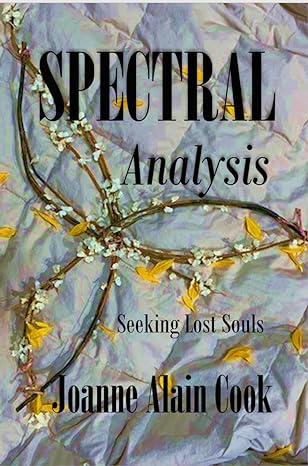
This novel follows the story of Janine Stinger, a tech specialist on the crew of a TV ghost-hunting show. Janine is deeply scarred by a previous relationship and especially vulnerable, although she does her best to hide it. When the team stumbles upon a story that dovetails with her own growing up, family history and local legend collide to confront Janine’s darkest fears. Is she part of a true haunting and curse? Her attempts to keep her past private start to crumble as her crush on the team’s lead paranormal investigator become mutual. How can she balance the past, the present, and the increasingly darker threats all while a river ghost lures people to their deaths?
Janine’s character is well-developed as are the other supporting characters. The personal dynamics of work, family, and romantic relationships all play a role in this historical ghost story. The author provides wonderful technical details on ghost hunting, the equipment, and the process. I loved the historical details and research that provided the backstory of the book. The reader learns about the culture in which ghost stories arise and grow. Although this book deals with one haunting, the reader is deeply invested in Janine’s experience and what is in store for her next.
Following on the heels of the successful, The Lost Apothecary, Sarah Penner’s latest novel has had a lot of hype. I found her new book when the library had a long waiting list for her first book and anything with séance in the title will get me to take a look.
The London Séance Society follows the story of Lenna Wickes who has recently lost her sister and who wants desperately to solve her murder. Since her sister was studying under a renowned medium, Lenna travels to Paris to engage Vaudeline D’Allaire for help. The two of them wind up back in London trying to solve a murder at a men’s club that functions as its own spiritualist-type institution. Of course, the two murders are connected and Vaudeline has her own history with the men’s club.
Not a bad setup, overall. The novel has a good pace with plenty of twists and turns. This is one where there may be a few too many. Throw in lesbian attractions. Men and misogyny. I started out thinking reading this book that it would be historical fiction but found the world the author created never existed. The contrived use of the séance in this way was irritating in a time when men’s societies did scientifically investigate phenomena. The use of language during this Victorian period many times felt far too modern. It was as if the author was unfamiliar with the way people spoke and the customs of the time (even though there are notes at the end of the book about mourning and funeral customs). The actual séance scenes and Vaudeline’s procedures were creative and well executed. Although the book held a lot of promise, it missed the mark for me. So much so, I’m going to pass on Penner’s first book.
“People are going to love this reimagining of the classic tale. In her unique way, author Ellis Nelson recaptures the magic. Her remarkable talent and vivid imagination bring it to life again with a new pair of adventurers and a new series of obstacles.”
“Down the Treacle Well is well-written, flows nicely, and is easy to read. It is also brilliantly clever—fun, funny, warmhearted, and wonderfully descriptive. As a fan of Victorian-era literature, I loved the nostalgic vibe. I think it would make a great film, too—animated or live! Wonderful job by the author.”
While visiting a museum in England, Ben and Kyle experience the extraordinary. Gazing at the Alfred Jewel, an ancient Anglo-Saxon artifact, they watch as it spins, contorts, and evaporates from its case, taking them with it.
Whisked back to Victorian England, the brothers are shocked to find themselves sprawled on the floor before Mr. Charles Dodgson, also known as Lewis Carroll, the author of Alice in Wonderland.
They soon learn that the famous author’s muse, Alice, is missing. Alice has used the Alfred Jewel to enter Wonderland and, by so doing, has upset the time continuum. The only way for the boys to return home is to locate Alice and return her safely.
Final Countdown To Launch- Down the Treacle Well (Nov 7th): Announcements! Review magazine, early reviewers, book trailer, cake, a book horoscope (really? REALLY!!).
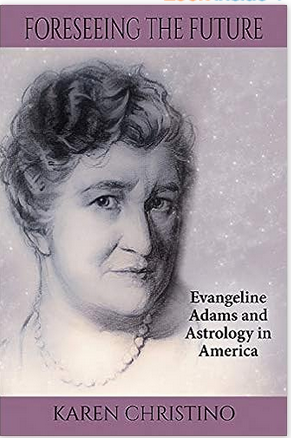
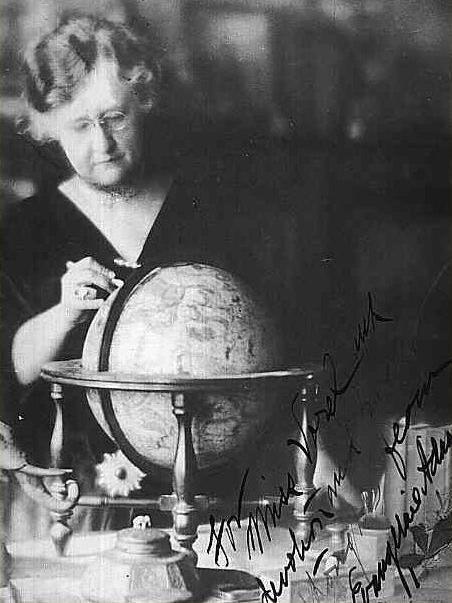
Evangeline Adams has long been an enigma in the world of astrology. Once she was a household name. Nowadays she is known to only a few. Her reputation in certain circles looms large but was it deserved? Karen Christino’s book goes a long way to demystify the woman who was the most famous astrologer of the early 20th century.
Evangeline Adams was a pioneer popularizing and legitimizing the practice of astrology so that it permeated American culture. That legacy was well-deserved. Other parts of her reputation, especially for forecasting may have been more a product of her ability to expertly market herself.
One of the most fascinating parts of the book for me involved Evangeline’s early beginnings. She was born in 1868 into a family of means. Her father died young having lost much of his wealth to speculating on an investment before its time (Perhaps this was a dose of Aquarian/Uranian energy which Evangeline inherits?). The family relocated to Andover, MA where Evangeline was surrounded by an extraordinary community of thinkers. With her mother economically independent, Evangeline grew up benefiting from an education separate from the men’s Andover Theological Seminary but very similar in content. The conservative Christian culture emphasized the development of character, mind, and spirit. Eva was able to attend lectures, debates, concerts, clubs, and art exhibitions. It would have been a stimulating place for anyone devoted to a life of the mind. Socializing, dancing, and frivolous activities were frowned on. Andover was a place devoted largely to training ministers for the serious work ahead of them. Luckily, Eva thrived in this setting.
It was also here that she met some very important people in her life. Her Sunday school teacher, Elizabeth Stuart Phelps, became a role model for a woman who could write for a living and remain unmarried. Through Phelps, Eva was introduced to some of the progressive ideas of the day— feminism, spiritualism, and homeopathy. Dr. Lewis Whiting and Eva became friends during a period of illness. Eva was able to ask Whiting deep philosophical questions and the homeopath seemed to recognize a certain spark in the young woman. Whiting later provided Eva with a referral to Dr. J. Heber Smith in Boston. What’s really interesting about this time in history is that doctors were overwhelmingly homeopaths. There were homeopathic hospitals and institutions. If you saw a doctor, it was likely a homeopath. And many homeopaths were well-trained astrologers. J. Heber Smith included, except that he didn’t openly advertise that. Eva went for a reading and that changed her life. The details of the reading are outlined in the book having been written down by Eva some 40 years later. No doubt many people have had (and will have) similar experiences to what Eva encountered on her visit to her first astrologer. From there, Eva goes on to study astrology with Smith who acts as her first astrology teacher. She later studied with Catherine Thompson who had a wealthy clientele in Boston. From Thompson, she learned the power of getting testimonials, using media for publicity, and how to cultivate a successful astrological practice. This was where Eva developed her people skills to counsel clients. Eva eventually ended up with access to a homeopathic mental hospital where she used charts and patient histories to correlate astrological placements and ailments. She followed medical students on rounds at the Westborough Insane Hospital. This gave her insight into medical astrology others didn’t have.
The earliest legend of Eva’s forecasting goes back to 1899 and involves a fire at the Windsor Hotel where she was living. Eva had done a reading for the hotel owner, Warren Leland, the day before the fire that had predicted some kind of imminent tragedy. Leland gave an interview that credited Eva with the prediction and the NY papers picked it up. Leland died within 3 weeks of the fire so clarification of exactly what was said was never corroborated beyond the initial report. While Leland talked to one reporter, Eva talked to many. She was a consummate self-promoter. She made sure the story made it into British papers and she used the tale throughout her life. There is no doubt that her business grew as a result.
Eva’s business was based in NY City and the law there forbade “pretending to tell fortunes.” Three separate times, Eva was arrested for fortune telling. It was the 1914 case which had become legendary. An undercover policewoman was sent in to receive a reading and Eva was consequently charged. The case was heard in a city court (so nothing can be said about how the NY State laws would function). Eva was viewed as a sincere, educated, white woman who showed the court that she consulted various books and had developed skills in interpreting astrology. The charges were dismissed. Judge Freshi found that “…not every astrologer is a fortune-teller.” Astrology therefore was NOT automatically fortune telling. Eva later claimed that the case established astrology as a legitimate science. Again, the notoriety of the story allowed Eva even greater visibility and her reputation and business grew.
Eva continued to grow her business, write astrology books, and market herself. She consulted in person and had a mail order business. She toured and gave lectures, and by 1930, she was called “America’s most famous astrologer.” In the 1930s, she had a radio show that was carried nationwide three times a week. Called “Your Stars,” the show had the potential to reach millions. In 1931, Eva had produced booklets for each zodiac sign which went on sale at Woolworth Department stores. She died in 1932 at the age of 64.
Evangeline Adams’ influence on the history of astrology in the US was tremendous. She innovated methods to practice astrology and initiated marketing strategies to successfully promote her business. The book emphasizes how dedicated she was to the art and occult science of astrology. She had a genuine interest in helping her clients using the techniques she employed. Her direct client work must have reached thousands including many celebrities and notables of the day (J.P. Morgan, Tallulah Bankhead, Joseph Campbell). Through radio and the print media she touched the lives of the public bringing astrology into the homes of millions. America was now primed for the astrologers who were to follow in her footsteps. Newspaper and magazine horoscopes would eventually become standard fair (even today, as online sources open new markets which Evangeline would no doubt be the first to employ). Making astrology available to the masses moved astrology from small occult circles into mainstream, middle-class America where it remains today. During her lifetime, Evangeline actively encouraged the study of astrology, and it influenced the next generation of astrologers. Her written materials and books continue to have influence as they are republished periodically.
To find my books, click here:
My visionary works are Into the Land of Snows and Timeless Tulips. Elephants Never Forgotten is Sci-Fi.
SJ Parris has written three novellas on the early life and adventures of the Dominican Friar, Giordano Bruno. In The Dead of Winter, we find Bruno uneasily settled at San Domenico in Naples in 1566. Bruno’s curiosity draws him deeper into philosophical questions and the nature of the healing arts. He has a penchant for asking uncomfortable questions and an ability to pierce mystery. Learning medieval medicine soon brings him into contact with others who seek deeper knowledge. In dark times, that means powerful men in secret societies who run risks that this young priest finds irresistible. A forbidden autopsy, murder, and countless secrets swirl at San Domenico and so do the politics of power. It will take Bruno’s keen intellect to survive.
This is a nice addition to accompany the other full-length novels Parris has done on Bruno.
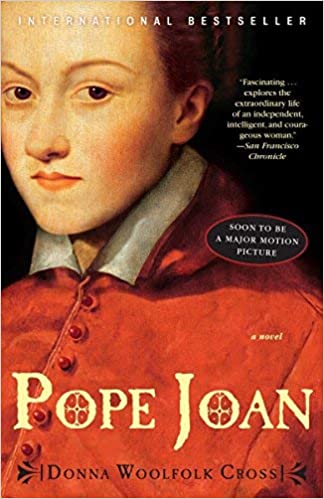
Although denied for centuries by the Church and some scholars, Donna Woolfolk Cross, has written a convincing fictional account of a ninth-century woman Pope. Her notes concluding the novel outline her credible sources for why she believes Joan did in fact exist. Her choice to write fiction was based on there not being enough known about Joan to write an extensive biography. Nevertheless, she makes a good case for her existence in a time when few records were kept and very little is known about the time period. Joan’s story comes to us through persistent legend and uncanny Church practices.
The novel plunks the reader down in a foreign age where women are not only second-class inferiors but brutally treated. Possessed of an inquisitive mind, Joan immediately resents living in a household where her brothers are educated to rise in the Church and she is left to menial housework. Her only eventual task is to marry as well as she can. Opportunity comes when her brother dies during a Viking raid, and she seizes the chance to disguise herself as a man and enter monastic life. Once established, she excels as a scholar and healer. Turbulent times eventually lead Joan to Rome and all the way to the papacy.
Cross’ book roughly follows the legends that have come down about Joan. The tale is well-written and engaging. Modern audiences can well imagine the motivations of someone who wants more for themselves and acts to defy convention and take advantage of opportunities as they come along. The story is a triumph of the human spirit striving for expression while the darker forces of others are at work here as well.








 ellisnelson