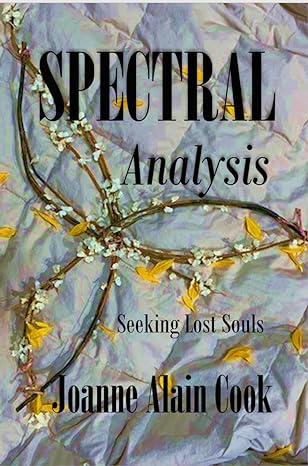
This novel follows the story of Janine Stinger, a tech specialist on the crew of a TV ghost-hunting show. Janine is deeply scarred by a previous relationship and especially vulnerable, although she does her best to hide it. When the team stumbles upon a story that dovetails with her own growing up, family history and local legend collide to confront Janine’s darkest fears. Is she part of a true haunting and curse? Her attempts to keep her past private start to crumble as her crush on the team’s lead paranormal investigator become mutual. How can she balance the past, the present, and the increasingly darker threats all while a river ghost lures people to their deaths?
Janine’s character is well-developed as are the other supporting characters. The personal dynamics of work, family, and romantic relationships all play a role in this historical ghost story. The author provides wonderful technical details on ghost hunting, the equipment, and the process. I loved the historical details and research that provided the backstory of the book. The reader learns about the culture in which ghost stories arise and grow. Although this book deals with one haunting, the reader is deeply invested in Janine’s experience and what is in store for her next.
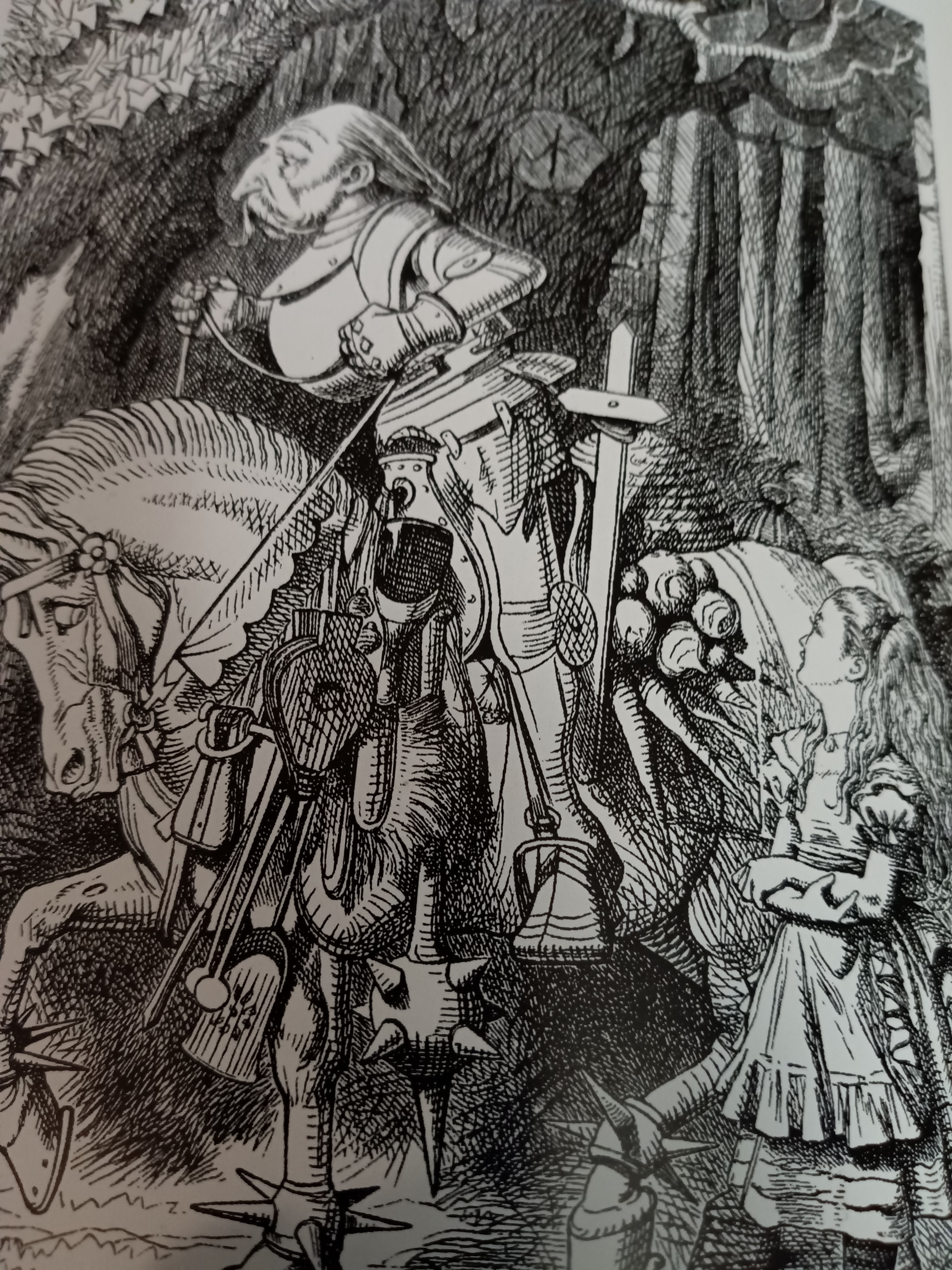
Lewis Carroll was born on January 27th, 1832. Lewis Carroll, the pen name taken by Charles Lutwidge Dodgson, was born into a line of English military officers and clergymen. His father was gifted in mathematics as was he. While the father found a home in the high Anglican Church, the son spent most of his life teaching at Oxford. The world would also come to know the son as the writer of one of the most recognized English language works of all time. Alice’s Adventures in Wonderland was published in 1865. Through the Looking Glass followed a few years later. Lewis Carroll became famous for his fantasy works and a category of writing known as literary nonsense (Jabberwocky, The Hunting of the Snark). His writings continue to inspire and influence our culture.
Following on the heels of the successful, The Lost Apothecary, Sarah Penner’s latest novel has had a lot of hype. I found her new book when the library had a long waiting list for her first book and anything with séance in the title will get me to take a look.
The London Séance Society follows the story of Lenna Wickes who has recently lost her sister and who wants desperately to solve her murder. Since her sister was studying under a renowned medium, Lenna travels to Paris to engage Vaudeline D’Allaire for help. The two of them wind up back in London trying to solve a murder at a men’s club that functions as its own spiritualist-type institution. Of course, the two murders are connected and Vaudeline has her own history with the men’s club.
Not a bad setup, overall. The novel has a good pace with plenty of twists and turns. This is one where there may be a few too many. Throw in lesbian attractions. Men and misogyny. I started out thinking reading this book that it would be historical fiction but found the world the author created never existed. The contrived use of the séance in this way was irritating in a time when men’s societies did scientifically investigate phenomena. The use of language during this Victorian period many times felt far too modern. It was as if the author was unfamiliar with the way people spoke and the customs of the time (even though there are notes at the end of the book about mourning and funeral customs). The actual séance scenes and Vaudeline’s procedures were creative and well executed. Although the book held a lot of promise, it missed the mark for me. So much so, I’m going to pass on Penner’s first book.
Evolutionary Astrology is where the past becomes a steppingstone, not a millstone.
So, what is it exactly?
Many seekers over millennia have sought out and used the tools of astrology. In modern times, a birth chart reading provides insight into the personality or psychology of the individual. But behind that chart lies another chart, hidden from all but the most ardent of explorers. This is what evolutionary astrology endeavors to parse, the blending of the psychological with the metaphysical to produce a kind of elevated psychology. Perhaps this could be viewed as a sacred level of psychology–the psychology of our evolving consciousness.
Whether as a literal reality or metaphor, evolutionary astrology uses the idea that we have all lived before. Through those lives, we faced lessons and challenges. We learned and grew, and we continue to confront challenges in this incarnation. This is an astrology that honors the individual and individual difference. As a sacred esoteric tool, it empowers each one of us with the free will of choice. Throughout life, an individual makes choices amongst a vast field of archetypal astrological possibilities and always an individual retains free will. We evolve through incarnations based on our choices.
What evolves lifetime to lifetime is consciousness. Exploring the evolutionary chart will reveal past-life situations and dynamics but the focus of evolutionary astrology is to evolve consciousness through understanding, healing, and releasing. The seeker enters the realm of the sacred—the deep, the mystical, the past. Together, astrologer and client go in search of pattern and archetype. We uncover triumph and failure revealing both treasure and wound.
It is important to remember that this analysis employs a symbolic system and is not literal. It is not possible to tell if someone lived in the 14th Cent. Florence or fought in the Boer War. The chart will not reveal personal past-life connections to people in our current lives. These areas may be best explored with psychics or mediums. An analysis using evolutionary astrology will uncover situations and experiences an individual has likely faced many times in the past and these are the issues that are active in this incarnation. The proof of evolutionary astrology is borne out by the presence of these issues in one’s life today.
Are you ready to find out about your past and get a taste of what your soul yearns for in this life?
For $100, payable through PayPal, you will receive your own personalized report along with your birth chart. This is NOT a computer-generated report but a detailed, specific analysis uniquely for you, written by me.Want to see a sample?Contact me through himalayaspencerellis@yahoo.com for more details and scheduling information.
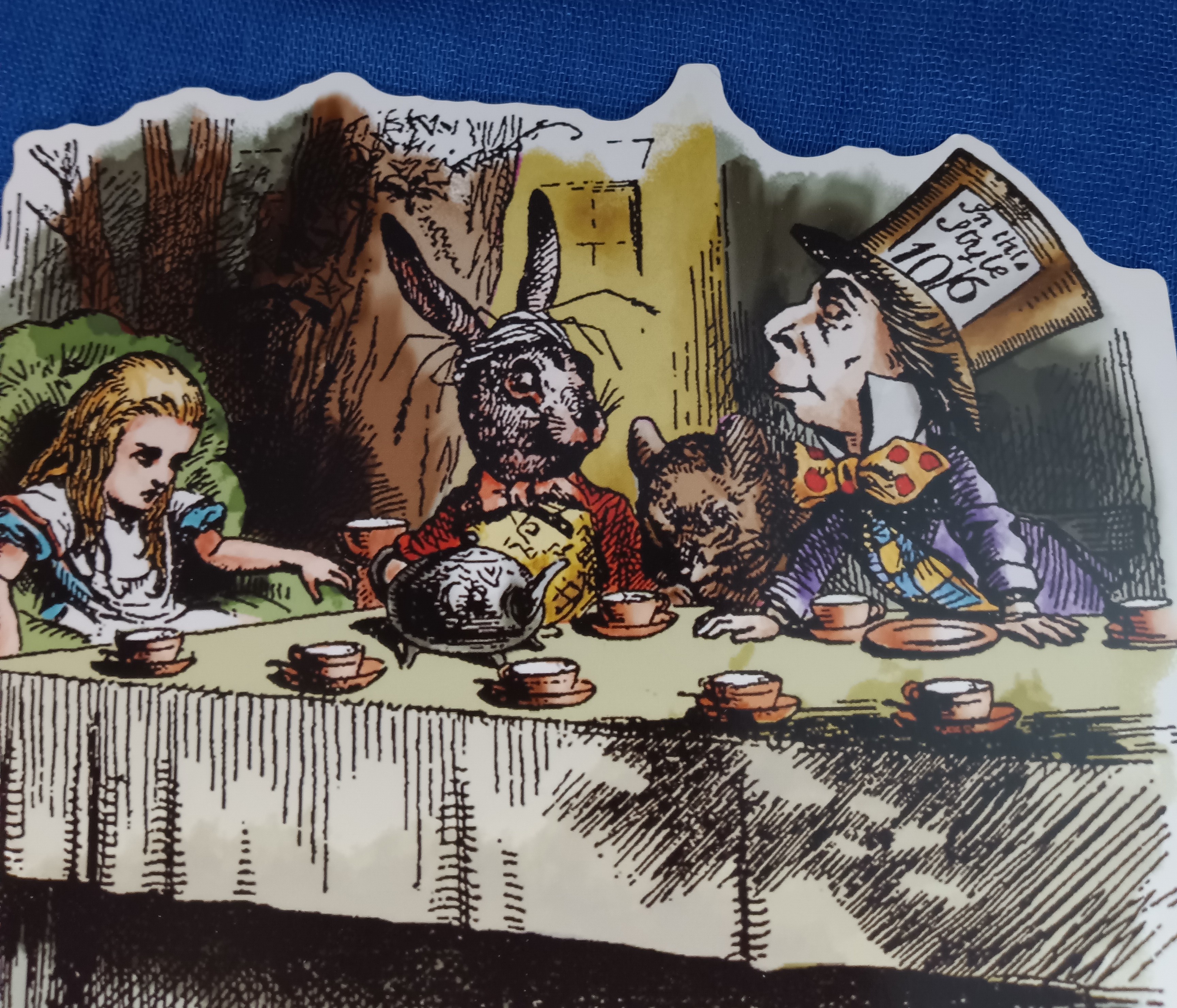
Back in Alice’s Studio, I discuss the famous riddle from Alice in Wonderland, called Hatter’s Riddle. What’s the story behind the riddle and why does it linger? For more videos on Wonderland, scroll through my YouTube page.
DOWN THE TREACLE WELL is on sale at the holiday price of $15.99 (through Jan. 1)on Amazon
CHECK OUT THE REVIEWS ON AMAZON!!
Book Description:
While visiting a museum in England, Ben and Kyle experience the extraordinary. Gazing at the Alfred Jewel, an ancient Anglo-Saxon artifact, they watch as it spins, contorts, and evaporates from its case, taking them with it.
Whisked back to Victorian England, the brothers are shocked to find themselves sprawled on the floor before Mr. Charles Dodgson, also known as Lewis Carroll, the author of Alice in Wonderland.
They soon learn that the famous author’s muse, Alice, is missing. Alice has used the Alfred Jewel to enter Wonderland and, by so doing, has upset the time continuum. The only way for the boys to return home is to locate Alice and return her safely.
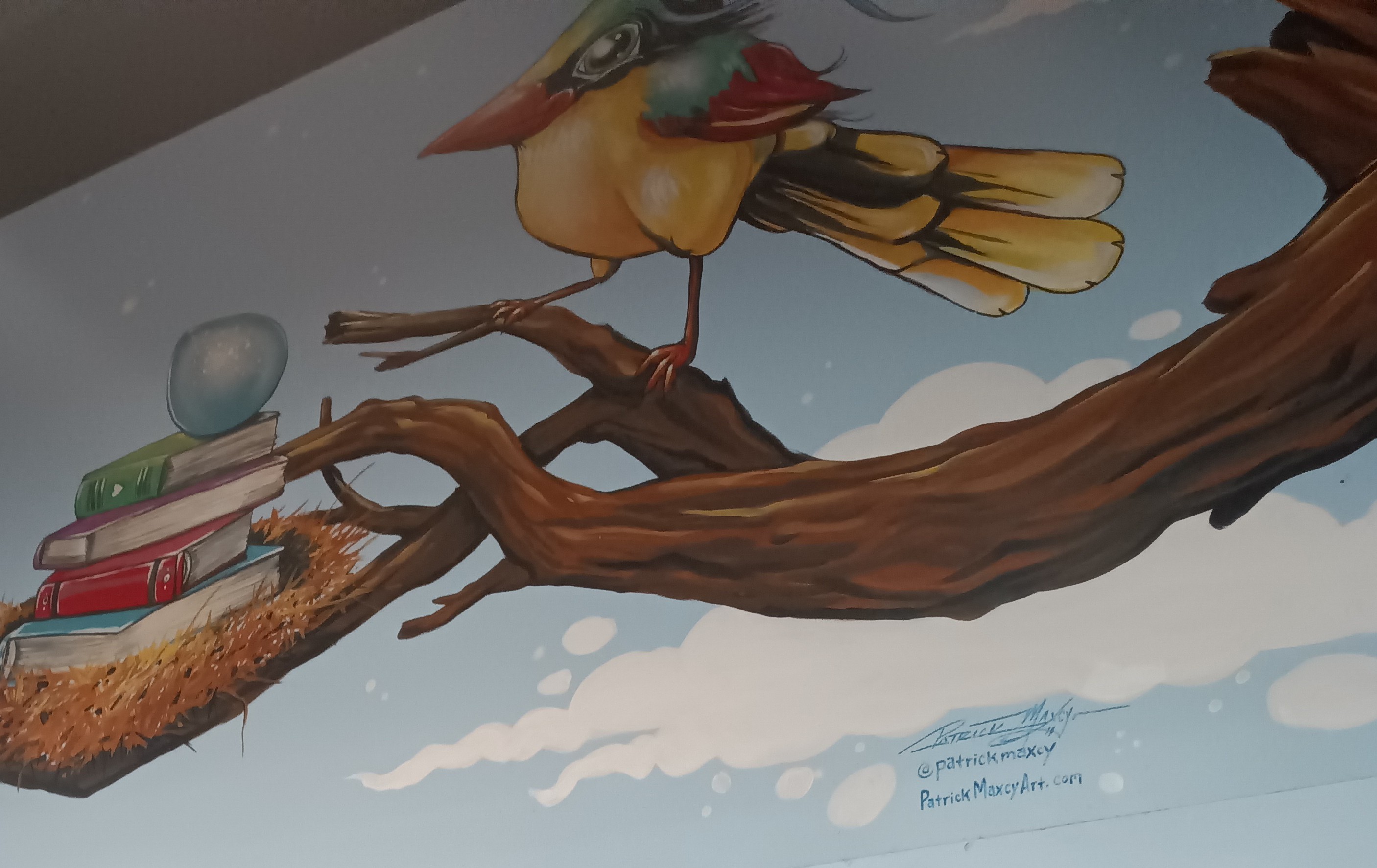
These trees are found at our local library. Glad to see the Alice in Wonderland tree when I recently attended an event there! I’ll post more trees if the holidays don’t overwhelm my plans.
The Alice in Wonderland Tree
Treasure Island
Bridgerton/ Colleen Hoover
20,000 Leagues Under the Sea
Studio Ghibli/ Tomorrow, Tomorrow, Tomorrow
The Legend of Sleepy Hollow
REMEMBER BOOKS MAKE GREAT GIFTS!ESPECIALLY FOR KIDS!
DOWN THE TREACLE WELL is on sale at the holiday price of $15.99 (through Jan. 1)on Amazon
Book Description:
While visiting a museum in England, Ben and Kyle experience the extraordinary. Gazing at the Alfred Jewel, an ancient Anglo-Saxon artifact, they watch as it spins, contorts, and evaporates from its case, taking them with it.
Whisked back to Victorian England, the brothers are shocked to find themselves sprawled on the floor before Mr. Charles Dodgson, also known as Lewis Carroll, the author of Alice in Wonderland.
They soon learn that the famous author’s muse, Alice, is missing. Alice has used the Alfred Jewel to enter Wonderland and, by so doing, has upset the time continuum. The only way for the boys to return home is to locate Alice and return her safely.
“People are going to love this reimagining of the classic tale. In her unique way, author Ellis Nelson recaptures the magic. Her remarkable talent and vivid imagination bring it to life again with a new pair of adventurers and a new series of obstacles.”
“Down the Treacle Well is well-written, flows nicely, and is easy to read. It is also brilliantly clever—fun, funny, warmhearted, and wonderfully descriptive. As a fan of Victorian-era literature, I loved the nostalgic vibe. I think it would make a great film, too—animated or live! Wonderful job by the author.”
While visiting a museum in England, Ben and Kyle experience the extraordinary. Gazing at the Alfred Jewel, an ancient Anglo-Saxon artifact, they watch as it spins, contorts, and evaporates from its case, taking them with it.
Whisked back to Victorian England, the brothers are shocked to find themselves sprawled on the floor before Mr. Charles Dodgson, also known as Lewis Carroll, the author of Alice in Wonderland.
They soon learn that the famous author’s muse, Alice, is missing. Alice has used the Alfred Jewel to enter Wonderland and, by so doing, has upset the time continuum. The only way for the boys to return home is to locate Alice and return her safely.
A wonderful Yule story that should become a family tradition:
This is the second offering in the series of The Wheel of the Year. As the wheel turns a battle must be fought to bring in the new season. Traditionally during Yule (Winter Solstice), the Oak King clashes with the Holly King.
In this powerful rendering, magic is afoot. This story draws character names from Welsh and Arthurian myths and legend. Gwythur experiences the rising of his potential and his call to action. It is restless and primal, but still doubt hangs in the air. Counseled by his wizened companion, Myrddin, Gwythur assesses the difficult living conditions of the people and his own readiness to fight. The writing is vivid and evocative. The struggle for life and the desire to turn the wheel underlies the very fabric of time itself. If Gwythur does not rise to the challenge or eventually fails, how can the people survive in the cold, darkness of perpetual winter frozen in time? The stakes could not be higher. Gwythur must confront Gywn. Still, the kings are evenly matched in this epic cyclical battle for survival. This metaphorical tale of seasonal change introduces young and old to the enduring earth-based religions’ legend of the Yule season. Each page of text contains a colorful illustration of the story helping to set the tone of the tale and keep children engaged. A wonderful read in front of the fire on those dark winter nights when we need reminders that spring and light will return.