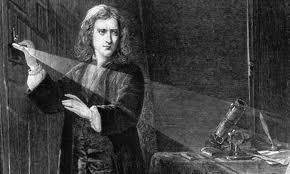
NEWTON AS ALCHEMIST

When we think of Isaac Newton, most of us probably return to high school physics. Laws of motion, gravity, incline experiments, and lists of equations come to mind. Newton was a great scientist and collective thought has enshrined him this way. But this is a very modern way to see him and casts aside and discards him as a spiritual being, for Newton was an alchemist. Sir Isaac wrote more on Biblical hermeneutics and occult studies than on math and science. He placed great emphasis on rediscovering the occult wisdom of the ancients and probably considered his scientific work to be of much less importance.

Although alchemy is generally viewed as a precursor to science (and it has that role), it was so much more. Alchemy incorporates Hermetic principles which include ideas from mythology, religion, and spirituality. Below HJ Sheppard outlines the dualistic nature of alchemy as both external (in the material world) and internal (spiritual) practices.

Alchemy is the art of liberating parts of the Cosmos from temporal existence

     and achieving perfection which, for metals is gold, and for man, longevity,

     then immortality and, finally redemption. Material perfection was sought

     through the action of a preparation (Philosopher’s Stone for metals;

      Elixir of Life for humans), while spiritual ennoblement resulted from some

      form of inner revelation or other enlightenment.

 We will probably never know the full extent of Newton’s alchemical work. Much was destroyed by fire. He also worked in a time when many alchemical experiments were banned and religious views differing from what was considered mainstream was heresy. Historians are still trying to piece things together.

An auction at Sotheby’s in 1936 created a worldwide sensation. Previously unpublished and unseen documents (Portsmouth Papers) surfaced and were presented for sale. About one-third of them were considered alchemical in nature. The papers show Newton’s keen interest in the philosopher’s stone. To this day, several projects are underway to catalog, transcribe, and make Newton’s papers available.

Other writings point to Newton’s interest in occult knowledge, sacred geometry, and prophesy. Throughout his life, Newton associated with members of various esoteric groups but his actual membership in any of them has never been confirmed. Certainly he shared many of the same interests these groups had. At the time of his death, Newton’s library contained 169 alchemical books and for its time, it would have been one of the best alchemical libraries in the world.

Recently I read Ghostwalk by Rebecca Stott. This is a fictional story which revolves around Newton’s life at Cambridge. Stott is a professor who bases the book on actual records of Newton’s life. At its core are the mysteries of Sir Isaac’s rise to power and position, a series of murders near the university, and the influence of alchemy. A very interesting read.
58 Comments

Filed under alchemy, Book Review, Spiritual/Mysticism

THINKING INSIDE THE BOX

A HALLOWEEN TALE

Over the past few years my husband has endured a long commute from our home to his work in Colorado Springs. To make life easier, we will relocate to a small town nearby. Now this isn’t just any town, this is QUITE a town.

 Manitou Springs got its start by catering to the tuberculosis sufferer of the Nineteenth Century. Emma Crawford and her family (practicing Spiritualists) relocated there in 1889 seeking relief for Emma through the mineral springs and mountain air. Young Emma was engaged to a railroad engineer, William Hildebrand. Legend has it that one day she hiked to the top of Red Mountain where her spirit guide appeared. She tied a red scarf to a tree and later it became her dying wish to be buried there. Emma never married William. She died on Dec.4th, 1891 at the age of nineteen.

Her fiancé and a dozen others carried Emma’s coffin to the top of Red Mountain where they buried her fulfilling Emma’s request. Emma’s grave became a popular hiking location for other Spiritualists throughout the next couple of decades. In 1912, the railroad removed her remains and reinterred her on the south side of the mountain. Heavy rains in August of 1929 unearthed her coffin and sent it careening down Red Mountain. Her bones were discovered 7200 feet down in a canyon. Emma was eventually reburied in Crystal Valley Cemetery in an unmarked grave. And that could be the end of the story, but it’s not.

Remember, I told you, Manitou is a different kind of place. Enter the quirky creativity and entrepreneurial instincts of this town’s folks.  Around Halloween each year the town celebrates The Emma Crawford Festival with a parade and coffin races. The coffin races feature a team of five (one person plays Emma and the other four act as pallbearers and push the coffin). Creativity and speed both play a role in judging the races. There are also prizes for best Emma and best coffin. It’s quite a spectacle and a great day out for family fun. Not your thing? That’s OK. There’s always the fruitcake toss early next year.


48 Comments

Filed under Spiritual/Mysticism

How This Book Came Into the World

Several years ago I had a particularly bad year. My father died, my son was hospitalized, and I came face to face with my own health crisis. All in one year. My illness effectively took me out of the world and focused my attention inward. I returned to basics and found my interest in Buddhism waiting for me. Silent, I think, since at least my teenage years.

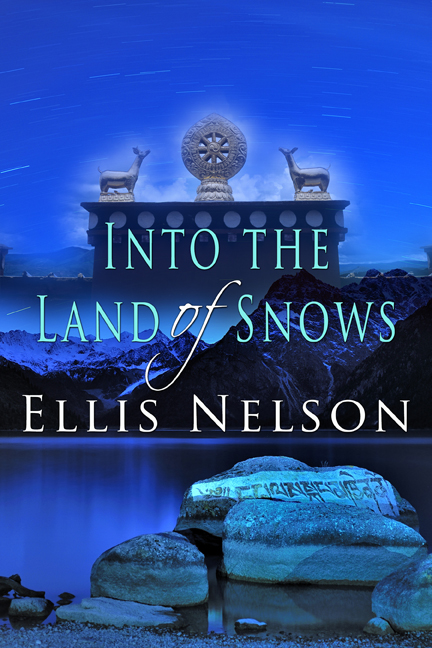
I began taking classes offered in faraway Dharamsala, India.  Thanks to the internet, I was able to study with a master who had fled Chinese-occupied Tibet to follow His Holiness, the Dalai Lama into exile in 1959. Listening to Geshe Sonam Rinchen’s patient lectures aided my understanding of Tibetan Buddhism. That along with my friendship with a young monk in India helped me to process and write, Into the Land of Snows.   The novel explores many of the themes I was exposed to as I learned Eastern concepts.

The process of the inward journey continues for me. Living in the material world is not easy. I know the majority of readers will read the book as an adventure in a foreign land, but I hope the book finds a few fellow spiritual travelers.

43 Comments

Filed under Book Review, Books, Story behind ITLS

THE STORY OF CHRISTOPHER ROBIN

I’ve always loved the Winnie-the-Pooh stories. The Disney version is OK, but I really treasure the books with the pastel wash illustrations by EH Shepard. My son’s nursery had six of these prints which I still have and can’t manage to part with despite him being twenty-one and off to university. Why is that?

AA Milne became famous for a series of stories and poems about a little boy named Christopher Robin and his adventures with his animal friends in the Hundred Acre Wood.  Up until this point Milne had been known for his plays, but in 1926 he published Winnie-the-Pooh and Christopher Robin, Eeyore, Kanga and Roo, Rabbit, Piglet, Owl, and Tigger made their way into children’s literature and the hearts of millions on both sides of the pond.     

The character of Christopher Robin was based on Milne’s small son by the same name. When the real Christopher Robin was young, he helped his father work on the stories. The fictional Hundred Acre Woods was modeled on nearby Ashdown Forest where father and son would walk together. Young Christopher had a stuffed bear named Edward. The fictional story bear was named after a bear in the London Zoo he had seen called Winnie (the bear came from Winnipeg, Canada) and Pooh after a swan the boy also saw. There is a bridge in Ashdown Forest where it is alleged that the first game of Poohsticks was played. The bridge has become a tourist site and since 1984, the annual World Poohsticks’ Championship has been held at Day’s Lock on the Thames.

Unfortunately, Christopher Robin grew up to resent his father immortalizing his childhood in the stories and poems. Once he was off to boarding school, he was teased and his life made difficult by other boys. So much so, that he learned to box to defend himself. Christopher Milne served in WWII, graduated from Cambridge, and ran a bookshop for most of his life. He also wrote several books, one called The Enchanted Places examined his life as a child. The stuffed toys Christopher played with were given to an editor who donated them to the New York City Public Library where they can be seen today.

Trivia Question: AA Milne attended school and was taught by another famous writer. Who was that? Feel free to answer in the comments. (I’ll post the answer if no one gets it.)  mike75 got it with HG Wells. Sorry, no big prize but I am impressed!! I had no idea until I read it in Milne’s biography.

59 Comments

Filed under Book Review, Books

ENERGY MEDICINE: The Reiki Experiments

Over the last few decades we’ve seen the rise of alternative medicine. As we become frustrated with allopathic choices, more and more of us are looking for another way. And some of those ways are going to challenge us. I take supplements, do biofeedback for migraine, meditation for stress, and see an integrative physician. And recently I had a Reiki session.

For those of you who haven’t heard of Reiki, it is a form of energy medicine grounded in a spiritual practice in which universal energy (ki) is transferred through the palms to promote balance and healing. The original system was developed by Mikao Usui in 1922 and has been adapted over the years by subsequent teachers.

The scientific effectiveness of Reiki has yet to be established as most of the limited studies have been either flawed or inconclusive. I did find a fascinating study of Reiki healers and their ability to influence the growth of E. coli bacteria however. University of Arizona researcher Gary Schwartz (PhD) and Beverly Rubik, a biophysicist, conducted this study at a NIH funded center. The work is detailed in The Energy Healing Experiments.


Fourteen Reiki healers would each come in on three separate days and work with a set of E. coli filled test tubes. After completing a standardized form which asked about their well-being, the healer performed a Reiki treatment on a box of test tubes. In another part of the laboratory, a control group of test tubes was placed without the knowledge of the healers. These tubes received no treatment. There were 42 boxes of Reiki treated test tubes and 42 boxes of untreated test tubes.

All of the test tubes were heated to slow the growth of the bacteria to 50 percent of the normal growth rate. If a Reiki practitioner was successful, one would expect more surviving cells in the test tubes which received Reiki than those tubes which had not received the treatment.

So what happened? Shockingly, Schwartz and Rubik found that the untreated Reiki control samples fared better than about half the samples given the healing. How was that possible? After several days of head shaking, Schwartz wondered about the emotional state of the healer. Could that have been a player?

Luckily the researchers had gathered that data and were able to take another look. In cases where the Reiki healer reported feeling physically and emotionally healthy, there was a positive correlation between giving a healing and cell growth. However, when the practitioner reported being stressed or unwell, those samples tended to be negatively impacted.

Obviously, there is a lot of work to be done in this area. But the point really is to know that Reiki (and other methods like it, including Quantum Touch) is on the horizon and offers the possibility of healing. It wasn’t that long ago that most Americans regarded chiropractors as dubious and now they’re mainstream health care providers. Some of these new energy modalities are likely to do the same.

Further reading:

The Energy Healing Experiments- Gary E. Schwartz, PhD

Soul Medicine- Norman Shealy, MD and Dawson Church

Energy Medicine: Balancing Your Body’s Energies- Donna Eden

The Magick of Reiki-Christopher Penczak


47 Comments

Filed under Books, Energy medicine, Spiritual/Mysticism

THE GHOST OF SPIRIT BEAR by Ben Mikaelsen


There are a lot of books available for teens today.  For a smart, discerning young adult, the range and quality of the work has never been better.  But I’m often dismayed by the lack of value (my judgment call here) a good portion of the popular literature offers.  At least, insofar as what sells best.  There are those books that entertain (and they should), and fill an afternoon, but don’t remain. Don’t challenge the teen, don’t teach the teen, don’t inspire the teen – in short, they’re fluff.  Like an ice cream sundae soon consumed and soon forgotten.  I know as parents, we’re just happy our kid is reading. There are so many who don’t.

That’s why when I find one of those quiet books, that don’t sell phenomenally well but offer something of depth for the soul, I want to highlight it. I read The Ghost of Spirit Bear a few months ago and it is one of those special books that continues to resonate.

The Ghost of Spirit Bear is a sequel to Touching Spirit Bear, a book that is being used in schools to combat bullying. In the first book, an angry and defiant teenager who has severely beaten a school mate chooses Circle Justice over jail. Cole Matthews finds himself exiled to a remote Alaskan island to do penance for his crime. In that year, Cole is mauled by a bear and faces surviving the harsh environment of the north. Alone on the island he faces his demons and takes responsibility for what he did. The Ghost of Spirit Bear picks up with Cole returning to his urban high school and facing all the same challenges that existed before his exile. Bullying is rampant, the school is dangerous, and the administrators don’t care. The rage that Cole conquered on the island begins to return.

 The heart of the story concerns how Cole uses the Tlingit wisdom tradition’s teachings in a modern world. During the banishment Cole is forced inward to find out who he is and how to control his emotions. Back in the real world, he must work to maintain his sense of peace and develop a new place for himself. As he holds onto his center, he reaches out to change the negative conditions around him.

I have found very few fiction books for kids that depict a wisdom tradition and expose youth to detailed meditation practices. This is one of them. It is refreshing to see how Cole’s inner transformation becomes externalized and in doing so, changes his world.


27 Comments

Filed under Book Review, Books

CHARLES A. LINDBERGH- Mystical Experience

Last week I was sure this week’s blog would be on John Dee. I’ve read several books about the Elizabethan alchemist, queen’s spy, and magus. But John Dee is a complicated subject, and well, I got sidetracked in a synchronistic sort of way. Consulting Harper’s Encyclopedia of Mystical and Paranormal Experiences, I was shocked to find John Dee not included, but stumbled on a fascinating little entry on Charles Lindbergh. Lindbergh? THE Lindbergh? Yup!

I suppose some of you may have heard of John Dee, but I’m sure all of you recognize Charles Lindbergh. The twenty-five year old, unknown air mail pilot became an overnight, worldwide household name in 1927 when he completed his non-stop transatlantic flight. You might even remember the tragic loss of his son in 1932 in what was called “the crime of the century”.  And there are a few of you who are mulling over the tag Nazi sympathizer, but I suspect few of you (including myself) are thinking … mystic.

The mystical experience happened in 1927 during the thirty-three plus hour flight over the Atlantic. During the long and lonely flight, Lindbergh experienced an altered state of consciousness. In this state, he became aware of three parts of himself. His body, his mind, and his spirit existed as separate entities. He was not afraid. The plane was filled with ghostly beings which were transparent and weightless. Lindbergh described seeing with “one great eye” the beings around him without having to turn around. These beings consoled and reassured him in friendly human voices. As things progressed, Lindbergh lost the sense of his physical body, something reported in many mystical experiences. He recognized that although he was still attached to life, the beings were not. Furthermore, the famous transatlantic pilot seemed to experience a shift in his view of death. Death no longer seems the final end it used to be, but rather the entrance to a new and free existence which includes all space, all time (Lindbergh The Spirit of St. Louis, 1953).

So what are we to make of this? In his first book describing the transatlantic crossing published in 1927, Lindbergh remained silent on this issue. It wasn’t until 1953 with the release of The Spirit of St. Louis that readers first learn of this incident. More follows after his death with the publication of Autobiography of Death (1977). Unfortunately, my library has none of Lindbergh’s books, not even The Spirit of St. Louis. On face value, it’s easy to dismiss the account. Lindbergh could easily have been hallucinating due to fatigue, boredom, or maybe even fuel fumes. But Lindbergh himself doesn’t seem to dismiss the incident. I’m inclined to think Lindbergh must have viewed the experience as personally significant and important enough to risk ridicule for by coming forward publicly with the account. This is another one of those areas in which readers will have to decide for themselves what the incident means.

 Further reading:

Any or all of Lindbergh’s books.

Lindbergh– A. Scott Berg (one paragraph on p. 124 about the mystical experience)

The Mystical Side of Life– Michael Murphy (audio; this is hard to find)

Harper’s Encyclopedia of Mystical & Paranormal Experience– R.E. Guiley, see Lindbergh entry

Cemetery John- The Undiscovered Mastermind Behind the Lindbergh Kidnapping

Robert John (new release, profiled in newspaper), nothing mystical here but the latest on the Lindbergh case.


https://amzn.to/30oq1NL

46 Comments

Filed under Books

CHAOS CODE by Justin Richards

In an effort to offer an alternative to all the paranormal romance books available, I have a book recommendation for teen boys. Of course, girls are free to read this as well. As a teenager this is the kind of book I would have chosen for myself. Chaos Code by British author Justin Richards is a great, fast-paced adventure book.

Turning up on his archeologist father’s doorstep for the start of a school break, Matt finds his dad missing. A trace of sandy footprints and a mysterious coded message left by Dad soon has young Matt hot on his father’s trail. With his new friend, Robin, and her father, Matt discovers Dad has been kidnapped in order to help an egomaniac find and decode a system that will allow world domination. The stakes are high. Matt and Robin must rescue Matt’s father and prevent the villain from executing his plan. Connections to the mythology of the great flood, quantum theory, and the power of computer technology all add to the plot and suspense.

 Justin Richards consults for the BBC on the Doctor Who books and has published several books for young readers including Death Collector, Parliament of Blood, and the Invisible Detective series. If you like action and technology, you might want to give him a try.

24 Comments

Filed under Books

ON BODY-HEAT YOGA (TUMO)

His bare skin was draped in a blanket that had been submerged in a frigid, mountain stream. In order to pass the test, the young monk must completely dry the blanket using only his body heat. Once he accomplishes that, he will be challenged to dry two more saturated blankets. Only then will he be declared proficient in tumo.

In my book, INTO THE LAND OF SNOWS, Blake has the opportunity to watch young monks practicing tumo. Mesmerized by what he sees, Blake wants to join in. He soaks his own repa garment and begins to imitate what he sees the adepts do. But Blake hasn’t had the training necessary to accomplish the generation of body heat and he soon is in the throngs of hypothermia.

Tumo requires a lengthy training process of three years, three months, and three days. Those who complete the training and maintain it, sometimes meet in high mountain snow fields to compete against one another. The monk who melts the largest circle of snow beneath his body is declared the winner. Without any preparation, Blake is lucky to survive his attempt to dry his repa.

Like many Tantric practices, tumo requires the passing of an empowerment from master to student. The spiritual bond between these two is characterized by a telepathic link which even survives the death of the master. In this way, the master always remains available to the student. In the esoteric practice of tumo, a monk will learn to generate heat at the base chakra by practicing elaborate visualizations, advanced breath work, and body posturing. In 1982 researchers who studied yogis in India, reported that the tumo practitioners could raise the temperature of their fingers and toes by as much as 8.3°C.

Additional reading:

Occult Tibet by JH Brennan

The Bliss of Inner Fire: Heart Practice of the Six Yogas of Naropa by Lama Thubten Yeshe

33 Comments

Filed under Books

ENTER TO WIN FREE COPY OF INTO THE LAND OF SNOWS

In the last month or so, I’ve been happy to welcome many new blog readers, and to celebrate, I’m inviting everyone to enter to win a free, signed copy of Into the Land of Snows. All you have to do is leave a comment below to be entered. There are a couple of rules, though. I’m only going to be able to mail to a location in the US. Comments will close midnight (MT) on Wednesday, August 15th (2012). I will conduct a random drawing at that point and notify the winner. Enter only once. Just to have a theme, I’m requesting you comment on something about the blog (mention something you liked or learned about) or something about the book (Buddhism, Tibet, Himalayas, Mt. Everest, Nepal, yeti, magic, etc.). To start us off, I’ll post a comment so no one feels awkward to be the first to post.

Thanks to everyone who entered. I enjoyed reading your comments and seeing the diversity of thoughts and experiences this group represents.

And the winner is…. fakename2. Congratulations!!! I’ve left a message on your blog. You can contact me at himalayaspencerellis@yahoo.com. I will need your mailing address.  

61 Comments

Filed under Books