Category Archives: Book Review

TRAVEL & ADVENTURE: Let’s Hit the Road!

Six Days in Bombay- Alka Joshi

This was a book I chose for its exotic setting and promise of mystery and travel. Sona is a nurse in India in the 1930s. Her father was British and deserted her and her Indian mother when Sona was very young. Sona struggles to fit into society never feeling comfortable as anything other than Indian, but Indian society doesn’t completely accept her. One day a very famous Indian artist arrives on her ward and Sona is quickly dazzled by her. Mira Novak is everything Nona isn’t. Outgoing, beautiful, charming, and talented, Mira captivates everyone who crosses her path. She’s also half-Indian but wears it with a confidence Sona can only marvel over. Unexpectedly, Sona becomes a close friend and confidante of the famous artist.

After some tense moments dealing with Mira’s health, the doctors believe she will make a full recovery. And then suddenly, Mira is found dead and as her nurse, Sona is implicated in her death. The hospital believes a terrible mistake was made with her medications, but Sona is certain she had nothing to do with it. Dismissed from her job, Sona finds that Mira has left a note for her to distribute several of her paintings to friends. Sona, who has never been out of Bombay, finds herself hitting the road to deliver Mira’s gifts and try to understand why she’s been entrusted with this role and perhaps solve Mira’s death. Mira travels to Istanbul, Paris, Prague, Florence, and London. She learns how complicated Mira’s life was and gains deep insight into the many sides of Mira she never witnessed. All along, Sona gains confidence and a better understanding of who she wants to be outside of the long shadow cast by this friendship. In London, she searches for her father and resolves her unsettled feelings about him. Upon returning home, she finds the answer to how Mira really died.

This is one of those books that I found enjoyable but not in a category of exceptional. There were some interesting things going on in the background of Sona’s life that may have made it more exciting. There are references made to Gandhi and the Independence movement in India at this time, but it never accounted for a significant role in the book. There are also hints at traditional Indian women’s roles and Sona’s rejection of them but again, it doesn’t form an important part of the book. The travel aspect of the book could have been fun, but the writing lacked the detail that makes good travel writing. Some of the characters presented in the book are really well done and that’s probably the author’s strong suit.       


 Follow Me to Africa- Penny Haw
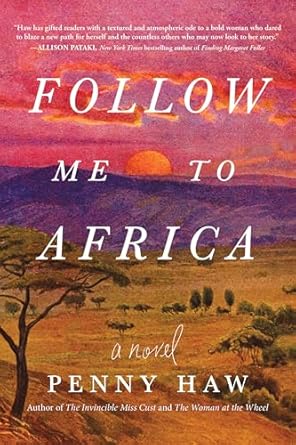
In this novel, we travel to the plains of the Serengeti where two women meet and share an unlikely friendship. The author splices together two timelines of the two women throughout the book. In one of the timelines, we follow the life of the famous paleoanthropologist Mary Leakey and in the other we meet a 17-year-old modern teenager, Grace, who in 1983 struggles with many of the same issues Mary once did.

This is a work of historical fiction where Mary Leakey’s life was researched and presented alongside a fictional account of her in her later years meeting a troubled teen who in many ways resembles her former self. Can Mary give this young girl the counsel she requires? The kind of advice she never got. The two women bond over the unexpected arrival of a hand-raised cheetah who has been released into the wild but isn’t doing well. Mary gives Grace responsibility for the animal and allows her to make her own mistakes, all things that allowed Mary to become the woman she would become. Mary recognizes that Grace needs to make her own way and discover her own feelings about being away from home.

I loved the chapters in this book that read like a biography of Mary Leakey’s life. She was a trailblazer for women during a time when women didn’t do science, have a career, or venture out into the wilds. Those chapters are vivid and give us insight into what it took to build the diligent scientist she became. We also get a glimpse of her personal life and how it shaped her career. The chapters with Grace are more stilted and contrived. I enjoyed those less and skimmed parts of those. This author excelled at description and setting while some of the character building might have been stronger. Of the two books, I liked this one better probably because the subject matter was more compelling for me and the adventure scenes were written in a vivid and compelling way. It’s hard to beat Mary stumbling on a full-grown lion or making some of the important finds she makes at Olduvai.  

BOOKS MAKE GREAT GIFTS FOR CHRISTMAS!

My Books to Hit the Road:    

2 Comments

Filed under Book Review

Reaching Down the Rabbit Hole:

A Renowned Neurologist Explains the Mystery and Drama of Brain Disease 

By Allan H. Ropper, Brian David Burrell

This is a fascinating book of stories by a neurologist covering some of his most interesting cases and patients. Written by a caring and professional doctor, the reader encounters everyday people who present with a variety of bizarre symptoms. In a teaching hospital setting, a neurologist and his staff step through the process of diagnosis and treatment for a variety of conditions. All the stories are compelling. Some of them are difficult because people’s lives and survival are at stake. Dr. Ropper also discusses treating Michael J. Fox for Parkinson’s in the early days of his diagnosis.

Probably the most controversial chapter in the whole book comes toward the end when Ropper bravely takes on the question, “When is somebody not dead yet?” Neurology is a field that can present a tangle of ethical and moral dilemmas. None more controversial it turns out than when defining when someone is actually dead. Ropper discusses how the need for a scientific definition of death became paramount when organ harvesting became possible. Conveniently, medical imaging of the brain and organ transplants came online side by side. Doctors could reasonably assess the likelihood that a brain would not recover. They called that brain death. Troubling though was that the body remained…alive. And bodies that donate organs remain alive, which can be morally problematic for some doctors. Imagine that. It bothers me too. Mostly, because I look at death not as an event but as a process. So choosing a moment of death has always sounded like pure hubris to me. Anyway, I was surprised that a doctor would cover this question and have hangups. Some of his colleagues clearly hadn’t thought about it at all.

If you’re interested in medical writing that has been compared to Rouche, Lewis Thomas, and Oliver Sacks, this may be your next great read.   

To find my books: click below

2 Comments

Filed under Book Review

Musings of a Medieval Abbess:

Book I of the Cumbrian Chronicles 

By Linda Marie Brown 

Have you ever wondered what life in a medieval monastery or convent was like? This is a book that goes a long way into giving insight into that experience. Musings of a Medieval Abbess is written in diary form by the fictional character known as Isentrude, an Augustinian nun. She lives in the northernmost parts of England during the time of the War of the Roses (mid-1400s). The book is pastoral, following the ebb and flow of the seasons and the goings on at the abbey. It’s a fairly quiet and reflective book offering a respite from our own highly fraught time.

It’s difficult to tell how accurate the book is to the period because Isentrude often has remarkable insights about her station in life, the Church, and the politics of the time. Indeed, her journal would be regarded heretical, if ever discovered—so she keeps it hidden. As Abbess, she is in a unique position of running an abbey but having no real peers. Her only confidante is a younger nun who she took under her wing decades prior. They often function as a team taking on challenges together as the years go by.

One of the most interesting parts of the book concerns how much freedom women had in during the era. Most of the nuns Isentrude leads do not have any religious calling but end up in the abbey as a kind of last resort. Trying to lead a group of women with different backgrounds, motivations, and talents during trying times constantly tests Isentrude. Because the Augustinian Order is a teaching and healing order, the abbey runs an orphanage, copies manuscripts, and tries to minister to the local community all while trying to be self-sufficient.      

Also portrayed in the book are some of the tumultuous secular politics and shifting allegiances during the War of the Roses. The Abbey tries to stay neutral while knowing certain power players could dissolve their religious institution. Church politics are also something Isentrude learns to negotiate in her years being Abbess. Running an institution of women in a man’s world requires a set of skillfully acquired tools.        

If you like medieval, historical fiction especially that explores the lives of women in the Church, this may be for you.

To find any of my books: click the BOOKS box below

Down the Treacle Well

Timeless Tulips, Dark Diamonds- A Ghost Story

Into the Land of Snows

Elephants Never Forgotten

Leave a comment

Filed under Book Review

ROSE OF JERICHO

By Alex Grecian

This was a truly odd and engaging read. But I’ll say from the beginning, you have to like weird, and you have to be able to tolerate a generous amount of gore. Those aren’t usually for me, but I found this to be the most unique thing I’ve read in a long time. Because it was so different, I found it very compelling.

The setting is nineteenth-century New England where witch hunters still stalk their prey and where women with psychic powers try to blend into a community where nothing is normal anymore. Ascension was meant to be a quiet, rural village—a respite from frenetic city life and maybe it would have been. Except that the house on the hill is haunted with dozens of ghosts all with their own stories to tell. They are just a distraction because the town’s problems run far deeper and reach back into time. And now the dead aren’t dying anymore.

Rose, Sadie Grace, and Rabbit arrive in Ascension to take care of Rose’s sick cousin. Only the cousin, previously on her deathbed, has risen and made a miraculous recovery…or has she? Turns out the town is full of people who should be in their graves but are not. Stories circulate that Ascension isn’t the only town experiencing these phenomena. Meanwhile the reason why the death no longer visits earth is headed straight to Ascension for an epic confrontation.

Witches, witch hunters, ghosts, demons, and angels are all afoot in the world created by Alex Grecian. An exciting and creative read.   

To find my books:

2 Comments

Filed under Book Review

The Apothecary Rose

By Candace M. Robb

A Medieval Mystery:

Owen Archer was Captain of Archers before an act of betrayal lost him an eye and his enthusiasm for battle. He finds himself singled out by the powerful Archbishop of York who has a singular mission for Owen. The Archbishop has just learned that his wayward ward has died in mysterious circumstances at the abbey in York. He needs someone he can trust to investigate and report on what happened there. Owen reluctantly agrees but soon finds himself overwhelmed by the goings on at the abbey, a nearby apothecary, and a city of colorful characters. This professional soldier often feels out of his depth negotiating not one but two murders and a cadre of slippery suspects.

The book has the feel of a Cadfael story because the apothecary plays a central role in the story and so does the Church. There are lots of fascinating details about the medicines, gardens, and how the guild oversees the running of apothecaries at this time. Owen also must understand and work within the politics of the church hierarchy as he investigates the murders. Thrown into the mix, is an examination of the role of women- how the Church viewed them and what society allowed at the time (some aspects might surprise).

This was an enjoyable, light read. There is a romantic attraction that runs through the novel (not my thing). I loved the setting, the Church politics, and the apothecary details. The mystery was well developed and came to a satisfying conclusion. This is book 1 of 15. The problem is that I’m not enamored with Owen Archer, so I won’t be reading the rest of the series. But that’s a matter of personal taste and many have loved this series.

Join me next time when I’ll be coming to you from Canada! Remember MARCH AND APRIL WILL BE TURBULENT!! Buckle up. Make time for self-care.

To find my books:

6 Comments

Filed under Book Review

IMMINENT

Inside the Pentagon’s Hunt for UFOs by Luis Elizondo

“For those who believe, no proof is necessary. For those who disbelieve, no amount of proof is sufficient.”

— Ignatius of Loyola

Given the reaction of the American public to some of the recent disclosure information concerning UAPs, I’m prone to agree with Ignatius. Where are YOU people?? Testimony out of Congress shouted, WE ARE NOT ALONE! No reaction….none????

Luis Elizondo was the former head of DOD’s Advanced Aerospace Threat Identification Program (AATIP). He is an Army veteran with wide experience rising to top levels of government in the intelligence arena with high security clearances. He has testified before Congress as an expert on UAPs (unidentified anomalous phenomena).

Imminent is his recent book on the UAPs. Partially a work of biography and partially a historical look at what we have come to understand about the UAPs, this is an important book by a government insider. Elizondo was privy to highly classified programs within the government and military/industrial complex that have serious implications for national security and our understanding of the universe itself.

After being recruited into a highly classified program with a mission to study these phenomena, Elizondo learned that certain parts of the government (and defense contractors) work to block access to what his team needed. Nevertheless, what they had led to some disturbing conclusions. Since at least WWII, the government (including some Presidents), have known that unidentified vehicles have been in flying in US airspace. These craft operate in ways that defy conventional physics. Elizondo’s team identified five distinct performance characteristics (observables) associated with UAPS.

  1. Hypersonic velocity: UAPs routinely reach Mach 17 and above, no sonic booms associated with the speed (the USAF SR-71 can reach Mach 5 at high altitude; X-15, some missiles, Space Shuttle can exceed Mach 5 at high altitude only)
  2. Instantaneous acceleration: UAPS can accelerate to 13,000 mph or faster and can stop on a dime. Also typical are tight, high speed turns impossible for known conventional aircraft. Instantaneous acceleration is associated with high g-forces. UAPs seem to possess the ability to withstand g-forces as high as several thousand g’s. (Structural failure on the F-16 occurs at approximately 17g’s.)
  3. Low observability: Contrary to known technology that leaves a signature, UAPs leave virtually few or no observable signature. UAPs tend to be silent, with no sonic booms, no contrails, no heat ablation, no atmospheric ionization.
  4. Transmedium travel: UAPS can operate equally well in space, air, and water environments.  UAPs can move from one medium to another with no degradation in performance. (Example) Craft have been observed to operate first in air and then enter water without slowing down or creating waves. And vice versa.
  5. No propulsion system/lift mechanism (defying gravity): UAPs have no wings, propellers, rotors. There are no control surfaces or means of maneuvering the vehicle.

Another component to UAPs are the biological effects of encountering these objects. There are military and intelligence members who have been injured and are receiving compensation due to these injuries. Some of the injuries associated with a UAP encounters entail radiation burns, internal organ damage, eye problems, psychological issues, and time anomalies (which may also be fundamental to understanding the phenomena).

About halfway through the book, Elizondo describes a theory that Hal Puthoff and others developed that account for all of the observables. With this theoretical technology, space and time could be warped locally creating a bubble around a craft. The craft then is immune from gravity (no wings required). Faster than light travel becomes possible. The pilot’s body does not feel excessive g-forces. In essence, two realities exist at the same time. It also explains why UAP photos tend to be blurry. This is because every photo shows the barrier layer. Elizondo explains in detail how the theory accounts for the features commonly reported with UAP phenomena and why the craft vary so much.

The book does suffer from a confusing timeline as Elizondo hops between his own life and some of the UAP historical happenings. For those who scoffed at Roswell, scoff no more. There is also a survey of famous cases and not so famous cases. Yes, the government has crash retrieval programs and yes, we have biologicals. There is evidence of reverse engineering of off-planet technology. Within the government, this is known as the Legacy Program. Consisting of government and contractor personnel, the program focused on retrieving and reverse-engineering crashed vehicles not made by humans. Materials in the possession of these contractors became the possession of the contractors to the point that the government has no record of them. Sounds like something from the X-files but it’s apparently very real and sinister at that.

Three videos released from the Navy would eventually change the world (TikTac/FLIR 2004, Go Fast 2015, GIMBAL 2015). Elizondo and his team, had for years, faced difficulty in obtaining materials related to the UAPs. Certain parts of the government wouldn’t talk or release data. The Air Force was notorious in this regard but so were other agencies and contractors. In 2014, the Navy was preparing the USS Roosevelt for deployment in the Persian Gulf. In practice exercises in the Atlantic, aircrews reported 22 separate encounters with UAPs which were seen with eyes and sensors abroad aircraft. When reports of this came in, Elizondo remembered a similar 2004 case of the Nimitz/Princeton where UAPs engaged in similar behavior. The incidents were becoming so numerous that pilots were scared, and safety threats loomed. The Navy was looking for answers. Certain reports and films of events were sent through channels to see what operators of secret programs were endangering their crews. Turns out there weren’t any.

At a certain point, Elizondo felt the tide turn against his efforts to take his team’s findings to the Secretary of Defense. He made the decision to leave government to help disclose the truth about UAPs directly to the American public. Chris Mellon, a friend to the ATTIP efforts, and former Deputy Assistant Secretary of Defense for Intelligence released the now declassified Navy videos to the world. Elizondo went on to work with the History Channel on the Unidentified series and has worked with Congress on educating the American public. He, along with eyewitnesses have testified before Congress.

The UAP Disclosure Act was passed in Dec. 2023. The most notable part of the legislation concerns funding for UAP programs. No longer can Legacy Programs be funded without government approval by appropriate committee. Congress finally has oversight of all UAP matters. It also directs that the National Archives be the receiving agency for all documents concerning UAPs, technologies of unknown origin, and nonhuman intelligence. And any UAP documents not previously disclosed must be disclosed within 25 years, unless there are national security reasons that prevent such disclosure.    

This is a paradigm altering book. A top government intelligence insider has no doubt that American airspace is routinely penetrated. His opinion is that UAPs are not human phenomena and that this is a security threat. He has been instrumental in bringing forward competent, professional witnesses who have testified before Congress twice at this point. Legislation has been enacted as a result. Why people continue to act as if the world is the same is incredible. So, if you see a UAP, what should you do? Read the book (and stay away from the blue lights…).

To find my books:

8 Comments

Filed under Book Review

ERUPTION

by Michael Crichton & James Patterson

Recently I discovered that one of my favorite authors had left behind an unpublished book. Michael Crichton died suddenly in 2008, and I’ve missed his scientific and historical thrillers. I really looked forward to diving into what would probably be his last book. The problem is that Crichton left behind the idea for the book, and I haven’t been able to determine if he wrote any of the actual book. His widow entrusted James Patterson to write/complete the novel.

Eruption is a present-day novel set in Hawaii where the world’s largest volcano is set to erupt. The main character is the lead volcanologist, John MacGregor, who heads a team of scientists who will guide residents through the natural disaster. Much of the novel involves how these scientists work and how the local politics of Hawaii function. The impending eruption has long been forecasted, and it’s not deemed cataclysmic until MacGregor learns that the US Army has stashed a secret project deep in the side of the volcano. Now the stakes are dire for the entire planet.

The idea is solid and apparently Crichton gathered notes and research for the project for years. The problem is that this book doesn’t read like the fast-paced thrillers Michael Crichton was known for. The first eighty percent of the book is a slow slog watching bureaucrats maneuver for the impending disaster. Things do pick up in the last twenty percent of the book, which is where all the action occurs. It’s a shame the reader must wait that long. Parts of the novel seem ludicrous. The way the different levels of government and agencies work together (or fail to) suggests the writer has little understanding of these entities. The history of the secret project feels implausible at best. When the army shows up, an army General declares martial law which is illegal. The characters themselves aren’t interesting people. There were times when I found the dialogue overstated and grating. There’s a B-rated movie kind of feel to the whole thing. I can’t speak to the validity of the science represented. There are some interesting ideas presented. One review I read by someone claiming to know a lot about earth science/volcanos regards the book as highly flawed.  

Obviously, I wanted a great book and found a mediocre one. Maybe if you’re a Patterson fan, this will be more to your taste. I haven’t read any James Patterson books and don’t feel inclined towards the themes he takes up.   

To find my books:

12 Comments

Filed under Book Review

THE MUMMY OF MAYFAIR

(An Irregular Detective Mystery #2)

By Jeri Westerson

I read this fun mystery around Halloween but it’s a good read any time. Let’s go back to Victorian times. Recall the fabulous clothes and rigid societal rules of the British Empire. Sir Arthur Conan Doyle created an aloof, calculating detective calledSherlock Holmes. Holmes had a motley street gang called the Baker Street Irregulars. In Westerson’s tale, it’s 1895 and Holmes has helped one of those former street boys, now grown up, to form his own detective business. Timothy Badger and Benjamin Watson take on a case of a death at a mummy unwrapping party.

Hired as security for the party, Badger and Watson, are already on the scene. The case falls into their laps and they’re hot on the trail of a cunning killer. The Victorian setting allows for a dive into the mummy craze and Egyptology as well as body stealing. All creepy 19th century history. There’s even a bit on a strange poisoning technique and embezzlement at a famous London hospital. There are plenty of potential suspects to check out using Sherlock’s methods. The famous detective himself makes cameo appearances to encourage the new private investigators he underwrites. And Badger finds a chance for romance while still hunting for a criminal.

This is an easy, enjoyable mystery. It’s a good read for when you don’t want to be overtaxed with anything too deep or too complicated.    

SPECIAL BOOK DEAL: (Coming Dec. 2024)

INTO THE LAND OF SNOWS will be deeply discounted in Dec.

Sixteen-year-old Blake travels to Base Camp on Mt. Everest to spend time with his physician father. When a deadly avalanche occurs, Dad is forced to rethink things and sends Blake away. Now accompanied by a Sherpa guide, and in possession of a mysterious camera, Blake undertakes a journey that will challenge everything he believes. In the magical Himalayas, he will be forever changed by what he experiences.

3 Comments

Filed under Book Review

BLACK PILL

By Elle Reeve

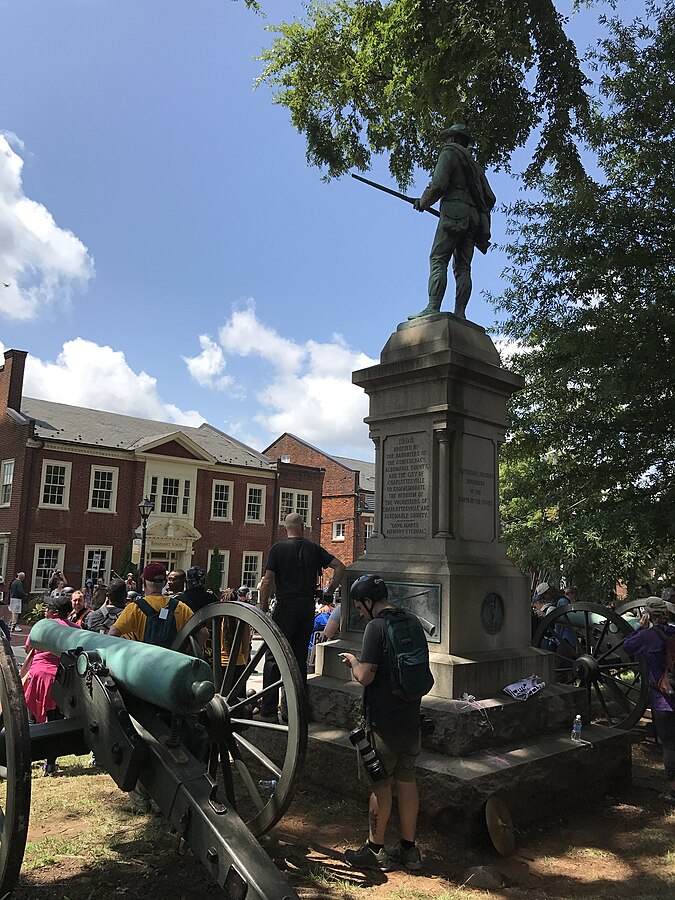
Shortly after Trump was elected in 2016, we moved to Belgium. I was happy to be out of the country after the shocking and devastating defeat of Hillary Clinton. I wasn’t alone feeling sucker punched. In Europe, the news focused on NATO and Brexit. I avoided all but the top headlines coming from the US, and I was grateful to turn a blind eye. It wasn’t until I met up with my brother on his stopover during a river cruise that I felt I missed something important. He mentioned Charlottesville and I had barely a passing acquaintance with the events. But the way he wouldn’t let go of it gave me the impression, it was big. Still, I was in Europe and wanted no part of the US scene. I was free to ignore it, and I did.

Those of you who read this blog, know I’m an astrologer and all of us in that community, knew something big (and traumatic) was going to happen in 2020. It was looking like a time to be home and circle the wagons. Besides that, my first granddaughter was turning one. We had already missed so much. Home we came in late 2018. But recent events and especially the close (how is that possible????) election has me wanting to fill in the missing pieces of 2017/2018.

Black Pill by Elle Reeve is a book about how small groups in the darkest corners of the internet gained power and led to Charlottesville and beyond. As a journalist uniquely positioned to report on the rise of the alt-right, Reeve draws a line from Charlottesville to the siege on the Capitol. Along the way, she teaches us “normies” a lot of vocabulary, dispels common myths, and fills in the blanks of what was happening behind the scenes in parts of society that most of us are afraid to look at. Let’s start with the obvious—black pilled. To be black pilled is to believe that times are bad, the system is corrupt and beyond saving, and the end is coming. People who buy into this philosophy lack hope for a better tomorrow. Societal collapse is guaranteed. This fatalistic attitude prevails in many of these fringe groups who have recently had massive effects on society. A solid case can be made that the concept of black pilling has spilled into mainstream America. (More than once, I asked myself, have I been black pilled? I certainly have met young Americans who are expressing a lack of faith in being able to change anything about society. Have we all been black pilled to a certain extent?)

Elle Reeve starts her book talking about “incels” (a group of men who are involuntarily celibate). These guys banned together on the internet to banter about their frustrations over the unattainable beautiful “Staceys” and the lucky “Chads” who always get the girls. The larger frame here has to do with how the isolation of relatively small groups is overcome on internet platforms especially where there is little to no regulation. Places like 4chan and 8chan gave what became known as the alt-right, a home to gather together, multiply, and go unchecked. A new white supremacism grew on the internet to challenge the old traditional, racist power structure. It was fueled by internet savvy, disenfranchisement, what was termed “isms” (where people with autism spectrum were attracted), and radical political beliefs. Unite the Right was an attempt by the movement to leave the internet and be seen in real life. Charlottesville was shocking and violent. The way the book reads, however, if more people had been paying attention we probably wouldn’t have been so surprised. The tell-tale signs were there. Of course, even in the aftermath of Charlottesville many questions remain. Why do we bend over backward to allow Nazi and white power protests? (Would we allow armed black power protests?) Why did the police fail to protect the citizens of Charlottesville? Do we have one kind of policing for whites and one kind of policing for blacks?) Even the verdict in Sines v. Kessler seemed way off. Although the white defendants were found guilty of conspiracy and racially motivated harassment or violence, the judgement was reduced from $26 M to $300K.

(photos: Anthony Crider, Agnostic Preachers Kid, Redneck Revolt)

Mainstream America was appalled. The alt-right did take a hit in the court of public opinion. Initially, recruitment into the alt-right swelled after Charlottesville but as infamy and shame as well as real world consequences grew, their numbers and leadership suffered. They were kicked off social media, lost credit cards, jobs, and became pariahs.

In a bizarre twist, back in 2017, a 4chan user claimed to know details about Hillary Clinton’s imminent arrest and the countries that would extradite her should she flee the US. This unknown individual claimed to have a top government clearance called Q. This was the start of QAnon. QAnon moved to 8chan and grew into even more peculiar conspiracy theories attracting greater numbers than the alt-right and especially notable—many women.       

Echoes of the internet and Charlottesville connections played out in violent episodes across the globe in the following years. In Toronto, in April 2018, Alex Minassian, an incel, drove a van into a crowd killing 11 and wounding 15. The following spring saw 51 killed in attacks on mosques in Christchurch, NZ. The killer posted his manifesto on 8chan and called on others to act to destabilize and radicalize society. Poway, CA became the scene of another death and 3 injured just a month later. The killer cited the Christchurch shooter as his inspiration. The one I remember the most happened in August 2019. A 21-year-old white man went into a Walmart and killed 23. He also cited the Christchurch shootings as well as the far-right, Great Replacement conspiracy theory. He posted his ideas on 8chan.              

Elle Reeve spent most of 2020 covering Seattle and Portland during the right-wing backlash to the Black Lives Matter Movement. This is where the reader gets an introduction to the Proud Boys. She describes them as a group without a political agenda. “They had a vibe and they had a look.” In the northwest, they acted as a security force for conservative groups, but they were most known for street fighting. The Proud Boys attracted young, disenfranchised men who wanted to fight.

On January 6th, 2021, Reeve was at the Capitol watching events unfold. Since she had followed so many of these groups, she was not surprised at what happened.   

(Jan. 6th violent insurrection at the Capitol, showing Oath Keepers)

The book did fill in some of the blanks for me. All are now part of history. Reeve makes a case for how personal choice can be exercised in the making of history. We are still standing on a precipice. Trying to decide who we are as a nation. The consequences couldn’t be higher. Lives are at stake. Holding a mirror to ourselves is not easy but how can we go forward without confronting our past?  Black Pill is a cautionary tale about how small, radical groups can use technology to mobilize and influence American life. It is also a call to understand the deeper psychological forces at work which produce these movements in order to combat their negative effects on society. Highly recommended!

TO FIND MY BOOKS:

LOOK FOR A $.99 Promotion on Timeless Tulips, Dark Diamonds (Kindle edition- now through Halloween!!) Scary, ghost read for the fall chill. Grab yours today!

1 Comment

Filed under Book Review