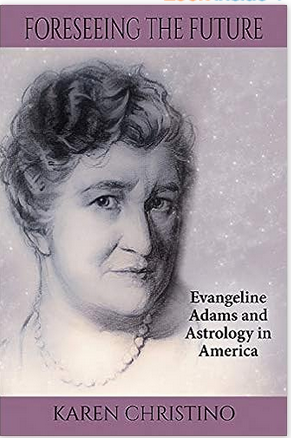
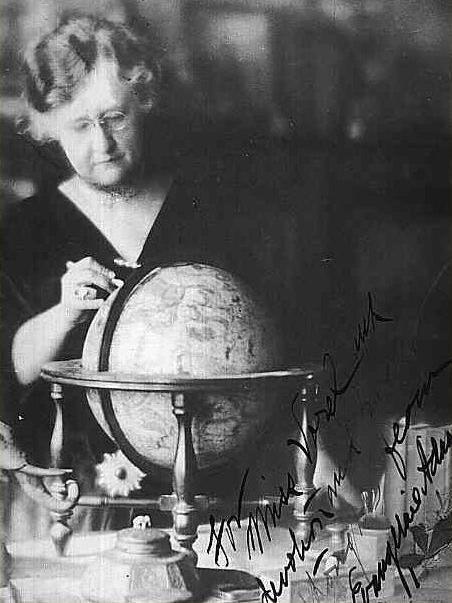
Evangeline Adams has long been an enigma in the world of astrology. Once she was a household name. Nowadays she is known to only a few. Her reputation in certain circles looms large but was it deserved? Karen Christino’s book goes a long way to demystify the woman who was the most famous astrologer of the early 20th century.
Evangeline Adams was a pioneer popularizing and legitimizing the practice of astrology so that it permeated American culture. That legacy was well-deserved. Other parts of her reputation, especially for forecasting may have been more a product of her ability to expertly market herself.
One of the most fascinating parts of the book for me involved Evangeline’s early beginnings. She was born in 1868 into a family of means. Her father died young having lost much of his wealth to speculating on an investment before its time (Perhaps this was a dose of Aquarian/Uranian energy which Evangeline inherits?). The family relocated to Andover, MA where Evangeline was surrounded by an extraordinary community of thinkers. With her mother economically independent, Evangeline grew up benefiting from an education separate from the men’s Andover Theological Seminary but very similar in content. The conservative Christian culture emphasized the development of character, mind, and spirit. Eva was able to attend lectures, debates, concerts, clubs, and art exhibitions. It would have been a stimulating place for anyone devoted to a life of the mind. Socializing, dancing, and frivolous activities were frowned on. Andover was a place devoted largely to training ministers for the serious work ahead of them. Luckily, Eva thrived in this setting.
It was also here that she met some very important people in her life. Her Sunday school teacher, Elizabeth Stuart Phelps, became a role model for a woman who could write for a living and remain unmarried. Through Phelps, Eva was introduced to some of the progressive ideas of the day— feminism, spiritualism, and homeopathy. Dr. Lewis Whiting and Eva became friends during a period of illness. Eva was able to ask Whiting deep philosophical questions and the homeopath seemed to recognize a certain spark in the young woman. Whiting later provided Eva with a referral to Dr. J. Heber Smith in Boston. What’s really interesting about this time in history is that doctors were overwhelmingly homeopaths. There were homeopathic hospitals and institutions. If you saw a doctor, it was likely a homeopath. And many homeopaths were well-trained astrologers. J. Heber Smith included, except that he didn’t openly advertise that. Eva went for a reading and that changed her life. The details of the reading are outlined in the book having been written down by Eva some 40 years later. No doubt many people have had (and will have) similar experiences to what Eva encountered on her visit to her first astrologer. From there, Eva goes on to study astrology with Smith who acts as her first astrology teacher. She later studied with Catherine Thompson who had a wealthy clientele in Boston. From Thompson, she learned the power of getting testimonials, using media for publicity, and how to cultivate a successful astrological practice. This was where Eva developed her people skills to counsel clients. Eva eventually ended up with access to a homeopathic mental hospital where she used charts and patient histories to correlate astrological placements and ailments. She followed medical students on rounds at the Westborough Insane Hospital. This gave her insight into medical astrology others didn’t have.
The earliest legend of Eva’s forecasting goes back to 1899 and involves a fire at the Windsor Hotel where she was living. Eva had done a reading for the hotel owner, Warren Leland, the day before the fire that had predicted some kind of imminent tragedy. Leland gave an interview that credited Eva with the prediction and the NY papers picked it up. Leland died within 3 weeks of the fire so clarification of exactly what was said was never corroborated beyond the initial report. While Leland talked to one reporter, Eva talked to many. She was a consummate self-promoter. She made sure the story made it into British papers and she used the tale throughout her life. There is no doubt that her business grew as a result.
Eva’s business was based in NY City and the law there forbade “pretending to tell fortunes.” Three separate times, Eva was arrested for fortune telling. It was the 1914 case which had become legendary. An undercover policewoman was sent in to receive a reading and Eva was consequently charged. The case was heard in a city court (so nothing can be said about how the NY State laws would function). Eva was viewed as a sincere, educated, white woman who showed the court that she consulted various books and had developed skills in interpreting astrology. The charges were dismissed. Judge Freshi found that “…not every astrologer is a fortune-teller.” Astrology therefore was NOT automatically fortune telling. Eva later claimed that the case established astrology as a legitimate science. Again, the notoriety of the story allowed Eva even greater visibility and her reputation and business grew.
Eva continued to grow her business, write astrology books, and market herself. She consulted in person and had a mail order business. She toured and gave lectures, and by 1930, she was called “America’s most famous astrologer.” In the 1930s, she had a radio show that was carried nationwide three times a week. Called “Your Stars,” the show had the potential to reach millions. In 1931, Eva had produced booklets for each zodiac sign which went on sale at Woolworth Department stores. She died in 1932 at the age of 64.
Evangeline Adams’ influence on the history of astrology in the US was tremendous. She innovated methods to practice astrology and initiated marketing strategies to successfully promote her business. The book emphasizes how dedicated she was to the art and occult science of astrology. She had a genuine interest in helping her clients using the techniques she employed. Her direct client work must have reached thousands including many celebrities and notables of the day (J.P. Morgan, Tallulah Bankhead, Joseph Campbell). Through radio and the print media she touched the lives of the public bringing astrology into the homes of millions. America was now primed for the astrologers who were to follow in her footsteps. Newspaper and magazine horoscopes would eventually become standard fair (even today, as online sources open new markets which Evangeline would no doubt be the first to employ). Making astrology available to the masses moved astrology from small occult circles into mainstream, middle-class America where it remains today. During her lifetime, Evangeline actively encouraged the study of astrology, and it influenced the next generation of astrologers. Her written materials and books continue to have influence as they are republished periodically.
To find my books, click here:
My visionary works are Into the Land of Snows and Timeless Tulips. Elephants Never Forgotten is Sci-Fi.
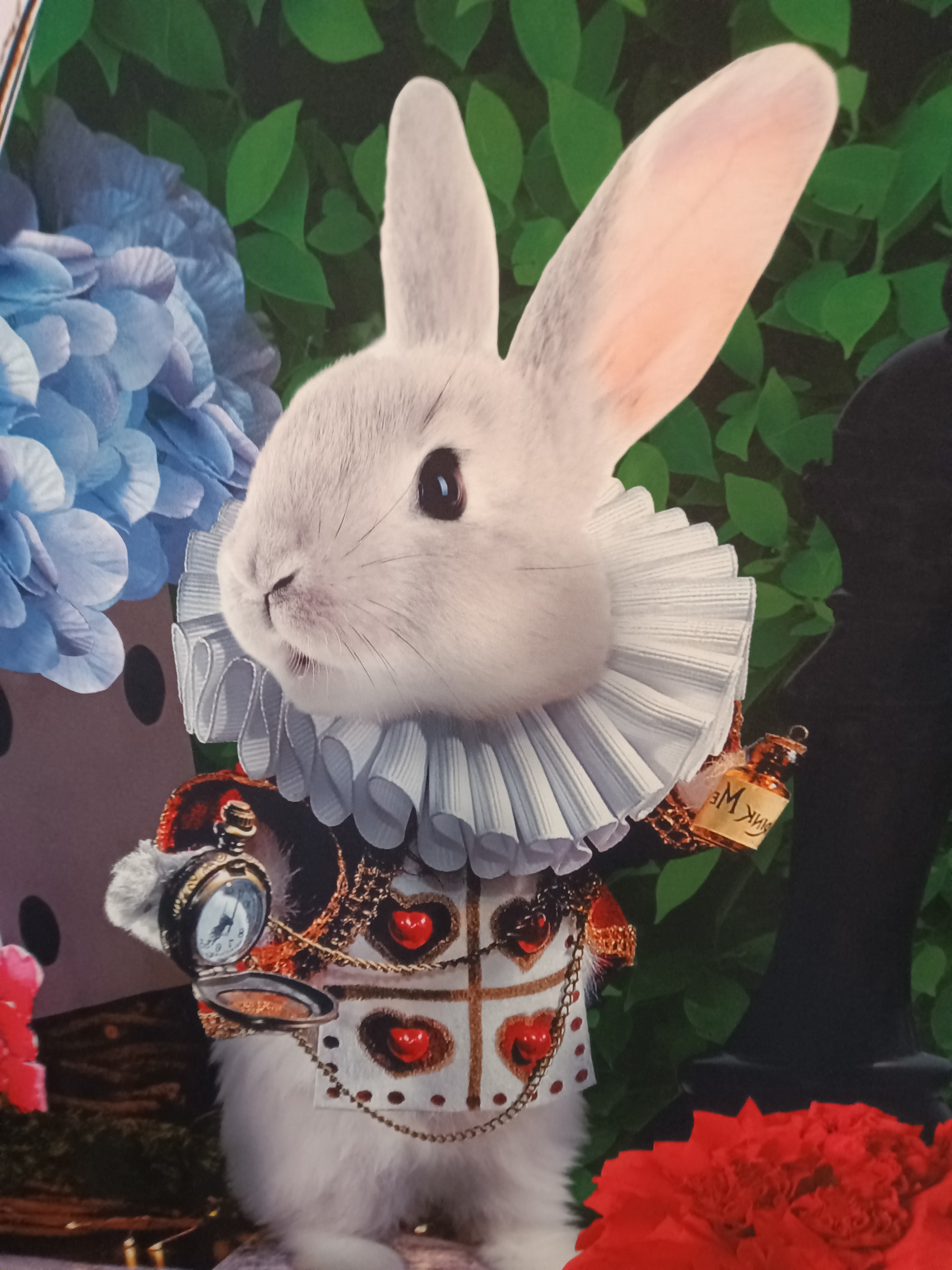
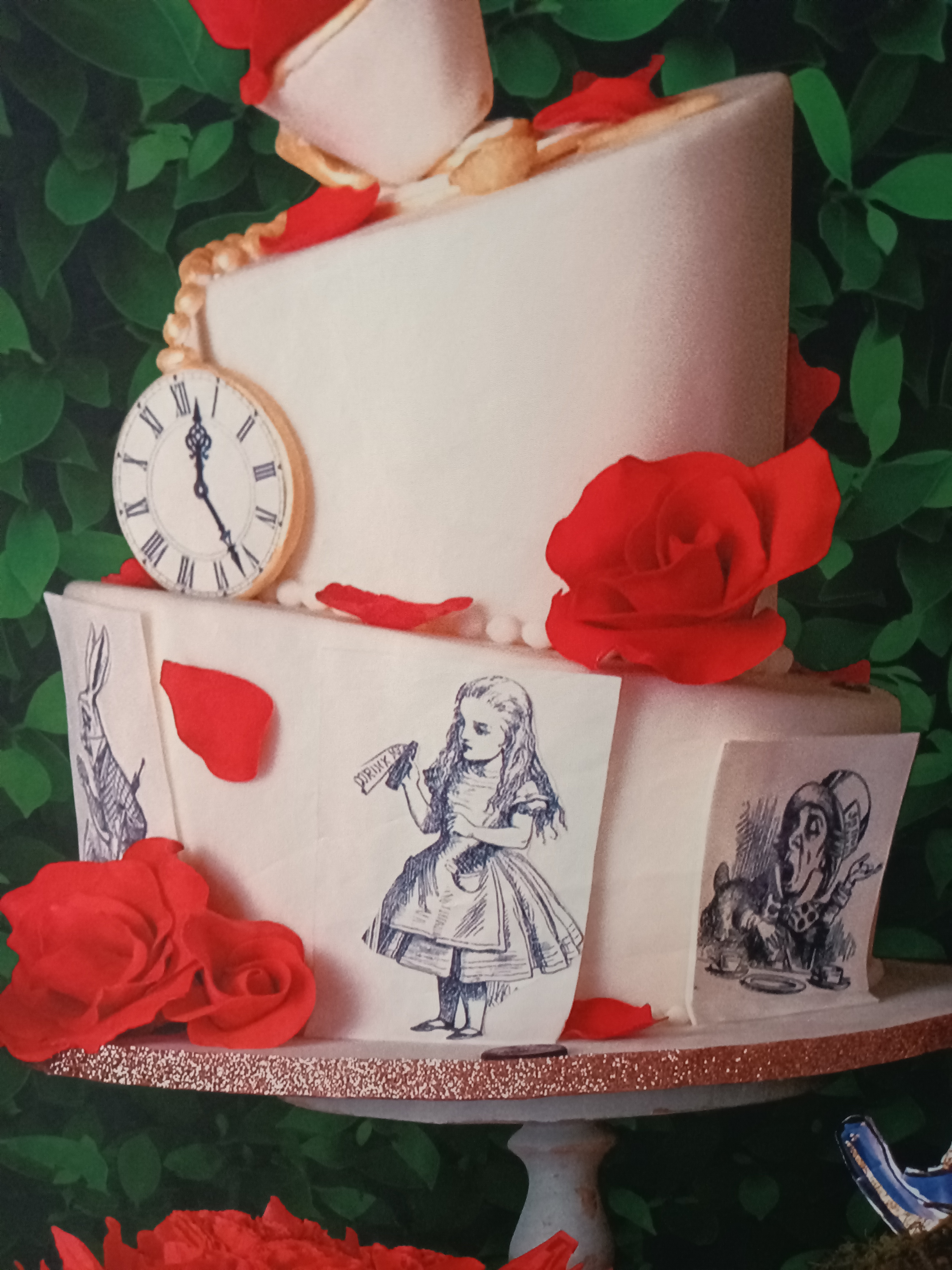
Very soon I’ll be producing video installments to introduce people to the world of Lewis Carroll and Wonderland. Much of the material formed the background for the book that will be released in November (Down the Treacle Well, Tuxtails Publishing). Join me as we go on this adventure of discovery. Here are some photos from the studio I’m currently setting up.
I’ve just finished the edits on Down the Treacle Well, which will be released this fall. Reflecting on the book, I was reminded that its first glimmers had their start in reading a biography about Lewis Carroll. I was intrigued by the real history behind Alice in Wonderland. It wasn’t until after I read the biography below that I read through Carroll’s works.
So I came to Wonderland as it were through the writer, finding him more engaging than the Victorian tale— at least, initially. I’ve also been doing more evolutionary astrology and it seemed natural now to combine the two.
Why not look at the Rev. Charles L. Dodgson (Lewis Carroll) through the lens of evolutionary astrology to get an even more personal understanding of the author who so inspired my new book!
First a little about the man born as Charles Dodgson in 1832. Dodgson was born into a line of English military officers and clergymen. His father was gifted in mathematics as was he. While the father found a home in the high Anglican Church, the son spent most of his life teaching at Oxford. The world would also come to know the son as the writer of one of the most recognized English language works of all time. Alice’s Adventures in Wonderland was published in 1865. Through the Looking Glass followed a few years later. Adopting the pen name Lewis Carroll, Dodgson became famous for his fantasy works and a category of writing known as literary nonsense (Jabberwocky, The Hunting of the Snark).
What can evolutionary astrology tell us about Dodgson’s past lives? Evolutionary astrology begins with the premise that we all have lived many lifetimes and that we evolve spiritually through the many lessons we encounter along the way. To understand the themes associated with anyone’s past lives, we must look to the south node in the birth chart. Carroll’s south node is in Aquarius (2nd House). Let’s begin there because it reveals much about him.
The Aquarian South Node:
With the south node in Aquarius, his past life experience was one where he was an outsider, a rule breaker. Aquarius’ modern ruler is Uranus, known for lightning-fast change and rebellion. It rocks the predominant paradigm to bring about the future. He was part of that energy of evolution or revolution. In some sense, he would have challenged conventional reality and its power structure with new ideas and new ways of doing things, perhaps just by being himself. Being different often threatens the existing power structure. He may have often felt lonely and as if the world was against him. The Aquarian south node has strong themes of individualism and thinking for oneself. He would have questioned what other people easily accepted at face value. His chosen path would have formed by deep questioning and a reliance on individual expression. He would have sought and found his own truth. Guided by this, Carroll in his past lives found the courage to define his own story. He may very well have found himself at home in subcultures unfamiliar to the general public.
The danger in this nodal pattern is that the rebel lifestyle with its outsider association can become an identity that outlives its utility. Did he continue to identify with the ideas and causes that labelled him a rebel? Even if that wasn’t a problem, there was a risk in him becoming so caught up in ideas that he became too far removed from other people and life.
Human societies do not tolerate differences well. Sometimes, an Aquarian-type individual can exist within the establishment and adjust enough to get along. However, there are many times when society imposes conformity in all sorts of ways. Past lives where the soul retains memories of persecution, confinement, or torture may lead an individual to dissociate from feelings. There can be a preference for thinking over feeling. The disconnect from feeling can create a wedge in relating to others.
How does this connect to the life of Lewis Carroll?
In anyone’s chart, the south node is our comfort zone. It is what we know and what we are most familiar with. Generally, we tend to stay fixed in this energy and repeat these patterns over and over.
With Carroll’s life, many of the Aquarian markers were present. He has a brilliant mind and loved to engage in fantasy writing, word play, mathematical puzzles and games of all kinds. He lived alone and never married. While he had wide social circles, he spent considerable amounts of time by himself—often walking alone miles and miles every day. Carroll identified as a Christian and rose as a high as a deacon in the church but never assumed the role of clergyman. To this day, no one knows why he refused to take his final ordination. It should have cost him his position at the university and yet he alone was allowed to stay on having refused the requirement. Choosing an academic life, he rejected his father’s path of parson by remaining a bachelor teaching don in residence at a college. Although this arrangement was typical for the time for academics, we might view this as a subculture of society because most of Victorian society did not eschew marriage and family. Lewis Carroll also went on to produce a highly distinctive and individual body of literary writing. So unique was his work that it continues to influence our culture today. His writings are still widely read in their original form. Lewis Carroll societies exist around the world. Not as well known, but certainly Aquarian, are the many inventions he created over his lifetime. He created several practical devices, ciphers, games, and even proposed alternative forms of parliamentarian representation.
The South Node in the Second House:
Recall from above that Lewis Carroll’s south node was located in the second house of his chart. That gives us insight to the kinds of life experiences he had in his past lives. The second house is generally associated with money, self-worth, and values. It is the house that indicates how resources are made available to us in life. Was a person wealthy or poor? Prone to sudden reversals of fortune? All of those are second house concerns. In Carroll’s chart, Uranus (the planet of surprise or sudden upset) is conjunct his south node. This indicates that his resources were vulnerable to unexpected changes. We can easily imagine that challenges to physical or spiritual survival affect the soul. Especially where the repeat of such stress shows itself many times. This is when the soul can become fearful—full of self-doubt and insecurity.
Situations of having to fight for daily survival focuses our attention on the basics of life. Dreams and aspirations go by the wayside. Life becomes a compromise where existence is the only goal. The soul becomes weary feeling cheated out of life. Human dignity is degraded in this experience. Doubt in our own abilities and in the world’s ability to provide reigns. Failure can feel fated if all we know is deprivation.
How does this connect to Carroll’s life?
The Rev. Charles Dodgson was living a quiet academic life when he happened to meet a neighbor of his. That neighbor was the college dean’s wife, and they became good friends. Oftentimes, he and another college friend took the Dean’s children out for the day. On one of these occasions, Dodgson crafted a particularly enchanting tale that one of the children, Alice, begged to have written done. Eventually, Dodgson complied. He also went on to share the story with another friend who encouraged him to seek publication because his own children became very fond of the tale. The publisher immediately liked the book and once it went to print, it became an immediate success. Dodgson became Lewis Carroll. He didn’t spend years as a frustrated, unpublished author. He became an overnight success such that Queen Victoria became aware of who he was and wanted his next book dedicated to her. The money flowed as well. His fan mail quickly overtook his ability to reply. Uranus had touched him, and a series of events led to a complete reversal of his fame and fortune. For a generally shy and reserved man, this probably came as quite a shock and brought its own struggles. Wealth or poverty brings countless changes.
What we have examined briefly here are the way patterns of past lives tend to repeat in one’s current life. That was certainly the case with Lewis Carroll. His soul’s challenge was to move toward the opposite energy of Leo (8th House). To move away from patterning and familiarity takes an enormous amount of insight, dedication, and hard work. However, that was the task set for that incarnation. This is just a brief glimpse into evolutionary astrology. A complete analysis of relevant aspects would give us far more detail into the situational and personal dynamics of his previous lives. However, this gives a taste of the kind of information that can be gleaned quickly from a chart.
If you are interested in what your own chart might reveal, contact me below. Clients continue to report surprising correlations between evolutionary astrology reports and their current life experiences. This is going to be a highly transformative time as we enter the summer. Several key astrological aspects are happening bringing in fast change. Understanding the full context of these changes in light of one’s own personal karmic history is often beneficial.
“You know perfectly well whom you are addressing!” said Alice.
“Where is he then?”
Alice groaned. “Mr. Dodgson said that I should make the announcement and that’s why I’m here.”
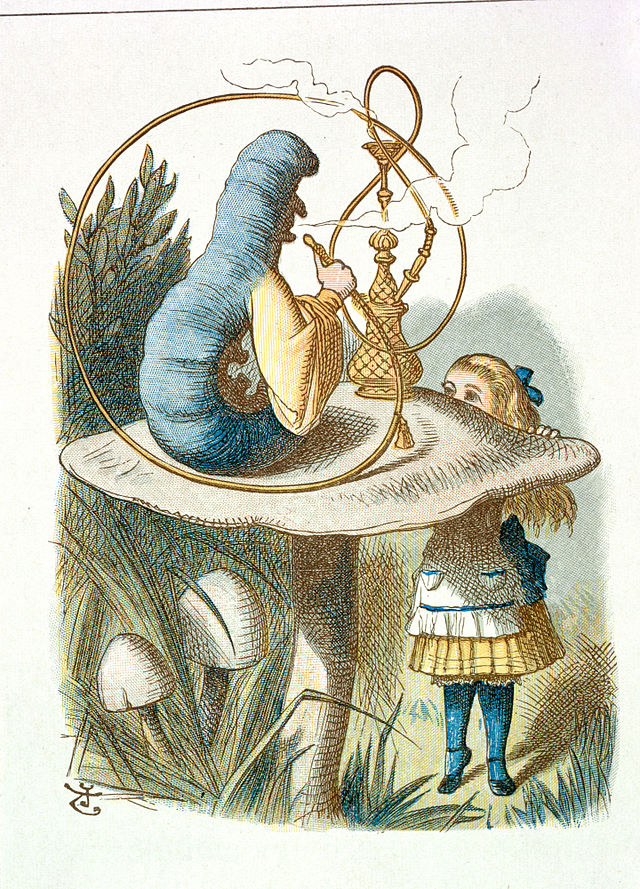
Caterpillar blew smoky rings into the air. His eyes grew droopy. “No one knows this Mr. Dodgson fellow anymore.”
“Mr. Dodgson? Alright then — Lewis Carroll.” Alice’s mounting irritation became plain as she opened and closed her fists.
“Let me introduce you and then you tell them? Agree?” murmured Caterpillar.
“I suppose,” said Alice.
“For all those listening, this is Alice Liddell from Oxford. She has news to share.”
Alice drew a long breath. “It is my privilege and honor to announce that my recent set of adventures underground with my American friends, Ben & Kyle, and also Mr. Dodgson ( I mean– Lewis Carroll) has been set to paper by author Ellis Nelson. The book entitled, Down the Treacle Well, will be published by Tuxtails Publishing and made available this fall. Everyone in Wonderland is terribly excited about the impending release.”
Caterpillar raised an eyebrow. “Everyone?”
“Well, probably not everyone. The Red Queen for one is likely to be quite upset.”
SJ Parris has written three novellas on the early life and adventures of the Dominican Friar, Giordano Bruno. In The Dead of Winter, we find Bruno uneasily settled at San Domenico in Naples in 1566. Bruno’s curiosity draws him deeper into philosophical questions and the nature of the healing arts. He has a penchant for asking uncomfortable questions and an ability to pierce mystery. Learning medieval medicine soon brings him into contact with others who seek deeper knowledge. In dark times, that means powerful men in secret societies who run risks that this young priest finds irresistible. A forbidden autopsy, murder, and countless secrets swirl at San Domenico and so do the politics of power. It will take Bruno’s keen intellect to survive.
This is a nice addition to accompany the other full-length novels Parris has done on Bruno.
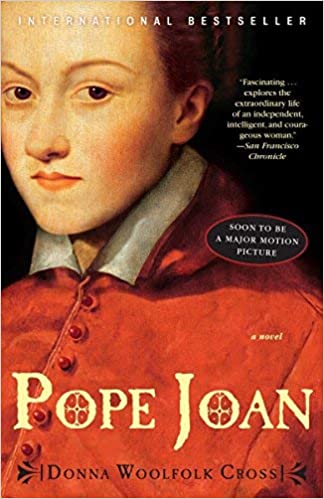
Although denied for centuries by the Church and some scholars, Donna Woolfolk Cross, has written a convincing fictional account of a ninth-century woman Pope. Her notes concluding the novel outline her credible sources for why she believes Joan did in fact exist. Her choice to write fiction was based on there not being enough known about Joan to write an extensive biography. Nevertheless, she makes a good case for her existence in a time when few records were kept and very little is known about the time period. Joan’s story comes to us through persistent legend and uncanny Church practices.
The novel plunks the reader down in a foreign age where women are not only second-class inferiors but brutally treated. Possessed of an inquisitive mind, Joan immediately resents living in a household where her brothers are educated to rise in the Church and she is left to menial housework. Her only eventual task is to marry as well as she can. Opportunity comes when her brother dies during a Viking raid, and she seizes the chance to disguise herself as a man and enter monastic life. Once established, she excels as a scholar and healer. Turbulent times eventually lead Joan to Rome and all the way to the papacy.
Cross’ book roughly follows the legends that have come down about Joan. The tale is well-written and engaging. Modern audiences can well imagine the motivations of someone who wants more for themselves and acts to defy convention and take advantage of opportunities as they come along. The story is a triumph of the human spirit striving for expression while the darker forces of others are at work here as well.
(No longer under contract restrictions, I can now share the story freely.)
A Dutch settlement, north of New Amsterdam,
The New World 1638
ANNIKA
Father would want me to record this day. I fetched parchment and pen. My soul was hollow as I wrote words unthinkable only days earlier.
Alone, so very alone, I write to stave off the madness that encircles me. My only wish is to hold on long enough to see you return.
Sickness has spread through our village. I am told I must remain indoors so as not to tempt the Devil’s wrath. Watching from my window, I have seen the bodies wrapped in linen and taken behind the village. I know not how long this will continue or who shall succumb next.
Father, it has been too long since I have gazed on your kind countenance. I fervently hope you will hear my prayers and hasten back to your most obedient daughter.
May God have mercy upon us.
Chapter 1
LYDIA
Amsterdam, Today
The rain had stopped, finally. The gray clouds broke in the afternoon sky as the cab pulled to a stop in front of a house on Lindengracht. Dad jumped from the front seat and hurried to help the driver wrestle the luggage from the trunk. The cab’s dome light came on and threw a beam onto the metallic clasp of Mom’s purse. Lydia caught the glint of the reflected streak and winced. She looked away, but the damage was done. A flickering cascade of broken, mirrored glass danced at her feet. Instinctively, she closed her eyes. Not now, she commanded. Not now.
Moments later, Lydia opened her eyes and found the image gone. She sighed with relief and got out of the cab. Standing near Mom, Lydia gazed at the three-story brick structure and stifled a yawn with her hand. It was more modern than many of the buildings they had passed since their arrival into the garden district, but still old by American standards. The house reminded her of Colonial Williamsburg except that it was very narrow and tightly surrounded by other structures, one building almost melting into the next. She closed her eyes and yawned, opening her mouth wide. Stretching, she thrust her jaw left and right, fighting the effects of jetlag. It had been a long flight from New York City.
Dad deposited Lydia’s wheeled suitcase alongside her and returned to retrieve the rest of the bags. Mom left Lydia to grab her own shoulder-bag and makeup case from the back of the cab. Lydia turned to look at the tree-lined street and remembered from her tour book that many early canals in the area had been filled in. The grassy strip just beyond the paved street was probably one of those former canals. She wondered what it was like to live in a city where water was the main method of travel. Sleepy pictures of Venice floated through her mind as Dad tapped her shoulder indicating he was ready to go inside.
Lydia pulled her suitcase to the bottom edge of the house’s stairway and bumped it up the six steps following Dad. The three of them stood before a massive oak door while Dad dug deep into his pockets for the key. The family would stay in this historic house owned by the company while Dad interviewed with a Dutch publishing firm. His previous job as editor at an independent art book publisher vanished when the company decided to change its product line. Now that company produced novelty books for children.
“It’s got to be here,” Dad said, his Southern accent making the words melt like butter on toast.
Exasperated, Mom stepped forward and reached to help Dad explore his other pants pocket.
Dad playfully slapped her hand as he took a step back. “Not now, Ronni. The child’s watching…” He grinned.
Mom rolled her eyes. “I’m only trying to help.”
Lydia smirked. She’d seen this kind of behavior before. Dad enjoyed these little stabs of humor while Mom was always uncomfortable with them, reacting slightly shocked each time. Maybe if Mom pulled her own joke once in a while Dad would be able to lay off it. But really, Lydia couldn’t see that happening. Her parents’ dynamics just wouldn’t allow it. They’d never change.
“You two aren’t going to do this the whole time we’re here, are you?” Lydia asked.
Dad produced the key that had been hidden in his hand the whole time and reached for the door. Mom raised an eyebrow and pursed her lips as if to say look what I have to put up with.
“Of course not, darling. I, for one, am going to be on my best behavior.” He swung the door open and stood gallantly to the side, allowing the ladies to pass.
Lydia stepped over the threshold and into a darkened room. Directly in front of her, a staircase led to the upper floors, and just to the left, illuminated only by the light from the street, a vase of tulips sat on a pedestal. The creamy white vase was overwhelmed by the vibrant yellow and red flowers that overhung it. The splotch of color momentarily made the entranceway warm and inviting. Dad closed the door and plunged them into darkness.
“How ‘bout some lights?” Lydia asked.
“One second, one second…” Dad slapped at the wall feeling for the light switch.
A click and the overhead light came on.
“Very nice,” Mom said examining the entranceway and taking note of the fresh flowers. A mirror hung on the wall opposite the arrangement. That caught her eye. She stepped forward and peered at herself. Long slender fingers sporting a French manicure smoothed her eyebrows and corrected a bit of stray lipstick. Without taking her eyes off herself, she pulled a brush from her purse and whisked her newly colored blond locks from her face.
“You look beautiful already,” Dad said grabbing her around the waist, embracing her.
“You always say that,” Mom answered.
“Because it’s always true.”
Lydia turned away from the tender moment. She’d seen that many times, too. She abandoned her suitcase and strolled left into the living room. Two large windows brought light in from the emerging sun. A beige room with a fireplace and comfy blue sofas greeted her. She sunk luxuriously into one of them and eyed the coffee table, considering whether to rest her feet on it. Slipping her shoes off, she started to raise her feet, but then Mom entered the room. Her feet stayed on the floor.
Dad poked his head around the corner. “Don’t you want to explore the new digs, Sunshine?” he called to Lydia.
“Sure,” Lydia said pulling herself to her feet.
Mom surveyed the room and stationed herself at the rain-spattered window. “Do you suppose it’ll rain the whole time we’re here?”
Lydia joined her at the window. “The guidebook says that in Amsterdam, it’s raining, just stopped raining, or getting ready to rain. It doesn’t look too bad right now.”
Mom turned and looked at Lydia. She swished Lydia’s long brown hair off her shoulders so that it hung behind.
“I’m waiting,” Dad called.
With practiced motion, Mom pulled a few short tendrils curling in the humidity and smoothed them down behind Lydia’s ears. Lydia felt her mother’s eyes on the strawberry birthmark at her hairline. Starting in pre-school Mom had covered it with makeup and Lydia repeated the behavior mostly out of habit. As her mother reached up, Lydia stepped back and spun around. She ran to meet Dad at the foot of the stairs.
“Race you to the top!”
Lydia gave him her best, you’ve-got-to-be-kidding look.
“You think I’m too old for it? Just because I’m a little gray and have a little extra weight,” Dad poked his pouch of a tummy, “doesn’t mean I can’t still beat you.”
“I mean, I’m too old for it. Fourteen-year-olds don’t race their fathers anymore.”
Dad sighed, sounding almost hurt. “Sounds like some ridiculous teenager rules! I thought you and I would resist the imposition of silly rules and blaze our own way.”
“Nope,” Lydia said. She started slowly up the stairs.
“I’ve always said that maturity is overrated, and fun should take precedence.”
“That’s not sounding very parental. Don’t let Mom hear you say that.”
Lydia paused at the top of the stairs while her father caught his breath. In his mid-fifties, Miles Bradshaw had begun to show the decade or so that separated him from his wife. As Lydia gained height and maturity, she watched her father become grayer and rounder. His reading glasses had recently become a permanent fixture. And while the physical changes were expected, she more frequently questioned her father’s ability to adapt to her growing up and changing. He should know that ninth graders are beyond racing their fathers up a flight of stairs. Besides, her father always said that being an only child had made her mature beyond her years. So why did he want her to participate in such incredibly childish behavior?
A quick look upstairs revealed three comfortable bedrooms and a small bathroom. From a window in the smallest bedroom, Lydia peered out onto a grassy courtyard framed by laurel bushes. A garden with spring bulbs bloomed alongside the foundation, and in two beds separated by a walkway were rows and rows of tulips.
Dad leaned against the doorframe. “Small, but nice. What do you think?”
“It’s fine,” Lydia answered. She went to the bed and bounced up and down a few times. “What will our new house be like?”
Dad moved to the window. “That depends. Assuming I get the job, we’ll get a place in the country. Big change for us.”
“That means no Saks or Bloomies. You think we can get a puppy?”
“I think that might be negotiable— if and I mean if, we move. I know you’ve always wanted a pet. Heck, I had a dog as a kid. Loved the dickens out of that hound dog.”
“I know, Dad. That’s why I think it’s time I had my own dog. It’d make the move easier if I had something to look forward to. You know?” Dad gazed out into the backyard seeming to consider her plea.
“Let’s see how things progress, dear daughter, and I’ll get back to you on that. Let’s say you’re not looking at the parent who needs the convincing. Right now, I’m more concerned over how your mother’s going to handle the move. She’s going to have the hardest time adjusting. That is, if we move.” Dad walked down the hallway out of sight.
Lydia fell back onto the bed and smiled. Visions of puppies danced in her mind’s eye. At least if they did move, the prospect of getting a dog was on the table and since Dad was okay with it, it meant that Mom would cave over time.
She sprang to her feet. The move would be a big change and she worried about how they’d all adapt. She knew that Mom was not looking forward to giving up Manhattan to go upstate. In fact, Mom had done her best over the years to erase her rural roots and pretend to be from the city. She enjoyed the fast pace of the metropolis and its myriad choices. Mom loved the crowded streets, the theatre life, the shopping, and the excitement that seemed to make the streets pulse. Dad was right that Mom would have the hardest time relocating.
Lydia herself was conflicted over the family uprooting itself from the city. She could see some definite disadvantages, but she also recognized that it wouldn’t be all bad. There was the possibility of the puppy! No doubt she’d miss her friends and the routine of her life. She might have to give up ballet, but that might not be such a horrible thing. What worried her most was the uncertainty of the whole thing. If Dad didn’t get the job, they’d stay in the city. But if he did, and it was very likely that he would, then they would be moving.
When Lydia considered that possibility, she felt unsure. What should she feel? Scared and sad about leaving her friends? Hannah especially. How would Hannah get along without her? Would Hannah be mad at her? Blame her? Would Hannah forget her the week after she left? Maybe. Lydia considered the other option. What if she could actually feel some excitement about the change? Maybe getting out of the city would be a good thing. The school might be a little more relaxed and not so focused on standardized tests and whose parents did what. In a small town, she might be able to go more places on her own and enjoy more freedom. She’d be able to be outside more. Actually, be in nature and see wildlife. That would be cool! Being a teenager away from the city might have its perks. But then again, there was always the problem of whether she’d fit in. Would she be able to make friends?
The only thing she was certain of was that Dad would make it through any transition just fine. His perpetually upbeat attitude assured he’d always land on his feet, finding something good in everything that ever happened.
The sound of footsteps on the stairs broke her train of thought. She realized it was only Dad bringing up some of the luggage.
A slight breeze lifted her hair off her shoulder and Lydia wheeled around. Facing the window, she watched as one of the curtains floated up and then returned to its normal position. An odd occurrence with the window closed, but one she thought could be easily explained. Obviously, the windows were not well sealed, and the wind had raised her hair and blown the curtain, startling her. Old houses were like that, just like old apartments. Back home, weather stripping ran all around her bedroom window because without it, her room would be freezing in the winter.
Lydia approached the window, confident that she would be able to feel the draft responsible for moving the curtain. She floated her hand around the window searching for air flow but found none. The window was old, but it seemed to be in good repair and Lydia did not feel a breeze. Dropping her hand, she tried to remember how the incident had happened. She was tired and maybe jetlagged just enough to think she saw a white curtain move against a white wall. If she was turning around when she saw it, maybe it was just that motion combined with not focusing precisely, that made the curtain look like it moved. Yes, that must be it. Lydia refused to dwell on it.
There were far better things for her to concern herself with. Deep down she had a feeling that Dad was going to get this job. He really wanted it, and he’d be good at it. She sighed. How could she make this move better for Mom? For herself? She turned and left the room, walking to the master bedroom, which faced the street.
A large, four-poster bed with a bright blue comforter hugged the wall to the left. She stepped around her parent’s luggage and into the intense sunshine pouring through the sheer curtain panels in the two windows in front of her. The first sunlight of the day beckoned to her, and Lydia rushed forward to be engulfed in its warmth.
From the window Lydia watched as a large, muscular woman pumped her bicycle and drew near. The woman leaned the bike against the lamppost in front of the house and secured it with a combination lock. Lydia pulled the curtains back for a better look and a few moments later, the doorbell rang.
While the print copy is no longer available, the ebook can be found here:
In this popular book, psychic Ainslie MacLeod outlines a system of soul evolution that fascinates and provides fodder for deeper exploration. In his system, the soul progresses through ten levels or ages on earth. The first stage of existence is lived out in simplicity, isolation, and naivety. We are brand new souls trying to understand the very basics of incarnation. A soul will spend 5000 to 6000 years in each stage reincarnating as necessary until progressing to the next level.
Briefly, here are the levels and their characteristics:
Level 6: social justice, uncertainty, introspection
Level 7: complexity, creativity, innovation
Level 8: activism, liberalism, sophistication
Level 9: spirituality, self-improvement, healing
Level 10: altruism, inertia, compassion (you will need to read the book for the explanation of inertia here, but is does make sense)
Anyone reading this, no doubt has decided which level they think they are currently have achieved. Our soul’s perspective on life goes through massive shifts about halfway through the process. The way MacLeod uses the term “old souls” is clarified in the book to be associated with qualities representing more peaceful, more empathetic individuals who are more accepting of differences and more open to questioning belief systems. The author goes as far to say that political beliefs are an indicator of someone’s level. (To me that means, I could easily draw a line to define the US red/ blue political split above.)
Exploring MacLeod’s system further, we find that each soul expresses through a personality that was created on the astral plane before incarnation. There are ten soul types. Reading through these, you can choose what resonates with you as a primary. You may also be drawn to a secondary. Some people have several which overlap and influence. You can sign up to take the soul type quiz on the author’s site here: https://ainsliemacleod.com/soul-type-quiz/
Soul Types: (and percentages of the population)
Helper (6 %)
Caregiver (10%)
Educator (9%)
Thinker (16%)
Creator (12%)
Performer (10%)
Hunter (6%)
Leader (12%)
Spiritualist (19%)
Transformer (less than 1%)
Although most of us have no conscious memory of past lives, our past lives form the basis of our daily existence in all kinds of ways. We gravitate toward the familiar. Talents and skills spill over. So do limiting beliefs, phobias, and fears. Unexplained physical ailments from past lives often carry over. Even events in our current life can trigger traumas of the past. A good portion of MacLeod’s book covers this terrain. The cases he presents are intriguing.
Some of the material will sound familiar to those who have read many sources on past lives. There is something to be gained from trying the mediation exercises at the end of the chapters to see what can be gleaned for the individual. This is a book that makes you wonder about your past and what you might be bringing forward. Why you like certain things and not others. Why certain cultures call to you. Why you like such and such music or art. Patterns that you repeat. Why you have an ache or pain, or what about that scar… It will also make you think about that friend or family member who can’t heal or break out of a cycle. It’s about plunging deeper into the unseen and life. Many libraries have the book, go find it. MacLeod has been interviewed by Oprah. The book is great fodder for conversation if you can find a person willingly to dive deep with you. I hope you do!



















 ellisnelson