Tag Archives: Parkinson’s

Reaching Down the Rabbit Hole:

A Renowned Neurologist Explains the Mystery and Drama of Brain Disease 

By Allan H. Ropper, Brian David Burrell

This is a fascinating book of stories by a neurologist covering some of his most interesting cases and patients. Written by a caring and professional doctor, the reader encounters everyday people who present with a variety of bizarre symptoms. In a teaching hospital setting, a neurologist and his staff step through the process of diagnosis and treatment for a variety of conditions. All the stories are compelling. Some of them are difficult because people’s lives and survival are at stake. Dr. Ropper also discusses treating Michael J. Fox for Parkinson’s in the early days of his diagnosis.

Probably the most controversial chapter in the whole book comes toward the end when Ropper bravely takes on the question, “When is somebody not dead yet?” Neurology is a field that can present a tangle of ethical and moral dilemmas. None more controversial it turns out than when defining when someone is actually dead. Ropper discusses how the need for a scientific definition of death became paramount when organ harvesting became possible. Conveniently, medical imaging of the brain and organ transplants came online side by side. Doctors could reasonably assess the likelihood that a brain would not recover. They called that brain death. Troubling though was that the body remained…alive. And bodies that donate organs remain alive, which can be morally problematic for some doctors. Imagine that. It bothers me too. Mostly, because I look at death not as an event but as a process. So choosing a moment of death has always sounded like pure hubris to me. Anyway, I was surprised that a doctor would cover this question and have hangups. Some of his colleagues clearly hadn’t thought about it at all.

If you’re interested in medical writing that has been compared to Rouche, Lewis Thomas, and Oliver Sacks, this may be your next great read.   

To find my books: click below
2 Comments

Filed under Book Review

DO YOU SEE THAT?

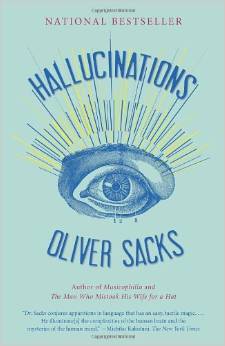
   HALLUCINATIONS by Oliver Sacks

b

I used to think hallucinations were associated with a particular kind of person- someone who would stand out in a crowd- someone who would need … medication. But that’s not wholly true. I suffer with migraines and, on occasion, I have aura in the classical fortification pattern (those zigzag lines). These are visual hallucinations. So on another level, I know hallucinations can affect many who wouldn’t stand out in a room or need medication.

Hallucinations by Oliver Sacks is a fascinating book because it reveals the diversity found in the human experience. Forget what you thought “normal” meant. It won’t be useful anymore. Turns out, there are many perfectly happy, functional people who have hallucinations.

Photo: Erik Charlton

Photo: Erik Charlton

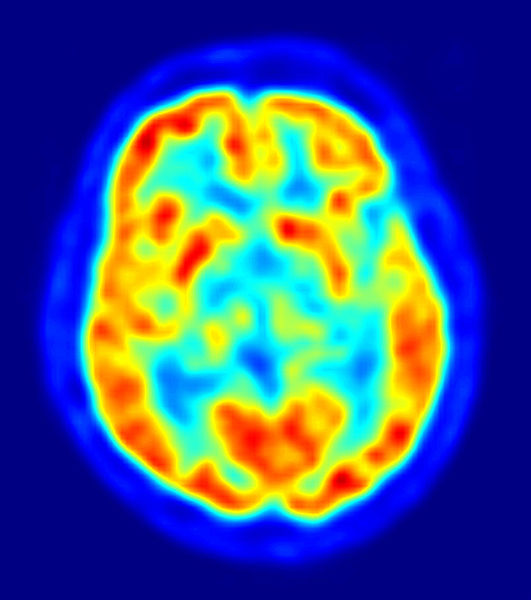
So what do we mean by a hallucination? Different definitions have been used throughout history. Even today there is confusion over exactly what a hallucination is, because the boundary between hallucinations, misperception, and illusion aren’t always clear. Sacks begins with the idea that a hallucination lacks external reality. (Keep in mind that for a Buddhist, we slipped into nebulous territory by assuming an external reality independent, discrete, and concrete.) Anyway, seeing or hearing (also tasting, feeling, or smelling) things that are not there will qualify as a hallucination for the book’s purposes. Hallucinations appear real to the one experiencing it because the perceptions are fully working to create that reality and project it into the world. This is different from a memory or the use of the imagination where, in the mind’s eye, both are experienced. Hallucinations are further characterized by being involuntary, uncontrollable, and often possessing color or detail beyond everyday average experience. Brain imaging now allows scientists the ability to monitor electrical and metabolic activity while someone is hallucinating.

Photo: Jens Maus

Photo: Jens Maus

Sacks chose to avoid any analysis of dreams (although he does cover those hallucinations experienced upon falling asleep or waking up ) and the subject of schizophrenia. He does hint at the level of stigma associated with seeing (or hearing) things and how patients will not disclose this is occurring. Oftentimes, people will avoid using the term hallucinating and call it other things. Modern society equates hallucinations with insanity. Sacks cites a 1974 case published in Science where eight healthy pseudo-patients presented themselves at various hospitals complaining about hearing voices. Seven were immediately diagnosed as schizophrenic without any other symptoms. The other one was diagnosed with manic depressive psychosis.

The book takes up the breadth of human experience in which people have hallucinations due to medical conditions and drug use (both prescribed and recreational). There are many first person accounts given in the book. They are all candid and insightful, and open the opportunity to grow our compassion. Some of the medical conditions discussed are Charles Bonnet Syndrome (blindness), deafness, Parkinson’s, migraine, epilepsy, PTSD, and delirium. Various injuries, sensory deprivation, sleep disorders, and grief may also bring on hallucinations. Although the chapters on out-of-body, near-death-experience, and ghosts are interesting, I disagree that science has a full explanation to offer us. From Sacks’ point of view, all mystical experience probably would also count as a hallucination. Again, a limited view.

This is a very informative and enlightening book, sharing what in many cases individuals are afraid to share with the general public and their doctors (for good reason, apparently). It does much to decrease the stigma associated with hallucinations and enlarges our understanding of the range of what it means to have a human body with human perception.

Oliver Sacks: TED TALK- Hallucinations

14 Comments

Filed under Book Review, Books, brain science, dreams, health, hypnogogic dreams, hypnopompic dreams, schizophrenia