Tag Archives: nature

ENTANGLED LIFE

How Fungi Make Our Worlds, Change Our Minds, & Shape Our Futures

By Merlin Sheldrake

First off, did you know fungi is a kingdom of life— like a totally different category from animals and plants. Generally, fungi have been relegated to study under plants, and we know relatively little about this curious kingdom. One estimate is that only 6% of fungi species have even been described by science at this point. Yet without fungi, plants may not have developed root systems to evolve out of water. Additionally, fungi are the first organisms to break down bare rock to produce fertile soil. With diverse metabolisms, fungi can dissolve wood, rock, crude oil, plastic, and TNT. Some can clean up nuclear waste.

Most people don’t realize the extent to which we depend on fungi in our lives. Because fungi are more closely related to animals than plants, we use some fungal solutions to solve human health problems. Penicillin, cyclosporine, statins, many anti-cancer, and anti-viral drugs rely on fungi. Then there’s alcohol and magic mushrooms (psilocybin).

Humans depend on plant life and as it turns out, fungi supply plants with nutrients from the soil. In exchange, fungi get sugars and lipids generated from photosynthesis. This ancient relationship developed and continues to sustain life and us to this day. More than ninety percent of plant species rely on mycorrhizal fungi. This little understood ecosystem of fungal networks with plants became the life work of the author.

Sheldrake’s work (along with others) in this field have prompted new ways of thinking about the world. Fungi appear capable of very sophisticated behaviors pushing the need for new models to explain how these organisms communicate, solve problems, make decisions, learn, and remember.

Into the weird world of fungi:

Worm-hunting fungus: Generally, are happy eating decomposing plant material but when there is a shortage of food, they develop worm-hunting organs & produce chemical signals to lure nematodes.

Maze runners: Experiments with mycelium have shown they can work out the best routes between British cities creating a recognizable motorway (Lynne Boddy, PhD).

Burst asphalt: Some mushrooms take on water and are capable of pushing through asphalt.

Communication across the fungal network: The current theory suggests electrical signaling may convey information about food, injury, outsiders, or local conditions.

Fungal computers: Growing a mycelium ecosystem (in the future) may allow large-scale environmental monitoring.

What’s a lichen? A source of confusion. Where does one organism stop and another start? The more we know about lichens, the harder they are to define or classify. An open-ended question in science at this point.

Zombie fungus: One fungus which infects carpenter ants removes their fear of heights. The ant climbs a plant, clamps its jaw in a death grip, then mycelium grow from its feet binding it to the plant. After digesting the ant’s body, a stalk grows from the head dispersing spores. Called “zombie” because the fungus controls the brains of the ants in ways scientists can’t explain. The death grip is executed precisely in the right temperature and humidity zone to allow the fungus to fruit. Infected ants all bite together at noon, facing the sun and clamping a major plant vein.

Laughing mushrooms: In 1486, at the coronation of an Aztec emperor laughing broke out after consumption of the mushroom known as “flesh of the gods,” one kind of psilocybin mushroom.       

Fungus partners affect produce: Tests with strawberries grown with different fungal communities changed the flavor of the berries. What does this mean for gardeners/farmers going forward?

Wood Wide Web: The vast connection of plants and fungus to transport everything from nutrients to signaling compounds. Poisons and hormones can pass through shared networks. Genetic material (viruses, RNA) may also be passing through fungal channels.

Bee Colony Collapse: Promising research is under way to see if white rot fungi can be used to reduce bee mortality.

I hope this dive into the strange world of fungus has whetted your appetite for more. There is a lot in this book. The author outlines some of the groundbreaking areas of research and production that are ongoing. Some of it feels like science fiction. He acknowledges the contributions of citizen mycologists who have pushed the field (and continue to do so). The kingdom of fungi may well hold solutions for humanity as we discover more and open our awareness to these lifeforms.

TO FIND MY BOOKS:

8 Comments

Filed under Books

WANTED: 100 Kind-Hearted Volunteers

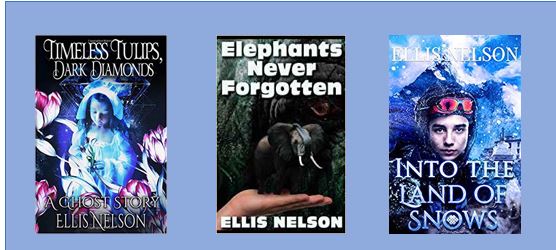
elephants never forgotten 2THE BOOK IS NOW AVAILABLE!

Please help me announce it to the world! Don’t just ‘like’ this posting. Sign up and help me out.

I’m looking for 100 people to help me get the word out about my new book, ELEPHANTS NEVER FORGOTTEN. On October 1 (Thursday) at 6 pm, I have set up a Thunderclap to resonate across the universe. Those who sign up will use their Facebook, Twitter, or Tumblr accounts to send a one- time message announcing the release of the book. It’s easy! Sign up on my account page, and Thunderclap does the rest. Can more than 100 people sign up? You bet, but I need at least 100 people or the message doesn’t get sent. Oh- and by the way, the clock’s ticking. There are only 22 days left. Help!

https://www.thunderclap.it/projects/30885-a-book-is-born

BUY FROM AMAZON

BUY FROM MUSEITUP

27 Comments

Filed under Uncategorized

HAS THE VOYNICH MANUSCRIPT BEEN CRACKED?

This is an update to a blog I did in 2012 about the Voynich Manuscript. Recent work done by Dr. Stephen Bax (Professor of Applied Linguistics, University of Bedfordshire) has resulted in some startling findings.

voynich botanical

From 2012:

I love tales of missing manuscripts especially in fiction, but also in non-fiction. Last week, I finished The Swerve which featured the true story of the recovery of Lucretius’ poem, On the Nature of Things, and how it influenced our modern world. I liked the idea of a Renaissance book hunter slipping into monasteries looking for ancient wisdom. But I have a better story to share.

In 1912, Wilfrid Voynich recovered a mysterious manuscript that bears his name and resides in the Yale Library as Manuscript 408. The curious document has defied the patient and persistent attempts by all amateur and professional cryptographers to break it.

Its exact history is sketchy, but the document is alleged to have belonged to an Emperor, several practicing alchemists, and a religious order. Some have even proposed that Roger Bacon or John Dee authored the manuscript.

Consisting of 240 vellum pages with colored illustrations, the writing script is unknown and unreadable. Many of the illustrations resemble herbal texts of the 15th Century except that only a few of them can be identified. Aside from the herbal renderings, there are also illustrations covering topics on astronomy, biology, cosmology, medicines, and recipes. The drawings are fanciful, colorful, and complicated. Carbon-14 dating in 2009, dates the manuscript to between 1408 and 1438.

The text itself has puzzled for decades and even modern computer tools have proved ineffective. The writing itself seems to progress left to right with no punctuation. There are no obvious corrections, the document being very carefully executed. There are some 170,000 separate glyphs utilized throughout and many are used only once or twice. Statistical analysis of the work reveals that it resembles the flow of natural language. But what language? It seems to share some correspondences to English and Latin, but not entirely. The repetition of the glyphs is not a characteristic of European language.

Manuscript 408 remains the only undeciphered Renaissance manuscript and it continues to draw many into its mystery. Some think it’s an early herbal or medical text. Others see it as a work of alchemy (early chemistry) or hermeneutical teaching. Still others have declared it a hoax, but if it is a hoax of some kind, it goes beyond anything produced in the 15th Century. It goes beyond the codes and cyphers used then, and continues to evade codebreakers today. What is this curious work and who penned its bizarre contents?

For those intrigued enough to read further:

The Voynich Manuscript- Gerry Kennedy & Rob Churchill

The Friar & the Cypher- Lawrence Goldstone

Six Unsolved Ciphers- Richard Belfield

Drawing on work done to date, Dr. Bax undertook a detailed look at some of the plants and signs in the manuscript. He began with some of the speculations on plant names to decipher letters within the text. He believes he has deciphered ten words and fourteen signs to begin the process of identifying the language MS 408 was written in. Dr. Bax believes the manuscript is not a hoax, but rather a 15th Century book on nature written not in code but rather an unknown language. Now, the hard work begins to try to reveal more of the manuscript. It seems like this is an instance when having the right experts makes all the difference.  

Watch Dr. Bax’s video describing his process and work. http://stephenbax.net/?page_id=38

https://amzn.to/30oq1NL

22 Comments

Filed under alchemy, Spiritual/Mysticism, Uncategorized