


I’m not a big Stephen King fan but I’ve known for decades that Estes Park, Colorado is home to the inspiration for his writing, The Shining. It’s alleged to be a very haunted place and consequently easily made my list of places I wanted to visit. But for decades, we merely drove by the stately hotel on our way to Rocky Mountain National Park.


That changed this year when my husband booked us overnight at the hotel and signed us up for the nightly ghost tour. Fun stuff.
Like many of Colorado’s commercial starts, the Stanley wouldn’t have happened without the tuberculosis epidemics of the late 19th and early 20th century. The founder of the magnificent Colonial Revival hotel perched on a hill at the gateway to the Rockies, FO Stanley, suffered from consumption and was told to go West to seek his cure. By this point he was already rich and successful from the photography business and steam powered automobiles. Arriving in Colorado in 1903 in poor condition, he spent a summer at high altitude and recovered his health. So much so that he vowed to spend every summer back in Estes Park. However, the rough Rocky Mountain town was not up to snuff for the wealthy East Coast inventor, entrepreneur, and architect. He felt it necessary to add hotelier to his resume.

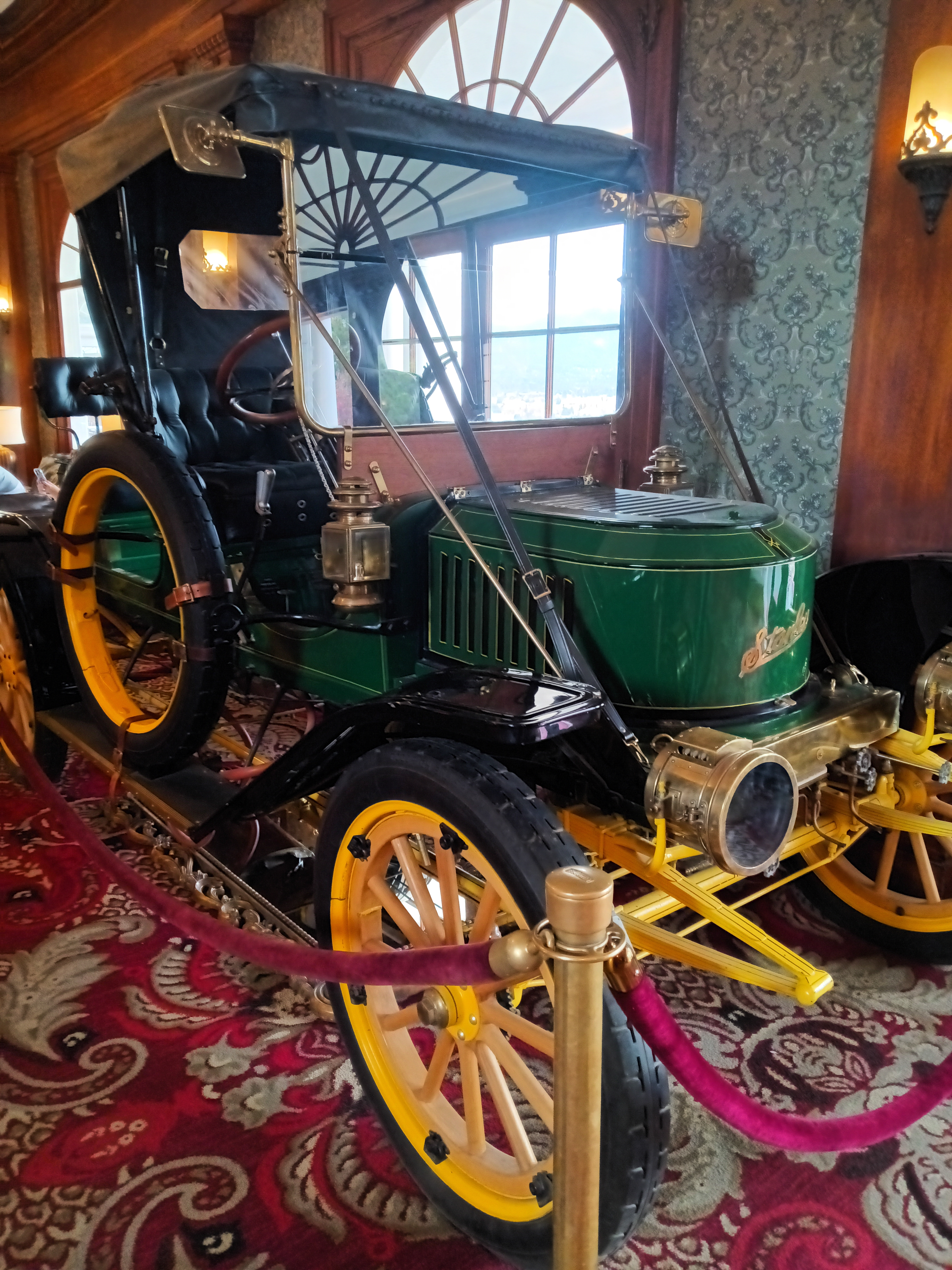
Over the next few years, FO and his wife went about building a huge edifice with all the modern accoutrements necessary to rival the hotels back home. The elegant Stanley Hotel boasted electric lights, telephones, ensuite bathrooms, a staff of uniformed servants, and a fleet of automobiles for guests. It’s been joked that Stanley had two things that a good hotelier needs—deep pockets and no children. The Stanley opened its doors to its East Coast clientele but never really made money. FO sold the hotel in 1930 to a Denver businessman.
By the time Stephen King and his wife spent their famous night at the Stanley in 1974, it was showing its wear. Nevertheless, the deserted hotel being prepared for closing for the season, sufficiently creeped out the horror writer and he walked away with the outline for a blockbuster book. The Shining would revitalize Stanley’s folly at the foot of the mighty Rockies.
And now I’m there, too!!
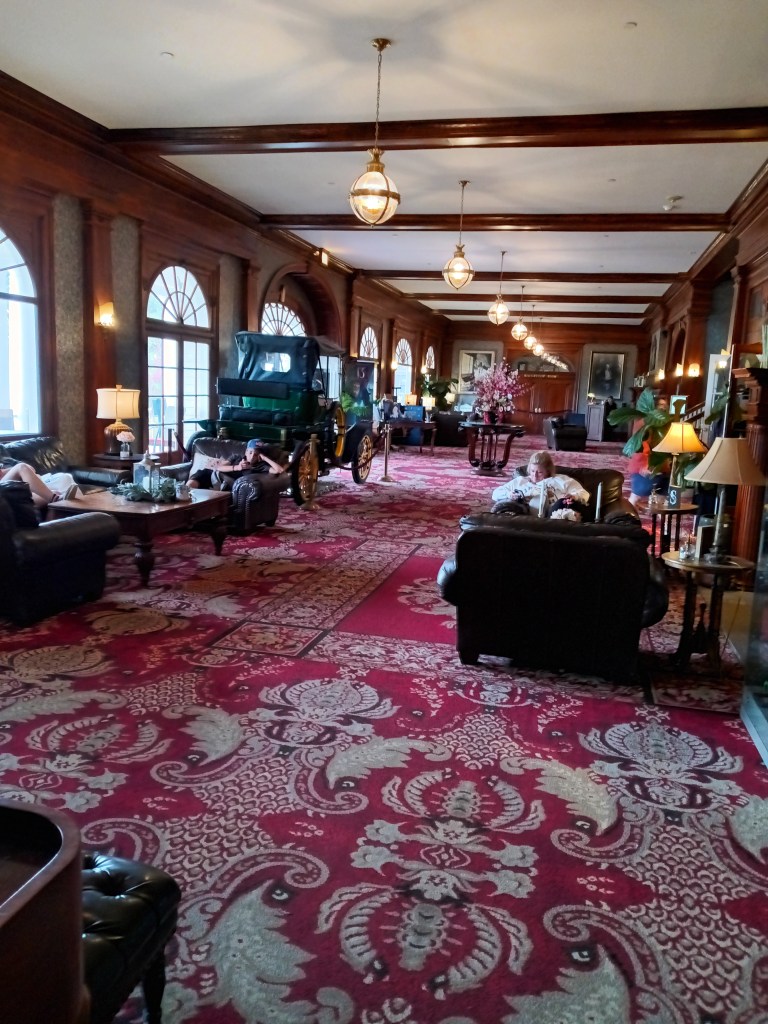
The Stanley is a pretty and well-maintained place. Lately, hotel management has been making a concerted effort in making it more of a destination vacation spot. They host concerts in their own hall, magic shows, and…seances. At least what they are terming “theatrical seances.” These seem to be small audience, scripted (?) events. I think they’d do better to try something more authentic (but that’s just me). There are several restaurants and a café on site. Also offered are a choice of rooms and locations around the sprawling grounds. We stayed in the main building on the 4th floor. The King’s were in Room 217 (and that suite is dedicated to Stephen King). If you stay in the hotel, all the floors are open to you, and we walked all of them. Surprisingly, the hotel feels light and airy. Remember, we were there in May when the Rockies are kind and in full tourist season swing and not closing for a long winter sleep.
A group of about twenty of us gathered for the ghost tour at 8pm on the lowest level. Our guide gave us a brief history of FO and the hotel before we set off to explore the grounds. We were taken into various external buildings, underground levels, and through parts of the main building that are normally off-limits to everyone else.



It seems that individual guides chose what to include or how to structure their tours. Our guide showed us lots of photos taken by previous guests and other guides in the recent past. I would have expected misty images and floating orbs—that kind of thing. Instead, there were actual pictures of what looked like real, solid people in places they shouldn’t be. A red-eyed girl looking through the railing of a staircase. An indistinct dark form of a person standing between two real people. What to think of those? Stories of the different locations were imparted. A vagrant dying in the basement. An Irish Earl fond of pinching the ladies. All along we were encouraged to snap photos. Sadly, I caught nothing but a misty light anomaly in the theatre. Who knows? I was never scared even though we were plunged into darkness often enough. Several guests were creeped out by the haunted mirror. Still, an amusing way to spend an evening. The theatre does have a certain energy about it.

I highly recommend a stay at The Stanley if you get the chance. It is pricey but the history and views are wonderful.
MY GHOST BOOK:
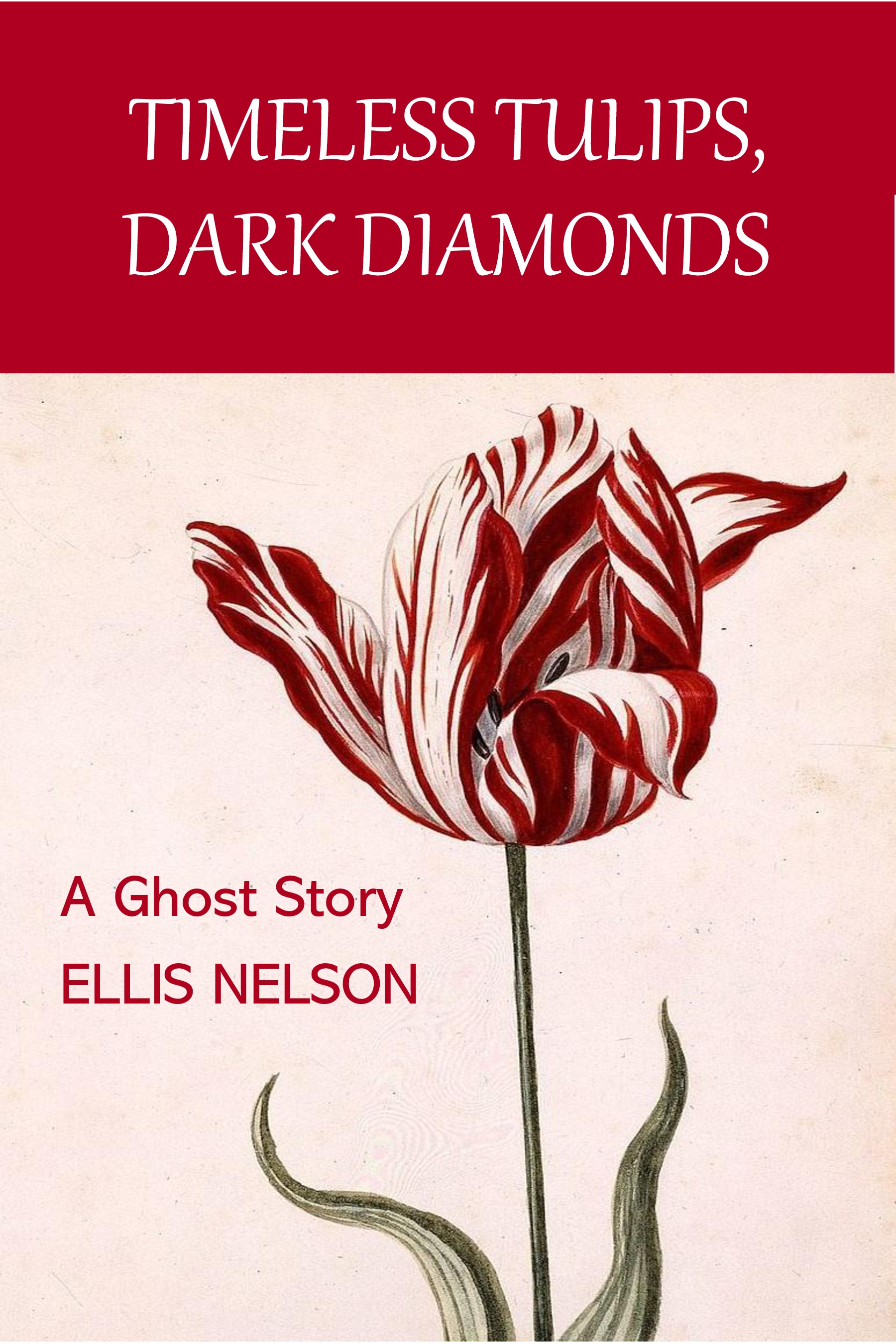
Book available: https://amzn.to/2l7LhHP
When fourteen-year-old Lydia travels to Amsterdam with her parents, the last thing she expects is the weird incidents that plague her stay. Curtains flutter mysteriously, and unexplained shadows move through the kitchen unnerving her. But Lydia is more concerned with the potential move to upstate New York. She dismisses the odd occurrences blaming them on jet lag and the various symptoms of her migraine disease.
When Lydia’s father lands a new job and the family moves to an area first settled by the Dutch, the bizarre happenings continue. Suffering from migraines has never been easy, but now Lydia has to contend with what she may have inadvertently brought home with her.


 ellisnelson