
By Karen Christino

Evangeline Adams has long been an enigma in the world of astrology. Once she was a household name. Nowadays she is known to only a few. Her reputation in certain circles looms large but was it deserved? Karen Christino’s book goes a long way to demystify the woman who was the most famous astrologer of the early 20th century.
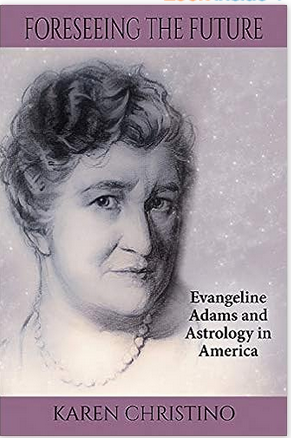
Evangeline Adams was a pioneer popularizing and legitimizing the practice of astrology so that it permeated American culture. That legacy was well-deserved. Other parts of her reputation, especially for forecasting may have been more a product of her ability to expertly market herself.
One of the most fascinating parts of the book for me involved Evangeline’s early beginnings. She was born in 1868 into a family of means. Her father died young having lost much of his wealth to speculating on an investment before its time (Perhaps this was a dose of Aquarian/Uranian energy which Evangeline inherits?). The family relocated to Andover, MA where Evangeline was surrounded by an extraordinary community of thinkers. With her mother economically independent, Evangeline grew up benefiting from an education separate from the men’s Andover Theological Seminary but very similar in content. The conservative Christian culture emphasized the development of character, mind, and spirit. Eva was able to attend lectures, debates, concerts, clubs, and art exhibitions. It would have been a stimulating place for anyone devoted to a life of the mind. Socializing, dancing, and frivolous activities were frowned on. Andover was a place devoted largely to training ministers for the serious work ahead of them. Luckily, Eva thrived in this setting.
It was also here that she met some very important people in her life. Her Sunday school teacher, Elizabeth Stuart Phelps, became a role model for a woman who could write for a living and remain unmarried. Through Phelps, Eva was introduced to some of the progressive ideas of the day— feminism, spiritualism, and homeopathy. Dr. Lewis Whiting and Eva became friends during a period of illness. Eva was able to ask Whiting deep philosophical questions and the homeopath seemed to recognize a certain spark in the young woman. Whiting later provided Eva with a referral to Dr. J. Heber Smith in Boston. What’s really interesting about this time in history is that doctors were overwhelmingly homeopaths. There were homeopathic hospitals and institutions. If you saw a doctor, it was likely a homeopath. And many homeopaths were well-trained astrologers. J. Heber Smith included, except that he didn’t openly advertise that. Eva went for a reading and that changed her life. The details of the reading are outlined in the book having been written down by Eva some 40 years later. No doubt many people have had (and will have) similar experiences to what Eva encountered on her visit to her first astrologer. From there, Eva goes on to study astrology with Smith who acts as her first astrology teacher. She later studied with Catherine Thompson who had a wealthy clientele in Boston. From Thompson, she learned the power of getting testimonials, using media for publicity, and how to cultivate a successful astrological practice. This was where Eva developed her people skills to counsel clients. Eva eventually ended up with access to a homeopathic mental hospital where she used charts and patient histories to correlate astrological placements and ailments. She followed medical students on rounds at the Westborough Insane Hospital. This gave her insight into medical astrology others didn’t have.
The earliest legend of Eva’s forecasting goes back to 1899 and involves a fire at the Windsor Hotel where she was living. Eva had done a reading for the hotel owner, Warren Leland, the day before the fire that had predicted some kind of imminent tragedy. Leland gave an interview that credited Eva with the prediction and the NY papers picked it up. Leland died within 3 weeks of the fire so clarification of exactly what was said was never corroborated beyond the initial report. While Leland talked to one reporter, Eva talked to many. She was a consummate self-promoter. She made sure the story made it into British papers and she used the tale throughout her life. There is no doubt that her business grew as a result.
Eva’s business was based in NY City and the law there forbade “pretending to tell fortunes.” Three separate times, Eva was arrested for fortune telling. It was the 1914 case which had become legendary. An undercover policewoman was sent in to receive a reading and Eva was consequently charged. The case was heard in a city court (so nothing can be said about how the NY State laws would function). Eva was viewed as a sincere, educated, white woman who showed the court that she consulted various books and had developed skills in interpreting astrology. The charges were dismissed. Judge Freshi found that “…not every astrologer is a fortune-teller.” Astrology therefore was NOT automatically fortune telling. Eva later claimed that the case established astrology as a legitimate science. Again, the notoriety of the story allowed Eva even greater visibility and her reputation and business grew.
Eva continued to grow her business, write astrology books, and market herself. She consulted in person and had a mail order business. She toured and gave lectures, and by 1930, she was called “America’s most famous astrologer.” In the 1930s, she had a radio show that was carried nationwide three times a week. Called “Your Stars,” the show had the potential to reach millions. In 1931, Eva had produced booklets for each zodiac sign which went on sale at Woolworth Department stores. She died in 1932 at the age of 64.
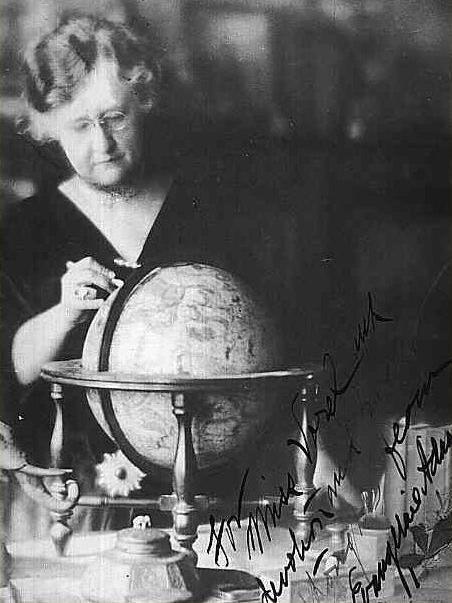
Evangeline Adams’ influence on the history of astrology in the US was tremendous. She innovated methods to practice astrology and initiated marketing strategies to successfully promote her business. The book emphasizes how dedicated she was to the art and occult science of astrology. She had a genuine interest in helping her clients using the techniques she employed. Her direct client work must have reached thousands including many celebrities and notables of the day (J.P. Morgan, Tallulah Bankhead, Joseph Campbell). Through radio and the print media she touched the lives of the public bringing astrology into the homes of millions. America was now primed for the astrologers who were to follow in her footsteps. Newspaper and magazine horoscopes would eventually become standard fair (even today, as online sources open new markets which Evangeline would no doubt be the first to employ). Making astrology available to the masses moved astrology from small occult circles into mainstream, middle-class America where it remains today. During her lifetime, Evangeline actively encouraged the study of astrology, and it influenced the next generation of astrologers. Her written materials and books continue to have influence as they are republished periodically.

To find my books, click here:
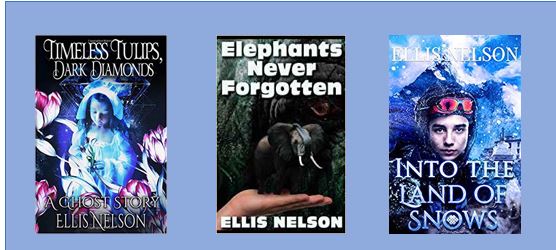
My visionary works are Into the Land of Snows and Timeless Tulips. Elephants Never Forgotten is Sci-Fi.






 ellisnelson